Key takeaways
- Very tight balcony: about 5 by 5 feet for a 20–24-inch table and two narrow chairs, assuming one side is against a wall.
- Comfortable two-person arrangement: about 6 by 6 feet for a 24–28-inch table and chairs that can be pulled back.
- Four-seat occasional arrangement: about 7 by 7 feet, although folding chairs may need to be added only when guests arrive.
Best Outdoor Bistro Sets for Small Patios
The best outdoor bistro sets for small patios are compact two-seat sets with a table no wider than 24–28 inches, chairs that can fold or stack, and materials suited to your local weather rather than simply the lowest price.
For most balconies, a 24-inch round metal table with two folding chairs offers the best balance of usable dining space and storage. Choose powder-coated steel for value, aluminum for easier lifting and humid climates, hardwood for a warmer appearance, or synthetic wicker for comfort and a softer look. Before buying, measure the entire usable area—not just the empty floor—and leave room to pull chairs out safely.
Our top picks

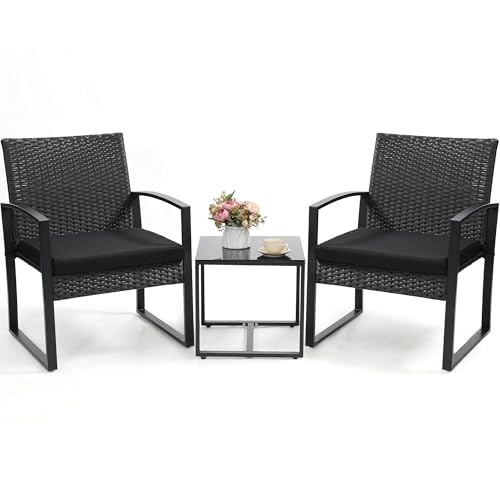


As an Amazon Associate we earn from qualifying purchases at no extra cost to you. Ratings are shown as listed on Amazon.
Quick picks by patio situation
| Situation | Best set type | Useful target specifications | Typical 2026 price range |
|---|---|---|---|
| Narrow balcony | Folding metal bistro set | Table 20–24 in wide; folded depth under 8 in | $100–$220 |
| Small patio used for daily meals | Powder-coated aluminum or steel set | Table 24–28 in wide; chairs rated for at least 250 lb each | $180–$450 |
| Wet or coastal climate | Aluminum with stainless or corrosion-resistant hardware | Rust-resistant frame; removable, quick-drying cushions | $250–$650 |
| Warm, traditional appearance | Hardwood bistro set | Acacia or teak; table 24–30 in wide; protective finish maintained | $220–$800 |
| Occasional entertaining | Folding table with two to four folding chairs | Table under 30 in wide; total folded storage depth under 14 in | $150–$400 |
How much space does a bistro set really need?
A table’s advertised diameter is only the starting point. A 24-inch round table needs approximately 24 inches of table width plus chair space on each side. For comfortable use, allow at least 24 inches behind each occupied chair; 30–36 inches is better if people must walk past.
As a practical minimum, plan for:
- Very tight balcony: about 5 by 5 feet for a 20–24-inch table and two narrow chairs, assuming one side is against a wall.
- Comfortable two-person arrangement: about 6 by 6 feet for a 24–28-inch table and chairs that can be pulled back.
- Four-seat occasional arrangement: about 7 by 7 feet, although folding chairs may need to be added only when guests arrive.
Rectangular tables often use a narrow balcony more efficiently than round tables. A 28-by-20-inch rectangular top can sit lengthwise against a railing, while a 28-inch round table may block more circulation. Round tables are friendlier for conversation and have no sharp corners, but they can waste space in square corners.
A simple fit calculation
Suppose your balcony is 60 inches wide and you want a 24-inch table centered against the railing. If each chair projects 24 inches from the table on opposite sides, the total occupied width is approximately 24 + 24 + 24 = 72 inches—too wide if the chairs face each other across the table. A better arrangement is to place the table against one side and use two chairs on the open side, or choose a 20-inch table and narrow chairs designed for balcony use.
Material head-to-head: what lasts and what wears first?
Powder-coated steel
Steel offers a stable, substantial feel and is usually the least expensive durable option. Powder coating protects the frame, but chips and scratches can expose bare metal. The feet and underside of the tabletop are common failure points because they collect water. Steel is a good choice for a covered patio, especially if you can store it during long wet periods.
Inspect seams, welds, and drainage holes. A set that looks rust-resistant on top may still deteriorate where water sits inside tubular legs. Touch up small chips with exterior metal paint after cleaning and drying the area.
Aluminum
Aluminum is lighter than steel and does not rust in the same way, making it useful for balconies where furniture must be moved frequently. It can dent more easily and may feel less planted in strong wind. Look for reinforced leg joints, non-marking feet, and a tabletop that does not flex when pressed.
For coastal areas, the hardware matters as much as the frame. Stainless steel fasteners and a finish intended for outdoor exposure are preferable. Salt deposits should be rinsed away periodically with fresh water.
Hardwood
Acacia and teak provide a warmer appearance and can last for years outdoors, but wood is not maintenance-free. It may fade to gray, develop surface checking, or swell slightly as moisture changes. Those changes are usually cosmetic, but loose joints and neglected end grain can become structural problems.
Use a breathable cover rather than wrapping damp wood tightly in plastic. Follow the manufacturer’s advice about oil or sealer; applying the wrong product can create a sticky surface and uneven color.
Resin wicker and plastic
Synthetic wicker is comfortable and visually soft, but the quality of the underlying frame determines longevity. Low-cost wicker can become brittle after prolonged ultraviolet exposure, while cushions may retain moisture. Plastic sets are easy to clean and often light, though thin tabletops can flex or blow over.
Folding, stacking, or fixed: which storage design wins?
Folding chairs are usually best for a small balcony. A typical chair may fold to roughly 4–8 inches deep, allowing it to stand beside a utility cabinet or hang on an appropriate wall-mounted storage system. Check that the folding mechanism locks securely and does not pinch fingers.
Stacking chairs are faster to put away when you have a covered corner. They usually require more floor space than folded chairs but are convenient for frequent use. Measure the stacked height if the set must fit beneath a shelf or balcony overhang.
Folding tables are useful when the patio has several purposes, but inspect the hinge and locking brace. A table that shifts while someone leans on it is less useful than a slightly larger fixed table. Never rely on a folding mechanism as a substitute for a level surface.
Comfort details that product listings often miss
- Seat height: around 17–19 inches suits most standard tables. A low lounge chair paired with a dining-height table will feel awkward.
- Seat width: 16–19 inches is common; wider users may prefer at least 18 inches between the arms.
- Seat depth: about 16–18 inches supports upright dining. Deeper seats are more relaxed but take more balcony space.
- Back angle: a slightly reclined back is more comfortable for coffee, while a more upright design works better for meals or laptops.
- Table clearance: check the distance between the underside of the table and the chair arms. Arms that cannot slide under the top make a small area feel cramped.
Cushions improve comfort but add ownership work. Choose removable covers with zippers, quick-drying foam or mesh construction, and a place to store them indoors. Do not leave cushions wet under a waterproof cover; trapped moisture encourages mildew.
Assembly and first-week setup
- Measure before opening the packaging. Confirm the assembled footprint and the folded dimensions against your balcony, doorway, elevator, and storage area.
- Lay out all hardware. Separate bolts by length. Using a bolt that is too long can interfere with a folding joint or damage a tabletop.
- Keep fasteners loose initially. Assemble the frame on a level surface, then tighten gradually after all parts are aligned. This prevents a crooked tabletop.
- Check stability. Press gently on opposite corners. If the set rocks, verify that the legs are fully seated and the fasteners are evenly tightened before adding pads.
- Protect the floor. Use outdoor-rated rubber or plastic feet, not absorbent felt, which can stay wet against wood or tile.
- Recheck after several uses. Folding joints and leg bolts may settle. Tighten them according to the instructions without overtightening aluminum parts.
Maintenance and ownership costs
The main consumables are replacement feet, touch-up paint, cushion covers, and occasionally hardware. A basic cleaning routine costs little: brush away grit, wash with mild soap and water, rinse, and dry completely. Avoid abrasive pads on powder coating and avoid chlorine-based cleaners unless the manufacturer specifically permits them.
For a set costing $240 and used four times per week for three years, the furniture cost is approximately $240 ÷ (4 × 52 × 3), or about $0.38 per use. If the set is used only twice per month, the same purchase costs about $3.33 per use over three years. This is why a cheaper-looking set may not be the best value for occasional use if it cannot be stored easily and deteriorates between outings.
Bottom line
Choose a folding 20–24-inch metal set when every inch matters, an aluminum set when you move furniture often or live in a damp climate, and a hardwood set when appearance and long-term refinishing are worth the extra care. For daily meals, prioritize chair comfort, frame rigidity, and usable table clearance over decorative details. The right bistro set is the one that fits with circulation space left over, survives your weather, and can be stored before wind and moisture turn a compact purchase into a maintenance problem.