Key takeaways
- Pros: Frees counter space, no tipping or moving, integrated look with faucet, works with dish soap, hand soap, or lotion.
- Cons: Requires a dedicated hole (typically 1.06 to 1.5 inches), needs under-sink clearance, refilling can be awkward if the bottle is small or the sink base is crowded.
- Best for: Homeowners with a 1-, 2-, or 3-hole sink who have an extra hole or are willing to use a hole cover for the sprayer or soap dispenser.
What's inside
- Built-In vs. Countertop: Which Type Fits Your Kitchen?
- Key Decision Criteria Before You Buy
- Spec Comparison: Popular Dispenser Types
- Decision Matrix: Match Your Situation to the Right Pick
- Fit and Cost Calculation: Will It Fit and What Will It Cost to Run?
- Durability and Ownership Realities
- Installation and Maintenance: Step-by-Step That Saves Time Later
- Which Should You Choose?
- Frequently Asked Questions
The best soap dispenser for kitchen sink use is a built-in pump if you have an unused sink hole and want a clutter-free counter, while a countertop pump or automatic dispenser is better if you rent, lack a spare hole, or want to avoid under-sink refilling.
- Built-In vs. Countertop: Which Type Fits Your Kitchen?
- Key Decision Criteria Before You Buy
- Spec Comparison: Popular Dispenser Types
- Decision Matrix: Match Your Situation to the Right Pick
- Fit and Cost Calculation: Will It Fit and What Will It Cost to Run?
- Durability and Ownership Realities
- Installation and Maintenance: Step-by-Step That Saves Time Later
- Which Should You Choose?
- Frequently Asked Questions
As an Amazon Associate we earn from qualifying purchases at no extra cost to you.


Built-In vs. Countertop: Which Type Fits Your Kitchen?
This is the first decision because it determines installation, refilling, and long-term maintenance. Both can work well, but they solve different problems.
Built-In (Sink-Mounted) Dispensers
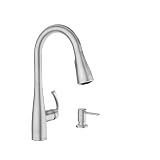
A built-in soap dispenser for kitchen sink installation mounts through a standard sink hole and holds a reservoir bottle under the counter. You pump from the top and refill from above or below depending on the model.
- Pros: Frees counter space, no tipping or moving, integrated look with faucet, works with dish soap, hand soap, or lotion.
- Cons: Requires a dedicated hole (typically 1.06 to 1.5 inches), needs under-sink clearance, refilling can be awkward if the bottle is small or the sink base is crowded.
- Best for: Homeowners with a 1-, 2-, or 3-hole sink who have an extra hole or are willing to use a hole cover for the sprayer or soap dispenser.
Countertop Dispensers
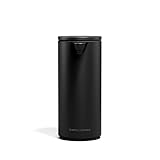
This includes manual pump bottles and touchless automatic dispensers that sit beside the faucet.
- Pros: No installation, easy to move and clean, wide range of styles and capacities from 8 oz to 20 oz, automatic models reduce cross-contamination.
- Cons: Takes counter space, can leave soap residue rings, lighter models may slide when pumping with one hand.
- Best for: Renters, sinks with no spare hole, or anyone who wants to switch soaps frequently.
Key Decision Criteria Before You Buy
1. Pump Type and Daily Use
The pump mechanism matters more than the finish.
- Standard manual piston pump: The most common for built-ins (brands like Delta, Kohler, Kraus, Moen). Delivers 0.05 to 0.07 oz per press. Reliable and easy to prime, but thick dish soaps can clog if diluted incorrectly.
- Spring-loaded countertop pump: Found on OXO, Joseph Joseph, and Simplehuman manual models. Smoother press, often with a collar that resists corrosion. Look for a pump head that locks for refilling and doesn’t stick after a week of disuse.
- Automatic infrared sensor pump: Battery-powered (Simplehuman, Joseph Joseph, Umbra). Dispenses a fixed 0.04 to 0.12 oz per wave, adjustable on better models. Avoids touching the pump with greasy hands but requires 4 AA batteries every 8-14 months depending on use, and sensors can misfire near stainless steel backsplashes.
2. Refill Ease: Top-Fill vs Under-Sink Bottle
Refilling is where most owners get frustrated.
- Top-fill built-ins: Models like the Kohler 1895 and Kraus Bolden have a head that unscrews or lifts out so you pour soap directly from above. No need to reach under the sink. If your under-sink area is packed with a filter or garbage disposal, prioritize this feature.
- Below-counter bottle: Traditional built-ins (many Moen and Delta models) require unscrewing a 12 to 17 oz plastic bottle from under the sink. You need at least 9 inches of vertical clearance below the deck and enough hand room to twist the bottle off without removing cleaning supplies each time.
- Wide-mouth countertop: Countertop bottles with a 1.5-inch or wider opening are significantly easier to refill without funneling, especially with thicker soaps. Stainless steel models with narrow necks look sleek but spill more.
3. Rust and Corrosion Resistance
A soap dispenser for kitchen sink areas lives in water, steam, and acidic soap.
- Materials that hold up: Solid brass pump heads with PVD coating, 304 stainless steel bodies, and ABS plastic reservoirs. Brass and 304 stainless resist pitting from chlorine and dish soap better than 201 stainless or zinc alloy.
- What wears first: The spring and check valve inside the pump head. In hard water areas, mineral buildup can make the pump stiff within 12-18 months. Chrome plating over zinc alloy will bubble and pit if the coating is thin – this is the most common failure on low-cost built-ins.
- Maintenance tip: Rinse the pump head and wipe the deck weekly, and flush the pump with warm water if you switch from dish soap to hand soap. Do not over-tighten the mounting nut; it can crack the gasket and let water seep under the flange, which accelerates corrosion.
4. Single vs Dual-Head Fit for Standard Sink Holes
Most US kitchen sinks use a standard hole diameter of 1-3/8 inches (35mm), with a tolerance of about 1.06 to 1.5 inches. Countertop models bypass this entirely, but built-ins must match.
- Single-head built-in: Uses one hole. Typical flange diameter is 1.7 to 2.0 inches, which covers the hole cleanly. This is the default choice if you have one spare hole.
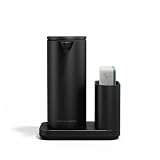
- Dual-head caddy or convertible dispenser: Some systems (e.g., Kraus and certain Delta configurations) offer a pump plus a small caddy or a dual-pump head that shares one enlarged hole or uses two adjacent holes. They are useful if you want both dish soap and hand soap at the sink without two separate countertop bottles. They require two holes or a 2-in-1 escutcheon and need at least 2.5 inches between hole centers.
- No spare hole? Options are: replace a sink hole cover or air gap with a dispenser, add a deck plate, or choose a countertop dispenser. Drilling a new hole in stainless steel is possible but permanent and can void a sink warranty; drilling in granite/quartz requires a diamond hole saw and professional installation.
Spec Comparison: Popular Dispenser Types
Use this table to compare realistic dimensions and ownership specs you will not find in a single listing summary.
| Type / Example Spec | Capacity | Hole Requirement | Head Material | Reservoir Material | Weight (Empty) | Refill Method |
|---|---|---|---|---|---|---|
| Built-In, Top-Fill (e.g., Kohler-style brass) | 13-17 oz (385-500 ml) | 1.06 – 1.5 in (27-38mm) | Solid brass, PVD stainless/chrome | HDPE plastic bottle | 7.5 – 10 oz (212-283g) | Pour from top, no under-sink removal |
| Built-In, Standard Bottle (e.g., Moen/Delta entry) | 12-13 oz (354-384 ml) | 1.06 – 1.38 in (27-35mm) | Zinc alloy or 201 stainless, chrome plated | LDPE plastic bottle | 5.0 – 7.0 oz (142-198g) | Unscrew bottle below deck |
| Manual Countertop Pump (e.g., OXO Good Grips) | 12-16 oz (354-473 ml) | None | 304 stainless + ABS pump | 304 stainless body | 9.0 – 13 oz (255-369g) | Unscrew pump collar, wide mouth |
| Automatic Countertop (e.g., Simplehuman Sensor) | 8-14 oz (236-414 ml) | None | ABS + 304 stainless accent | ABS plastic / stainless | 11 – 15 oz (312-425g) without batteries | Remove top, refill tank; 4x AA batteries |
| Dual-Head / Caddy System | 2x 10-13 oz | 2 holes or 1 enlarged 1.5 in hole with escutcheon | Brass / stainless | 2x HDPE bottles | 12 – 16 oz (340-454g) | Top-fill or dual bottles below |
Decision Matrix: Match Your Situation to the Right Pick
| Your Situation | Recommended Type | Why |
|---|---|---|
| Own home, 1 spare hole, want clean look, refill without hassle | Built-in top-fill, brass/PVD head, 16-17 oz | Largest capacity + no under-sink work; brass resists corrosion longest |
| Small sink base with disposal + filter, low clearance | Countertop manual 12-16 oz, weighted base | Avoids bottle removal in tight cabinet; weighted base stops sliding |
| Renter or no spare hole | Countertop manual or automatic | No modification needed; easy to take when you move |
| Want dish soap + hand soap at sink | Dual-head built-in OR two countertop pumps | Dual-head uses existing holes; two countertops simpler if holes are limited |
| Hard water, heavy daily dishwashing | 304 stainless or brass head, avoid zinc alloy | Better pitting resistance; easier to flush and clean valves |
| Hands often greasy/raw-food handling, budget permits batteries | Automatic sensor, adjustable volume | Touchless operation; set small dose to save soap |
| Tight budget, market range $15-$35 | Standard built-in with LDPE bottle or basic stainless countertop pump | Lowest upfront cost; expect to replace pump head sooner than brass models |
Fit and Cost Calculation: Will It Fit and What Will It Cost to Run?
Check Fit in 2 Minutes
1. Measure the hole diameter with a tape measure. If it is 1-1/4 to 1-1/2 inches, most built-ins fit. If your hole has a cover cap, pry it gently and measure the cutout, not the cap.
2. Measure vertical clearance from the underside of the deck to the first obstruction. You need at least the bottle height + 1 inch to twist off. Standard bottles are 6.5 to 8 inches tall; tall 17 oz bottles are 8.5 to 9.5 inches.
3. For dual-head, measure center-to-center between holes. Less than 2.5 inches means pump heads will collide.
Cost Per Use Example
A typical built-in dispenses about 0.06 oz per pump. A 16 oz reservoir therefore yields about 265 pumps. If you pump twice per dish session and do dishes twice daily, that is 4 pumps per day, so one fill lasts about 66 days. A 12 oz countertop dispenser at the same dose yields about 200 pumps, or 50 days at the same usage. With automatic dispensers set to 0.08 oz, the same 12 oz lasts about 150 uses, or 37 days. This helps you decide if a larger 17 oz top-fill is worth the upgrade to refill less often.
Durability and Ownership Realities
Expectations from listings rarely mention what actually fails.
- First failure point: The internal spring and ball valve. If the pump goes soft or dribbles, soak the head in warm vinegar-water (1:3) for 10 minutes and pump clean water through. This clears dried soap and mineral scale.
- Second failure: The gasket under the flange. If you see water pooling at the base, the gasket is compressed or misaligned. Loosen, re-center, and hand-tighten plus a quarter-turn with a basin wrench. Plumber’s putty is not needed on most modern dispensers with rubber gaskets.
- Finish care: Avoid abrasive pads and bleach cleaners on any plated finish. Brushed stainless and spot-resistant PVD finishes hide water spots best. Matte black finishes show soap film more and need wiping more often.
- Soap compatibility: Built-ins handle thin to medium-viscosity liquid soap best. Very thick lotions or castile soaps can require thinning or a larger-bore pump. Never use foaming soap in a non-foaming pump; it will dispense watery liquid and clog the air intake.
- Winter and infrequent use: If a vacation home sits unused, flush the pump with water before leaving. Dried soap in the tube is the top reason a dispenser won’t prime after months of disuse.
Installation and Maintenance: Step-by-Step That Saves Time Later
Built-In Installation (No Special Tools Beyond a Basin Wrench)
1. Turn off nothing – this is not a water line. Clear the under-sink area.
2. Insert the pump head and shank through the sink hole from above, with the gasket and flange seated flush.
3. From below, thread the plastic bottle or extension tube onto the shank. Hand-tighten the mounting nut until snug. Do not over-torque on thin stainless decks.
4. Prime: Fill the reservoir, then pump 10-20 times slowly. If it sputters, lift the head slightly and pump to release air lock.
5. Test for leaks around the flange with a dry paper towel after wiping the deck.
Countertop Maintenance
Clean the pump collar and base weekly to prevent a sticky residue ring. For automatic models, wipe the sensor window with a dry cloth; film from cooking oil can block the sensor. Replace batteries as a set, and remove them if storing the dispenser for more than a month to prevent corrosion in the compartment.
Which Should You Choose?
If you have a spare hole and want the most permanent, tidy solution, choose a built-in top-fill model with a brass or 304 stainless head and a 16 to 17 oz bottle – general market range $35 to $75 for the assembly. If you need flexibility, have no spare hole, or share the sink with a water filter faucet and air gap, a countertop manual pump in weighted 304 stainless ($20 to $45) is the most durable low-maintenance pick. Add a touchless automatic only if hands-free operation outweighs the cost of batteries and occasional sensor wiping.
Frequently Asked Questions
Can I put dish soap in any kitchen sink soap dispenser?
Yes for most built-ins and countertop pumps, but check viscosity. Standard dish soap works, but ultra-thick concentrated formulas pump harder and may need a pump designed for higher viscosity. Foaming dish soap requires a foaming pump specifically.
Will a built-in dispenser fit a granite or quartz sink hole?
If the stone was cut for a 1-3/8 inch hole, yes. If no hole exists, a fabricator must drill with a diamond core bit and water cooling. Do not attempt with a standard drill bit; it will crack the stone.
How do I fix a built-in that won’t pump after refilling?
Air lock is common. Remove the pump head, fill the reservoir to at least half, reinsert the head, and pump slowly 15-20 times. If still stuck, run warm water through the pump tube and check that the extension tube is fully seated on the shank without kinks.