Key takeaways
- Choose a 3-ton low-profile steel jack if you want one tool for the widest range of cars and crossovers. Choose a genuinely low-profile model with a long reach for lowered vehicles, a 3.5- or 4-ton long-reach jack for trucks and SUVs, and an aluminum 2-ton…
The best floor jacks for home garages are usually a 3-ton low-profile steel jack for ordinary cars and crossovers, a compact 2-ton aluminum jack for portability, or a 3.5- to 4-ton long-reach model when you regularly lift trucks and need extra chassis clearance.
Our top picks
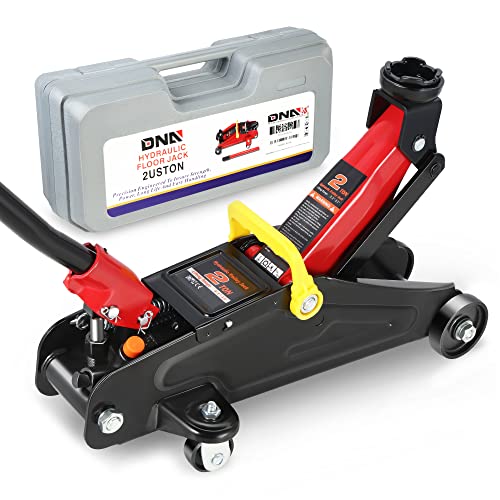

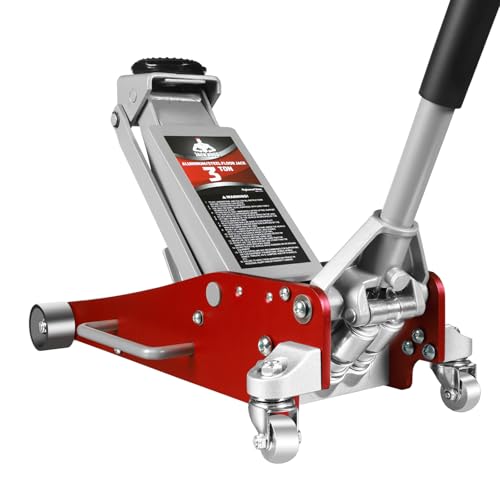
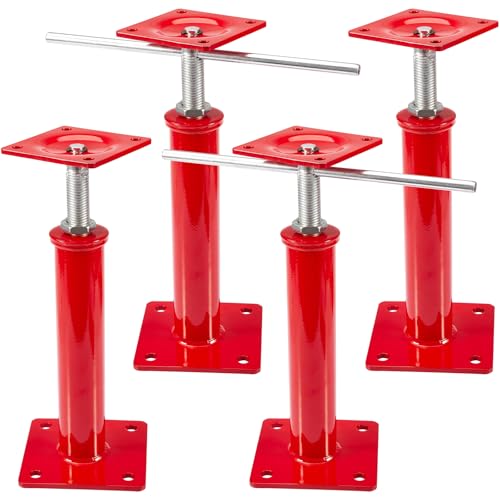
As an Amazon Associate we earn from qualifying purchases at no extra cost to you. Ratings are shown as listed on Amazon.
Quick picks by garage situation
| Situation | Best choice | Why it fits | Typical market range |
|---|---|---|---|
| One family car, occasional tire or brake work | 3-ton low-profile steel jack | Good reach, stable footprint, and enough capacity for most cars and crossovers | $150–$300 |
| Sports car or lowered vehicle | 2- or 3-ton low-profile jack | Minimum height commonly around 2.75–3.0 inches | $180–$450 |
| Truck, SUV, or frequent underbody work | 3.5- or 4-ton long-reach steel jack | Higher maximum lift and longer chassis reach the manufacturer’s lifting points more easily | $250–$550 |
| Jack carried to events or stored in a small space | 2-ton aluminum jack | Often 45–60 lb lighter than a comparable steel model | $250–$500 |
| Lowest purchase price | Basic 2- or 3-ton service jack | Functional for occasional use, but usually heavier and less refined | $80–$180 |
Best floor jack categories compared
Best all-around: 3-ton low-profile steel floor jack
For most home garages, this is the sensible default. A 3-ton rating provides useful headroom for passenger cars, minivans, crossovers, and many light SUVs, while a low-profile design can fit beneath cars with modest ride height.
Models such as the Daytona 3 Ton Low-Profile Floor Jack, the Arcan ALJ3T, and comparable 3-ton professional-style jacks typically offer a minimum height near 3 inches and a maximum height between roughly 19 and 24 inches. Their steel chassis is heavier than aluminum, but that weight can improve stability and reduce movement while lifting.
Choose a model with a broad saddle, a removable handle, a bypass valve, and a positive overload valve. A foam sleeve on the handle is useful around painted bodywork, but it is not a substitute for keeping the handle aligned and controlling the release valve carefully.
Best for lowered vehicles: low-profile 2- or 3-ton jack
Minimum height matters more than maximum capacity when the jack must reach a low pinch weld or front subframe. A difference of half an inch can decide whether the jack fits under the vehicle before a wheel is removed.
Look for a minimum height of 2.75 to 3.0 inches, a long lifting arm, and a saddle that remains clear of plastic aerodynamic panels. A compact 2-ton jack may suit a lightweight sports car, but capacity should be based on the portion of the vehicle being lifted, not the vehicle’s total curb weight alone. The jack still needs a substantial safety margin.
Do not assume that “low profile” means “long reach.” Some short low-profile jacks fit beneath a car but cannot reach the manufacturer’s recommended lifting point without contacting a bumper or rocker panel. Compare chassis length and the arm’s forward reach, not only the minimum-height number.
Best for trucks and SUVs: long-reach 3.5- or 4-ton jack
Trucks often need more lift at the frame or axle, and their ground clearance can make a conventional compact jack frustrating. A long-reach model, such as the Hein-Werner 3-ton service jack or comparable 3.5- to 4-ton professional-style equipment, generally offers a longer chassis and greater maximum height.
A maximum lift around 20 to 24 inches is useful for many SUVs, but it may still be insufficient for some lifted trucks. Check the height of the frame, axle, or approved lifting point and compare it with the jack’s maximum saddle height. If the jack must be raised to its absolute limit, use a larger model or a different lifting method rather than stacking objects under the saddle.
Best for portability: aluminum racing jack
An aluminum jack is easier to carry and maneuver than a steel jack. Many 2-ton aluminum models weigh approximately 35–50 lb, while steel jacks with similar capacity commonly weigh 60–90 lb or more. That difference matters when loading equipment into a vehicle or moving a jack across a crowded garage.
The trade-off is cost and, in some designs, a smaller chassis or narrower saddle. Aluminum can also show gouges and wear more visibly. A lightweight jack is a good choice when portability is important, but a heavier steel model is usually preferable if the jack will remain in one place and support frequent truck or SUV work.
Key specifications that decide whether a jack fits
| Specification | Useful target for most home garages | Why it matters |
|---|---|---|
| Capacity | 3 tons for general use; 3.5–4 tons for heavier vehicles | Provides margin above the load applied to the lifting point |
| Minimum height | 2.75–3.0 inches for low cars; 3.5–4.5 inches for ordinary vehicles | Determines whether the saddle can enter the lifting area |
| Maximum height | 19–24 inches | Determines whether a tire can clear the ground and whether stands can be positioned |
| Saddle diameter | 4–5 inches for general work; larger for frame rails | Affects load distribution and compatibility with pinch welds or adapters |
| Chassis clearance | Long-reach design for trucks; compact design for tight garages | Controls how far the jack can reach beneath the vehicle |
| Weight | 45–70 lb for a practical home-garage jack | Balances stability with maneuverability |
| Safety features | Overload valve, bypass valve, controlled release, and locking casters | Helps prevent overextension, sudden descent, and unwanted movement |
How much capacity do you actually need?
A vehicle’s total curb weight is shared across four contact areas, but the load is not always evenly distributed. During a front lift, the jack may carry more than one quarter of the vehicle’s weight; a heavy engine can increase the front share substantially.
For example, suppose a crossover weighs 4,000 lb. One quarter is 1,000 lb, but using a 3-ton jack does not mean the jack should routinely operate near 6,000 lb or that the full rating is automatically safe in every position. The 3-ton rating is a capacity limit, not a recommendation to lift any vehicle under 6,000 lb without checking the lifting arrangement. Use the vehicle manual’s approved lifting points and keep the jack centered beneath the load.
For most cars and crossovers, a quality 3-ton jack offers more practical margin than a cheap 2-ton model. For full-size pickups, heavy vans, or frequent commercial-style work, move to 3.5 or 4 tons and confirm the jack’s reach and maximum height.
Safety features and correct setup
A floor jack is a lifting tool, not a support stand. Before buying, favor a hydraulic system with an overload valve and a controlled-release mechanism. Wide front rollers and rear casters help the jack follow the vehicle’s movement as it rises. A broad saddle can reduce the chance of slipping, but it must still match the vehicle’s approved contact point.
- Park on a hard, level surface, select Park or first gear, and apply the parking brake.
- Chock wheels that remain on the ground.
- Identify the exact lifting point in the vehicle manual before positioning the jack.
- Raise the vehicle only high enough to place correctly rated jack stands beneath approved support points.
- Lower the vehicle gently onto the stands, then give it a careful stability check before working underneath.
Never use bricks, wood blocks, stacked ramps, or improvised objects as substitutes for jack stands. Do not rely on the jack’s hydraulic pressure overnight, and do not place any part of your body beneath a vehicle supported only by a jack.
Ownership realities: what wears first
On inexpensive jacks, the release valve, caster bearings, saddle pad, and hydraulic seals are common wear points. A slow descent, visible oil around the ram, a saddle that sinks under load, or casters that bind indicates that the jack needs inspection or service. A damaged hydraulic jack should not be kept in service simply because it still lifts an unloaded vehicle.
Keep the lifting arm and wheels free of gravel, wipe the ram clean before retracting it, and store the jack with the ram retracted in a dry area. Lubricate pivot points according to the manufacturer’s instructions; do not spray lubricant onto the saddle or wheels if it could reduce traction. Replacement saddle pads and caster assemblies are available for some established models, while very cheap jacks may be more economical to replace than repair.
Bottom line
Choose a 3-ton low-profile steel jack if you want one tool for the widest range of cars and crossovers. Choose a genuinely low-profile model with a long reach for lowered vehicles, a 3.5- or 4-ton long-reach jack for trucks and SUVs, and an aluminum 2-ton jack when carrying weight matters more than price or maximum stability. The best floor jacks are not simply the ones with the highest capacity: they fit the vehicle’s lifting points, reach the required height without strain, roll predictably, and make it easy to use jack stands correctly.