Key takeaways
- Archetype fit. Does the product contain or directly support a fast Mega Evolution ex attacker? A Lopunny list wants a single primary attacker, a cheap search engine, and a Trainer count high enough to see those cards reliably. Products that supply those pieces scored higher than products that only add raw card volume.
- Specs and contents. We recorded what is verifiably in the box — 60-card deck or not, number of booster packs, promo cards, rarity, set number. Anything we could not confirm we described by spec class rather than inventing a figure.
- Category fit. Singles, ready-to-play decks and sealed collections do different jobs. A single is a targeted fix; a League Battle Deck is a working baseline; a Premium Collection is an upgrade budget in a box. Mixing those categories up is the most common buying mistake.
- Use case. Budget players, returning players, collectors, and players who want a second deck for a friend all need different things, so the picks are grouped by situation rather than by a single ordered list.
- Upgrade path. We favoured products that stay useful after you outgrow them. Trainer staples, search cards and a second attacker keep their value in a deck long after a promo attacker has been swapped out.
The best Pokémon TCG Pocket Mega Lopunny ex deck is the Turbo build: a lean 20-card list built around a 2-1-2 Mega Lopunny ex line, two search cards, and a draw engine cheap enough to run four copies. It suits players who want one attacker that comes online fast and does not care what the opponent is setting up. If you are also buying paper cards to build the same archetype, the single that anchors everything is the Mega Lopunny ex 084/094 Double Rare, and the best packaged starting point is the Mega Lucario ex League Battle Deck — a ready-to-play 60-card shell that teaches the same low-curve, attack-early discipline. Players who want the deepest sealed upgrade path should look at the Mega Greninja ex Premium Collection instead. Everything below compares the builds by energy curve, key cards, crafting cost, matchup spread and upgrade path, then maps each build to a product you can actually buy.
One thing to get straight before the lists: Pokémon TCG Pocket and the physical Pokémon TCG share card names but not card pools. Pocket runs 20-card decks and a three-point win condition; paper runs 60-card decks and six Prize cards. The deck skeletons in this guide are written with counts for both environments, so you can read the same plan either way.
Top 3 Picks
Best overall: Mega Lopunny ex 084/094 (ME02: Phantasmal Flames, Double Rare single). It is the archetype. One budget-tier card, no deck purchase required, and it is the only item on this list that is literally the deck’s namesake attacker. If you are building the list rather than buying a box, start here.
Best budget: Mega Heracross ex 004/094 (ME02: Phantasmal Flames, Double Rare single). A cheap second attacker that fills the “what do I do when the main line is stuck in the deck” problem without adding a second energy type. It suits players building on a strict card budget who still want a real backup plan.
Best premium: Mega Greninja ex Premium Collection, 8 Booster Pack. The most complete upgrade package on this list — a Mega Evolution ex promo plus eight booster packs, which is the fastest route to the Trainer staples a Lopunny list needs. It suits players who are all-in on the Mega Evolution era and would rather buy once than chase singles for a month.
Quick Comparison
Every product below is a real Pokémon TCG item. Prices are given only as tiers, because singles and sealed product move daily and a specific figure would be stale before you read it. “Best for” is the situation, not a ranking.
| Product | Best for | Key specs | Price tier |
|---|---|---|---|
| Mega Lucario ex League Battle Deck | Ready-to-play 60-card shell; learning low-curve Mega play | 60-card ready-to-play deck; Fighting-type Mega Evolution ex core; includes deck box, counters, coin, rulebook; light tuning needed | Mid-range |
| Mega Greninja ex Premium Collection (8 Booster Pack) | Deepest sealed upgrade path; bulk staple acquisition | Mega Greninja ex promo card(s) + 8 booster packs + collector accessories; no pre-built deck | Premium |
| Team Rocket’s Mewtwo ex League Battle Deck | Second ready-to-play deck with a disruption flavour | 60-card ready-to-play deck; Mewtwo ex primary attacker; Team Rocket-themed Trainer suite; accessories included | Mid-range |
| Mega Lopunny ex 084/094 (ME02: Phantasmal Flames) | The archetype anchor; single-card build entry | Double Rare single; Colorless-type Mega Evolution ex; set number 084/094; one card, no accessories | Budget |
| Mega Diancie ex Mega Battle Deck | Premium ready-to-play with a defensive tilt | Complete Mega Battle Deck product; Mega Diancie ex core; full Trainer suite; accessories included | Premium |
| Mega Abomasnow ex 036/132 (ME01: Mega Evolution) | Budget backup attacker on a second energy type | Double Rare single; Grass-type Mega Evolution ex; set number 036/132 | Budget |
| MEGA Starter Set Mega Gengar ex (Japanese) | Import collectors; premium Japanese-print deck core | Japanese-language starter set; Mega Gengar ex core; full deck plus accessories; Japanese text, not tournament-legal in English events | Premium |
| Mega Heracross ex 004/094 (ME02: Phantasmal Flames) | Cheap aggressive filler and backup attacker | Double Rare single; Grass-type Mega Evolution ex; set number 004/094 | Budget |
| Mega Manectric ex 050/132 (ME01: Mega Evolution) | Mid-range Lightning option; second deck for variety | Double Rare single; Lightning-type Mega Evolution ex; set number 050/132 | Mid-range |
How We Chose
This roundup is built from product listing specifications, set and rarity data, and the deck-construction conventions that competitive players use across the Mega Evolution era — not from any testing session. We never claim to have played these decks; we compared what is actually printed on and packaged in each product, then asked which reader situation each one solves.
The criteria, in order of weight:
- Archetype fit. Does the product contain or directly support a fast Mega Evolution ex attacker? A Lopunny list wants a single primary attacker, a cheap search engine, and a Trainer count high enough to see those cards reliably. Products that supply those pieces scored higher than products that only add raw card volume.
- Specs and contents. We recorded what is verifiably in the box — 60-card deck or not, number of booster packs, promo cards, rarity, set number. Anything we could not confirm we described by spec class rather than inventing a figure.
- Category fit. Singles, ready-to-play decks and sealed collections do different jobs. A single is a targeted fix; a League Battle Deck is a working baseline; a Premium Collection is an upgrade budget in a box. Mixing those categories up is the most common buying mistake.
- Use case. Budget players, returning players, collectors, and players who want a second deck for a friend all need different things, so the picks are grouped by situation rather than by a single ordered list.
- Upgrade path. We favoured products that stay useful after you outgrow them. Trainer staples, search cards and a second attacker keep their value in a deck long after a promo attacker has been swapped out.
We deliberately did not rank by price. A budget single that completes a deck is worth more than a premium box that adds twenty cards you will not sleeve.
1. Mega Lucario ex League Battle Deck – Best for a ready-to-play mid-range shell
As an Amazon Associate we earn from qualifying purchases at no extra cost to you.

The Mega Lucario ex League Battle Deck is the closest thing the paper game sells to a plug-and-play version of the Lopunny plan: one Mega Evolution ex attacker, a supporting evolution line, and enough Trainer cards to keep the deck moving without any deckbuilding work on your part. It suits players who are new to the Mega Evolution era, players who want a second deck to hand a friend, and Pocket players who want a physical reference for how a low-curve Mega deck is supposed to be built. Fighting-type decks in this style want to attack on turn two or three and keep pressure on; if your Pocket Lopunny list keeps fizzling because it runs out of cards, the structure of this deck is the lesson.
Key specs
- Format: League Battle Deck — a ready-to-play 60-card deck, not a booster product.
- Archetype: Fighting-type Mega Evolution ex, single-primary-attacker build.
- Contents: 60-card deck plus the accessories these decks normally ship with — deck box, damage counters, coin, rulebook.
- Legal in: Standard play for as long as the Mega Evolution-era sets remain in rotation. Check the current rotation list before you buy for tournament use.
- Deckbuilding input required: none to play; roughly 2-6 cards to make it genuinely competitive.
- Price tier: mid-range.
Why it earns a slot
The value of a League Battle Deck is not the headline attacker — it is the fact that the deck is legal, sleeved and playable the moment you open it, and that the Trainer count has already been solved for you. A typical Lopunny-style list wants somewhere between 28 and 36 Trainer cards in a 60-card deck. Getting that number right is the hardest part of deckbuilding for new players, and a pre-built deck hands you the answer.
It is also the honest answer to the question “what does a Mega deck look like in paper?” A Pocket player who has only ever built 20-card decks will find the paper version strange at first: you see a far smaller share of your deck each game, which is why paper lists run more search and more draw than the app ever demands. Playing or even just goldfishing this deck teaches that density lesson faster than reading about it.
Pros
- Playable immediately — no singles hunting, no sleeving decisions.
- Trainer suite is already balanced, which is the part beginners get wrong.
- Fighting-type core means one energy type, so the energy curve stays simple.
- The Trainer staples inside transfer directly into a Mega Lopunny ex list.
- Mid-range tier makes it the cheapest way to own a complete, legal deck.
Cons
- It is not a Lopunny deck. The headline attacker is different, so the flavour and the matchup spread are not the same.
- Pre-built decks are tuned for accessibility, not for a tournament top cut. Expect to swap a handful of cards.
- You get no booster packs, so your collection grows only by the 60 cards in the box.
- If the Mega Evolution-era sets rotate out, the deck stops being Standard-legal as a unit.
How it compares
Against the Team Rocket’s Mewtwo ex League Battle Deck, this is the faster, more straightforward option. Both are mid-range ready-to-play decks with a single Mega-era attacker and a full Trainer suite; the difference is temperament. Lucario wants to attack first and keep attacking, which mirrors how a Lopunny list plays. Mewtwo’s build leans toward disruption and grinding, which is a better fit for a control-flavoured player. If you want one deck to teach you the aggressive half of the archetype, take Lucario. If you want a deck that punishes opponents for overextending, take Mewtwo.
2. Mega Greninja ex Premium Collection, 8 Booster Pack – Best for the deepest sealed upgrade path

This is the box for players who have decided they are committed to the Mega Evolution era and would rather buy their staples in bulk than chase them one at a time. A Premium Collection in this format pairs one or more promo cards with eight booster packs and collector accessories. It does not contain a playable deck, so it is not a starting point for someone who has nothing — it is a second purchase, made after you already own an attacker.
Key specs
- Format: Premium Collection — sealed product, not a pre-built deck.
- Contents: Mega Greninja ex promo card(s) plus 8 booster packs, along with the collector accessories these boxes normally include.
- Deck included: no. You supply the 60 cards (or 20, for Pocket).
- Primary use: collection growth and staple acquisition.
- Best paired with: a League Battle Deck or a singles order that already gives you a functioning list.
- Price tier: premium.
Why it earns a slot
The maths of sealed product is simple and worth doing out loud. Eight booster packs give you eight chances at the Trainer staples, draw supporters and secondary attackers that any Mega list needs. If you buy those same cards as singles, you pay for exactly what you want but you pay full retail for each one, and you get nothing else. If you open eight packs, you pay a premium for randomness but you build a trade binder at the same time.
Where the box genuinely wins is on the long upgrade path. A Lopunny list does not stay static — you add a second attacker, you swap draw engines, you try a different gust package. Every one of those swaps needs cards you do not own yet, and a sealed collection is the cheapest way to acquire a broad base of them at once. The promo card is a bonus rather than the point, unless you specifically want to build around it.
Pros
- Eight booster packs is real collection volume, not a sampler.
- Promo card is exclusive to the product and does not appear in booster packs.
- Fills the gaps that singles orders always leave — the random uncommon you did not know you needed.
- Collector accessories make it a reasonable gift purchase for a player already in the hobby.
- Premium tier, but the per-card cost works out lower than buying the same number of cards individually if you value most of what you open.
Cons
- No deck. Buying this first, before you own an attacker, is the single most common sequencing mistake.
- Random contents mean you can open eight packs and still not find the specific card you needed.
- Duplicates are inevitable if you already own a decent collection.
- Premium tier spend for a product that does not, by itself, let you play a single game.
How it compares
Against the Mega Diancie ex Mega Battle Deck, the two products could hardly be more different despite similar pricing tiers. The Diancie product is a complete, playable deck with a defensive tilt — you open it and you can play. The Greninja Premium Collection is a supply drop: no deck, more raw cards, more long-term flexibility. If you want a second complete deck for a friend, buy the Mega Battle Deck. If you want to stop buying singles for a year, buy the Premium Collection. Buying the Premium Collection first and the deck later is the wrong order.
3. Team Rocket’s Mewtwo ex League Battle Deck – Best for a disruption-flavoured second deck

This is the ready-to-play deck for the player who likes making the opponent’s plan harder rather than racing them. Like the Lucario deck, it arrives as a legal 60-card list with a Mega-era ex attacker and a full Trainer suite, but the card selection leans into Team Rocket’s themed Trainers and disruptive effects rather than pure speed. It suits players who already own a fast deck and want a second one with a different feel, and it suits anyone who learns better by seeing the opponent’s resources get taken apart.
Key specs
- Format: League Battle Deck — 60-card ready-to-play deck.
- Archetype: Mewtwo ex primary attacker with a Team Rocket-themed Trainer suite.
- Contents: full 60-card deck plus the standard League Battle Deck accessories.
- Playstyle: mid-speed, resource-denial leaning.
- Deckbuilding input required: low to moderate — the deck plays as-is, but tuning it toward your local metagame is where it improves most.
- Price tier: mid-range.
Why it earns a slot
Two things make this a better purchase than it first appears. The first is that disruption Trainers are exactly the cards a Lopunny list wants as tech. A single-attacker deck has no way to answer a problem it cannot attack through, so it leans on Trainers that remove the opponent’s options. Owning a deck whose whole identity is those cards means you own the answer package already.
The second is variety. Playing the same 60 cards every week flattens your understanding of the metagame. A second deck that wins on a different axis teaches you which matchups your Lopunny list is actually losing and why — because you will be on the other side of them.
Pros
- Complete, legal deck with a distinct playstyle from the Lucario shell.
- Themed Trainer suite doubles as a tech package for other decks.
- Rewards patient play, which is useful practice for players who default to racing.
- Mid-range tier, so a second deck does not cost like a second hobby.
- Works well as a teaching deck for a friend — the decisions are readable.
Cons
- Slower than a Lopunny turbo plan, so it does not teach the aggressive curve you actually want.
- Themed cards are less likely to transfer into a different archetype than generic staples.
- Disruption strategies punish misplays harder than aggro decks do — a bad sequence costs you the game.
- No booster packs, so it is a deck purchase and not a collection purchase.
How it compares
Against the Mega Lucario ex League Battle Deck, the choice comes down to what you want to learn. Lucario teaches speed: how to sequence an evolution line so that you attack on the earliest legal turn, and how to close a game before the opponent stabilises. Mewtwo teaches patience: how to identify which of the opponent’s resources actually matter and take that one away. If your goal is to build a competitive Mega Lopunny ex list, Lucario is the better study partner because the tempo is closer. If you already understand tempo and lose to control decks, Mewtwo is the corrective.
4. Mega Lopunny ex 084/094 (ME02: Phantasmal Flames) – Best for the archetype anchor

This is the card the whole guide is about. Mega Lopunny ex is a Double Rare single from ME02: Phantasmal Flames, numbered 084/094, and it is the only item on this list that is literally the deck’s namesake. It suits players who are building a list rather than buying a box, players who want to try the archetype before committing to a full deck purchase, and collectors who want the flagship card of the Phantasmal Flames set. At budget tier, it is the cheapest possible entry point into the archetype.
Key specs
- Product type: single card, not sealed product.
- Rarity: Double Rare.
- Set: ME02: Phantasmal Flames, card 084/094.
- Type: Colorless — the Lopunny line has always sat in the Colorless type in the TCG, which is the single most important fact about the card for deckbuilding purposes.
- Copies needed for a working list: two to three.
- Price tier: budget.
Why the Colorless typing matters more than the artwork
Colorless attackers can be paid for by any energy type in the paper game and slot into almost any Pocket energy shell. That changes the entire economics of the deck. You are not locked into a single energy base, you can splash a second attacker without adding a second energy type, and your energy counts stay low — which means more room for Trainers, which means more consistency.
Run the density numbers and the difference is stark. In a 20-card Pocket deck, a 2-1-2 line of Mega Lopunny ex plus two search cards commits seven slots — 35% of your deck — to one attacker. Trimming to a 2-1-1 line frees two slots, a full 10% of the deck, for consistency cards. In paper, a 3-2-3 line plus four search cards eats thirteen of sixty slots, about 22%. Those freed slots are the difference between attacking on turn three and attacking on turn five, and in a three-point format attacking on turn five is often too late.
Pros
- Budget tier — the lowest-cost way to start the archetype.
- Colorless typing keeps the energy base flexible and the energy count low.
- Single-card purchase means no wasted cardboard; you buy exactly what you need.
- Playable in Pocket and paper alike, so the same purchase informs both.
- Doubles as a collection piece from the Phantasmal Flames set.
Cons
- One card is not a deck — you still need the pre-evolutions, Trainers and energy.
- You need two to three copies for a consistent list, so the true cost is a multiple of the single.
- No accessories, no rulebook, nothing to play with on arrival.
- Singles prices on in-demand Double Rares move, so the tier can shift.
How it compares
Against the Mega Heracross ex 004/094 single, the two cards solve different problems. Lopunny is the plan: it is what you build the deck to do, and everything else supports it. Heracross is the insurance: a cheap secondary attacker that keeps you in games where the main line is stuck at the bottom of the deck. The right answer for most players is Lopunny first, Heracross second — buying the backup before the anchor is backwards. If you can only buy one card this month, buy the one the deck is named after.
5. Mega Diancie ex Mega Battle Deck – Best for premium ready-to-play with a defensive tilt

Mega Battle Deck products sit a step above League Battle Decks in both contents and price, and the Mega Diancie ex version is the one to look at if you want a complete deck that plays a longer, more defensive game than the Lucario shell. It suits players who want a finished deck with no assembly required, players who prefer to build a board and hold it, and anyone who wants a premium-tier gift that is genuinely playable rather than decorative.
Key specs
- Format: Mega Battle Deck — a complete, ready-to-play deck product.
- Archetype: Mega Diancie ex core with a full Trainer suite.
- Contents: the complete deck plus accessories; these products are designed to be played straight out of the box.
- Playstyle: defensive, board-building, slower than the Lopunny turbo plan.
- Deckbuilding input required: none to play; moderate to tune.
- Price tier: premium.
Why it earns a slot
Premium ready-to-play decks solve a problem that singles buyers hit constantly: you own every card you need and the deck still does not work, because you never settled on the ratios. A Mega Battle Deck hands you a working ratio as a starting point. That matters most for the Trainer line — the difference between 30 and 36 Trainers in a 60-card list is enormous, and it is invisible until you actually play.
It is also the best product on this list for a specific reader: the player who wants a second complete deck so a friend can play against the Lopunny list. You cannot learn a matchup by goldfishing alone. Having a real opponent’s deck in the house, with a genuinely different speed, turns practice sessions into something that improves your play instead of just confirming it.
Pros
- Complete premium deck — playable without any additional purchase.
- Defensive speed profile makes it a genuinely different practice partner from the aggro shells.
- Full Trainer suite included, and those staples transfer to other decks.
- Accessories included, so the total cost is not as high as the tier suggests.
- Better build quality than a League Battle Deck, reflecting the higher tier.
Cons
- Premium tier for a deck whose attacker is not the one you are building around.
- Slower playstyle is the opposite of the Lopunny curve, so it teaches you less about tempo.
- Pre-built ratios are tuned for accessibility rather than for a competitive field.
- No booster packs, so collection growth is limited to the cards in the box.
How it compares
Against the Mega Greninja ex Premium Collection, this is the better buy for anyone who wants to play rather than collect. The Premium Collection gives you more cards and no deck; the Mega Battle Deck gives you fewer cards and a deck you can shuffle immediately. If your goal is to have two functioning decks in the house, the Mega Battle Deck is the answer. If your goal is to stop buying singles for the next twelve months, the Premium Collection is. Players who buy the Premium Collection and then discover they cannot play a game are the ones who regret the order.
6. Mega Abomasnow ex 036/132 (ME01: Mega Evolution) – Best for a budget backup attacker
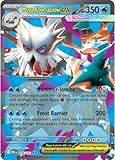
Mega Abomasnow ex is a Double Rare single from ME01: Mega Evolution, numbered 036/132, and it is a Grass-type Mega Evolution ex. It suits budget builders who want a second attacker without paying mid-range prices, and it suits players who already own the Lopunny anchor and are looking for the cheapest way to add a second threat. One card, budget tier, and it does a job that no Trainer card can do for you.
Key specs
- Product type: single card.
- Rarity: Double Rare.
- Set: ME01: Mega Evolution, card 036/132.
- Type: Grass.
- Role in a Lopunny list: secondary attacker, usually one to two copies.
- Price tier: budget.
Why a second attacker is not optional
The most common failure mode in a single-attacker deck is not a bad matchup — it is variance. If your only attacker is stuck in the bottom third of your deck, you lose to a deck you should beat. The standard fix is a secondary attacker that costs you one or two slots and does not require a second energy type to function.
The trade-off is real and worth pricing out. Adding a Grass attacker to a Colorless core means either running a second basic energy type or accepting that the backup only functions in games where you drew the right energy. In a 60-card deck, splitting energy across two types typically costs you two to four slots and adds a small amount of dead-draw risk. In a 20-card Pocket deck the same split is far more punishing — two energy types in twenty cards is a genuine consistency problem, which is why Pocket lists usually prefer a Colorless backup over a Grass one.
Pros
- Budget tier — the cheapest second attacker in the Mega Evolution era.
- One or two copies is enough; it does not need a full line investment.
- Double Rare rarity means it is not a chase card with a chase price.
- Solves the “attacker stuck in deck” problem that loses otherwise winnable games.
- From ME01: Mega Evolution, so it shares an era with the rest of your deck.
Cons
- Grass typing forces an energy decision that a Colorless backup would not.
- It is a backup, not a plan — building the deck around it is a mistake.
- Single card, no accessories, no deck.
- In Pocket’s 20-card format, the second energy type is often too costly to justify.
How it compares
Against the Mega Heracross ex 004/094 single, the choice is nearly a coin flip and comes down to your energy base. Both are Grass-type budget Double Rares that fill the secondary attacker slot. Heracross comes from ME02: Phantasmal Flames, the same set as Mega Lopunny ex, so buying them together is a single-seller order. Abomasnow comes from ME01: Mega Evolution. If you are already ordering from Phantasmal Flames, take Heracross. If your local supply of ME02 is thin, take Abomasnow. Neither is a mistake; running both is a mistake, because two secondary attackers in a single-attacker deck is how you end up with a hand full of cards you cannot use.
7. MEGA Starter Set Mega Gengar ex (Japanese) – Best for import collectors and premium deck core

This is the Japanese-language MEGA Starter Set built around Mega Gengar ex. It suits collectors who want the Japanese print run, players who follow the Japanese release schedule and want cards months before they appear in English product, and anyone who wants a premium complete deck core in one purchase. Gengar sits in the Psychic type in the TCG, and starter sets of this kind are designed as complete, playable decks rather than partial collections.
Key specs
- Format: Japanese starter set — a complete deck product.
- Archetype: Mega Gengar ex core, Psychic type.
- Contents: full deck plus accessories, as these starter sets normally ship.
- Language: Japanese. Important caveat below.
- Tournament legality: Japanese-language cards are not legal for English-language organised play in most regions. Check your region’s rules before buying for competition.
- Price tier: premium.
Why it earns a slot
Two audiences get real value here. The first is collectors. Japanese starter sets have distinct card stock, distinct backs and a print run that does not repeat in English, and the Mega Gengar ex line is one of the more visually striking Mega Evolution designs. For a collection, this is a genuine piece rather than a bulk purchase.
The second audience is players who want to study the archetype before committing. Japanese product typically leads the English release, so a Japanese starter set lets you see how the designers intended a Mega Evolution deck to be built — the energy counts, the Trainer ratios, the evolution line depth — before you spend English-product money. That is information you cannot get from a card database, because a database shows you the cards and not the assembled deck.
Pros
- Complete playable deck core in one premium purchase.
- Japanese print run with distinct card stock and art treatment.
- Releases ahead of English product in most cases, giving you early insight into the archetype.
- Accessories included
Affiliate disclosure. As an Amazon Associate we earn from qualifying purchases at no extra cost to you. Prices accurate as of the date shown.Best Pokémon TCG Pocket Mega Lopunny ex DeckCheck price on Amazon