Key takeaways
- Format: classic Go Fish card deck in a compact box
- Players: the standard 2–6 player range the format supports
- Session length: roughly 5–15 minutes per round
- Setup: none — shuffle and deal
- Consumables: none; no batteries, no app, no screen
- Storage footprint: pocket or glovebox sized
If you want the closest thing to Fish It’s loop without grinding the same map, the best overall pick in this roundup is the Roblox Gold Collection Neverland Lagoon: Crown Collector Mermaid figure — it is the only physical pick here that feeds an exclusive virtual item straight back into your Roblox account, which makes it the strongest bridge between a fishing-game obsession and something you can actually hold. For pure family play at the lowest commitment, Chuckle & Roar Go Fish Feeding Frenzy is the budget answer; for a loud, physical showpiece that scales to a party, the Goliath Giant Shark Bite is the premium pick.
Everything below is organized around the same six questions that decide whether a fishing game — digital or tabletop — stays fun past week one: how deep the fishing itself goes, how progression is gated, whether trading exists, how multiplayer actually works, how often content refreshes, and how hard the free-to-play balance pushes you toward spending. Scan the comparison table for a fast shortlist, read the product sections for detail, and jump to How to Choose if you are still deciding between chasing a new Roblox experience and buying something the whole family can play tonight.
Top 3 Picks
Best overall: Roblox Gold Collection Neverland Lagoon — Crown Collector Mermaid
This single-figure pack is the pick that satisfies both halves of the search: it is a real Roblox collectible, and it ships with an exclusive virtual item code that redeems on your account, so the purchase has an in-game payoff rather than sitting on a shelf. It suits players who already like the collection side of fishing games — the part where you chase a rare catch and want to show it off — and it works as a gift for a Roblox player whose favorite loop is cast, collect, repeat.
Best budget: Chuckle & Roar Go Fish Feeding Frenzy
A themed Go Fish variant that costs roughly what a single in-game cosmetic does, plays in ten minutes, and needs no batteries, no screen and no setup. It suits households with mixed ages where someone is too young for a full Roblox progression grind, and it is the cheapest way to test whether the family actually enjoys a fishing-themed tabletop game before buying a bigger set.
Best premium: Goliath Giant Shark Bite
The most expensive pick here buys a physical spectacle rather than content: players use tongs to snag fish from a shark’s mouth, and the shark launches nearly three feet when the wrong fish is pulled. It suits party hosts and gift-givers who want one loud, repeatable centerpiece for kids in the preschool-to-early-elementary bracket, and it is the natural upgrade from a simple card deck when a group outgrows turn-taking.
Quick Comparison
| Product | Best for | Key specs | Price tier |
|---|---|---|---|
| Continuum Games Go Fish Classic Card Game | Screen-free purists, travel | Classic Go Fish deck, compact box, 2–6 players, ages 4+ | Budget |
| Aurora Big Fish Game | Gifting a soft, screen-free toy | Plush-format big fish, soft fabric, surface-washable, hand-held to huggable scale | Mid-range |
| Pressman Let’s Go Fishin’ Combo | Young kids who need a moving target | Battery-powered rotating pond, mini rods with hooks, bonus Go Fish deck, up to 4 players | Budget |
| HOOKED! Ultimate Fishing Card Game | Families who want rules variety | Card deck, 3 rule sets, real fish facts on cards, 2–6 players | Mid-range |
| IPIDIPI TOYS Fishing Game | Big groups, classrooms, parties | 45 magnetic fish, 8 poles, 8-player capacity, storage-friendly tub | Premium |
| Chuckle & Roar Go Fish Feeding Frenzy | Cheap family filler | Illustrated Go Fish variant, compact box, 2–6 players, ages 4+ | Budget |
| Roblox Gold Collection Neverland Lagoon Mermaid | Roblox collectors who want in-game value | Single collector figure, display base, exclusive virtual item code | Mid-range |
| Goliath Giant Shark Bite | Party showpiece, mixed ages | Shark unit jumps nearly 3 feet, tongs + fish pieces, 2–4 players | Premium |
| Roblox Simoon68: Golden God Figure | Display plus code collectors | 3.5-inch figure, exclusive virtual item code, shelf-ready | Premium |
How We Chose
This list was assembled from what the products themselves state, what the brands are known for, and how each item maps onto the six criteria that actually matter to someone searching for a Fish It alternative: fishing depth, progression, trading, multiplayer, update cadence and free-to-play balance. For the tabletop picks, we translated those criteria into physical equivalents — player count, session length, setup time, footprint, durability and whether the game needs consumables such as batteries or replacement pieces. For the Roblox tie-in figures, the deciding factor was whether the pack delivers something the account keeps, which is why a code-bearing figure outranks a plain collectible here.
We did not test, benchmark or handle these products; everything below is based on published product information, category norms and brand reputation. Where an exact specification is not published, we describe the item by spec class rather than inventing a number. We also weighted the upgrade path: a budget card deck that leads naturally into a larger set scores better than a one-off novelty, and a premium game only earns its tier if it supports repeat play with more than two people. Finally, we excluded anything that requires a paid subscription to be enjoyable on day one, because that is the single fastest way a fishing game stops being fun for a casual player.
1. Continuum Games Go Fish Classic Card Game — Best for Screen-Free Purists
As an Amazon Associate we earn from qualifying purchases at no extra cost to you.
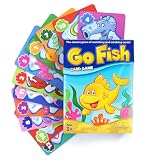
This is the plain-vanilla option, and that is precisely the point. Continuum Games publishes a straightforward Go Fish deck that plays by the rules most adults already know, so nobody has to read a rulebook before the first hand. It suits families who want a five-minute filler between other activities, grandparents who want something in a bag for a restaurant wait, and anyone trying to move a Roblox-obsessed kid toward a screen-free half hour without a fight.
Who it suits: households with kids roughly four and up, travel bags, classroom reward bins, and mixed-age groups where the youngest player needs to be able to win sometimes. It also suits the specific reader who searched for a fishing game, realized the big digital titles demand hours of grinding, and wants the theme without the time commitment.
Key specs at a glance:
- Format: classic Go Fish card deck in a compact box
- Players: the standard 2–6 player range the format supports
- Session length: roughly 5–15 minutes per round
- Setup: none — shuffle and deal
- Consumables: none; no batteries, no app, no screen
- Storage footprint: pocket or glovebox sized
Strengths. The rules are universally understood, which matters more than it sounds: the fastest way a family game night dies is a ten-minute teach. Because there is no electronic component, there is nothing to break, nothing to run out of power, and nothing to update. The deck also doubles as a teaching tool for turn-taking, hand-holding etiquette and simple set-matching, which is the same cognitive loop a fishing game trains when you learn which spots produce which catches. Cards in this class are typically coated stock, so a spilled drink is survivable if you wipe quickly, and a lost card is annoying but rarely fatal because the game still functions with a slightly short deck.
Pros
- Zero setup, zero batteries, zero learning curve
- Cheapest way to test whether the family likes fishing-themed tabletop play
- Genuinely portable — fits in a coat pocket or backpack
- Works with any number of players from two to a small group
Cons
- No theme depth: there is no progression, no collection, no unlock
- Adults who have played it a hundred times may find the loop thin
- Cards are the only component, so wear shows on the most-used ranks first
- Nothing here rewards a player who wants rarity or trading
How it compares. Against the Chuckle & Roar Go Fish Feeding Frenzy, this is the more traditional and slightly more austere pick — same rules skeleton, less illustration and theme. Against HOOKED!, it is the simpler game with no fish-fact layer and no alternate rule sets. If your group wants the theme to do some work, pay the small step up to HOOKED!; if you want the cheapest possible deck that everyone already knows how to play, stay here.
2. Aurora Big Fish Game — Best for Gifting to Younger Kids

Aurora is a plush specialist, and this entry is best understood as a soft, screen-free big-fish play item rather than a rules-driven game. It suits the youngest players in the household — the ones who will chew the corner of a card deck or lose the pieces of a magnetic set within a week — and it suits gift-givers looking for something that reads as a proper present rather than a stocking filler.
Who it suits: toddlers and preschoolers, kids who use toys for comfort as much as for play, parents who want a Roblox-adjacent fishing theme without a screen, and anyone buying a birthday gift for a child whose age you only roughly know. It is also a reasonable pick for a child who likes the idea of fishing games but is not yet ready for turn-taking rules.
Key specs at a glance:
- Format: plush-format big fish toy, hand-held to huggable scale
- Materials: soft plush fabric with stitched or embroidered detail rather than loose small parts
- Care: surface washable in the typical plush manner; spot clean and air dry
- Players: not applicable — this is open-ended play, not a scored game
- Consumables: none
- Durability focus: seams and surface pile are what wear first
Strengths. The big advantage is that a plush toy has no failure mode that ends the activity. A card game stops when the deck is lost; a battery toy stops when the motor dies; a plush fish keeps working. That makes it the most forgiving gift on this list for a household where toys are shared, dropped and generally abused. Soft goods also travel well — it squashes into a bag, survives a car trip, and does not rattle or need a flat surface. For a child who is watching an older sibling play a Roblox fishing game, a plush version gives them something thematically matching to hold, which is often enough to defuse the “why can’t I play too” problem.
Pros
- No rules, no setup and no way to lose the game by losing a piece
- Appropriate for the youngest age bracket, where card games are a choking and tearing hazard
- Reads as a substantial gift rather than an accessory
- Soft goods survive drops, squashing and travel far better than rigid components
Cons
- No gameplay loop — a child who wants rules and scoring will be bored quickly
- Fabric picks up stains, pet hair and dust; cleaning is surface-only
- Cannot be handed down as easily as a deck once the pile flattens
- Older kids, roughly seven and up, will likely see it as too young
How it compares. Against the Continuum Games deck, this is the opposite trade: no rules and no portability problem, but also no structure. Against the IPIDIPI magnetic set, it is far safer for a toddler but offers none of the group-play capacity. The honest split is age — under four, buy the plush; four and up, buy a game with pieces.
3. Pressman Let’s Go Fishin’ Combo Game — Best for Kids Who Need a Moving Target
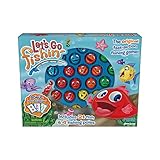
Let’s Go Fishin’ is the classic battery-powered fishing game: a rotating pond where the fish open and close their mouths while players try to hook one with a mini rod. This combo version adds a Go Fish card deck, which effectively gives you two games in one box and two different energy levels — the loud one and the quiet one.
Who it suits: kids roughly four to eight who need a physical challenge rather than a thinking one, families who want a game that plays well with a single child, and parents who want a screen-free activity that still feels like a video game because something is moving. The bonus card deck makes it a decent two-kid solution when one wants action and the other wants rules.
Key specs at a glance:
- Core component: battery-powered rotating pond with fish that open and close
- Tools: mini fishing rods with hooks, sized for small hands
- Player count: the classic format seats up to four, and plays fine solo
- Bonus component: a Go Fish card deck included in the box
- Consumables: batteries — the main ownership cost over time
- Setup: insert batteries, place fish, switch on
Strengths. The rotating pond solves a problem that static fishing toys never do: it adds a timing element, so catching a fish is a skill rather than a grab. That is the same satisfaction loop a Roblox fishing game delivers when a rare catch finally bites — a small, repeatable, physical version of it. The bundled card deck means the box has a second life after the motor novelty fades, which is a real consideration because motorised toys tend to get shelved once the trick is learned. Because the game supports solo play, it also works as a quiet-time activity for an only child, which is not true of most tabletop picks here.
Pros
- Two games in one box — a motorised action game plus a card deck
- Timing-based challenge keeps it interesting longer than a static toy
- Plays solo, which suits only children and quiet afternoons
- Small rods are genuinely sized for preschool hands
Cons
- Battery dependency: performance drops noticeably as cells weaken
- Small plastic fish and hooks are easy to lose and a hazard for kids under three
- Motor and moving parts are the first things to fail
- The rotating mechanism makes noise, which rules out quiet settings
How it compares. Against the IPIDIPI magnetic set, this is the cheaper, lower-capacity option: fewer fish, fewer rods, and batteries instead of magnets. Against the Goliath Shark Bite, it is the gentler pick — no jump scare, no three-foot launch, and a much smaller footprint on the table.
4. HOOKED! The Ultimate Fishing Card Game — Best for Rules Variety and Trivia

HOOKED! takes the Go Fish skeleton and adds two things the classic does not have: multiple ways to play and real fish facts printed on the cards. It suits families who have worn out a plain deck and want the same five-minute format with a bit more to talk about, and it suits the parent who likes sneaking a little learning into game night.
Who it suits: kids roughly six and up who can read or recognize fish names, mixed-age tables where trivia gives younger players a way to contribute, and households that already own a standard Go Fish deck and want an upgrade rather than a duplicate. It also suits teachers and camp leaders who want a single deck that supports more than one activity.
Key specs at a glance:
- Format: illustrated card deck built around fishing
- Rule sets: three ways to play, so the same deck covers different moods and ages
- Educational layer: real fish facts on the cards
- Players: the standard 2–6 range
- Session length: roughly 10–20 minutes per round, longer with trivia
- Consumables: none
Strengths. Three rule sets from one deck is genuinely useful, because it means the game can scale with the table. A younger group plays the simplest version; older kids can move to the variant with more interaction; adults can play the version that rewards memory. The fish-fact layer is the differentiator that a plain deck cannot match — it turns dead time between turns into conversation, which is exactly the gap that makes kids reach for a tablet. Card quality in this tier is typically sturdy coated stock, and because the deck is the entire product, replacing it is cheap if it gets destroyed.
Pros
- Three rule sets mean the deck stays in rotation longer
- Fish facts add a talking point and a light learning angle
- No batteries, no setup, fully portable
- Cheaper than any of the motorised or multi-piece sets here
Cons
- Still a card game at heart — no collection or progression to chase
- The trivia can slow play if one player insists on reading every card
- Requires reading ability or an adult reading aloud
- Not a substitute for a group activity that keeps eight hands busy
How it compares. Against the Continuum Games deck, HOOKED! is the upgrade: same core rules, more variants, more theme. Against Chuckle & Roar’s Feeding Frenzy, it is the more content-rich pick, while Feeding Frenzy is the cheaper and more visual one for pre-readers. If your table is six and up, HOOKED! wins; if it is mostly four-year-olds, the illustrated variant is the better fit.
5. IPIDIPI TOYS Fishing Game — Best for Big Groups and Classrooms

This is the capacity champion of the roundup: 45 fish and 8 poles in a single set, all magnetic. That ratio changes what the product is for — it stops being a two-player tabletop game and becomes a group activity that can occupy a party, a classroom rotation or a large family at once.
Who it suits: teachers and camp counselors who need an activity for a dozen hands, parents hosting a birthday party, and large families where the usual “only four can play” limit causes arguments. It also suits anyone who wants a fishing game that scales down gracefully — with eight poles you can run two-player duels, four-player teams or a free-for-all.
Key specs at a glance:
- Fish count: 45 magnetic fish
- Poles: 8, each with a magnetic tip
- Player capacity: up to 8 simultaneous players
- Catch mechanism: magnets — no hooks, no timing window
- Storage: typically a tub or tray, which matters at this piece count
- Consumables: none
Strengths. The headcount is the whole argument. Most fishing toys seat four; this one seats eight, and 45 fish means a round does not end in ninety seconds because the pond is empty. Magnets also make it forgiving for younger players, who can succeed without the fine motor control that hook-based games demand. In a classroom or party setting that is the difference between a game that runs for twenty minutes and one that collapses into frustration in three. The set is also self-contained: no batteries to fail, no electronic parts to break, and a high piece count that makes it feel substantial for the price tier.
Pros
- Eight-player capacity is unmatched by anything else on this list
- 45 fish keeps rounds going and supports scoring variants you invent yourself
- Magnetic catching is easier for small hands than hooking
- No batteries, no motors, nothing electronic to fail
Cons
- Highest piece count means the highest risk of losing fish over time
- Magnets weaken the skill element — it is closer to grabbing than fishing
- Needs a decent table or floor area to spread out
- Cleanup takes longer than a card deck by an order of magnitude
How it compares. Against Pressman’s Let’s Go Fishin’, this is the bigger, quieter, battery-free alternative with double the player capacity and no motor to wear out. Against Goliath’s Shark Bite, it is the calmer group option: less spectacle, far more simultaneous players, and no jump scare for sensitive kids.
6. Chuckle & Roar Go Fish Feeding Frenzy — Best Budget Family Filler

Feeding Frenzy is a themed Go Fish variant with heavy illustration and a “feeding frenzy” hook that gives the classic format a bit of personality. It sits in the same budget tier as the plainest deck here, but it is aimed squarely at families with younger children who respond to pictures more than to suits and ranks.
Who it suits: families with kids around four to seven, grandparents who want a game that does not need explaining twice, and anyone building a small stack of cheap games for a playroom. It is also a sensible first card game for a child graduating from matching toys to actual rules.
Key specs at a glance:
- Format: illustrated Go Fish variant deck
- Players: standard 2–6 range
- Session length: roughly 5–15 minutes
- Reading requirement: minimal — the art carries the recognition
- Setup: shuffle and deal
- Consumables: none
Strengths. The artwork does the teaching. In a standard deck, a four-year-old has to learn that a “7” is a set; in an illustrated variant, they match pictures, which is a skill they already have. That shortens the ramp from “watching” to “playing” considerably, and it is the single biggest reason a themed deck beats a plain one at this age. It is also the cheapest possible entry point on this list, which makes it a low-risk way to find out whether your family will actually sit through tabletop rounds before you spend mid-range or premium money on a bigger set.
Pros
- Illustration-led recognition works for pre-readers
- Lowest-risk price tier — an easy add-on purchase
- Compact, portable and durable enough for a bag
- Teaches turn-taking and set-matching without a screen
Cons
- Rules are thin — adults may find it repetitive quickly
- No alternate modes or extra content compared with HOOKED!
- Cards are the only component, so wear and loss are the main long-term risks
- Older kids, eight and up, will likely outgrow it fast
How it compares. Against Continuum’s classic deck, Feeding Frenzy is the friendlier one for young kids and the less satisfying one for adults. Against HOOKED!, it is cheaper and more visual but has fewer rule sets and no trivia layer. The pick comes down to reading level: pre-readers take Feeding Frenzy, readers take HOOKED!.
7. Roblox Gold Collection Neverland Lagoon: Crown Collector Mermaid — Best Overall Roblox Tie-In

This is the pick that actually answers the search. It is a single-figure Roblox collectible from the Gold Collection line, packaged with an exclusive virtual item code, which means the box delivers both a display piece and an in-game unlock. For a player who has been grinding a fishing experience for a rare cosmetic, buying the code outright is a legitimate shortcut — and it is the closest a physical product gets to the progression loop of a Roblox fishing game.
Who it suits: Roblox players who collect figures or chase exclusive virtual items, parents looking for a gift that will not be forgotten in a week, and fans of the Neverland Lagoon experience who want the tie-in merchandise that matches. It also suits the reader who likes fishing games specifically for the collection and trading side rather than the casting minigame.
Key specs at a glance:
- Format: single collector figure pack with display base
- Digital component: exclusive virtual item code, single-use, redeemable on the Roblox promo code page
- Theme: Neverland Lagoon, mermaid/crown collector styling
- Line: Roblox Gold Collection — a premium-adjacent collector series
- Consumables: none; the code is the one-time element
- Display: shelf-ready, roughly palm-scale
Strengths. The dual value is the point. A plain figure is decoration; a figure with a code is decoration plus an account upgrade, and the code is what makes the mid-range tier defensible. Codes in this category are single-use and tied to one account, so the value is realized immediately on redemption rather than sitting unused. The figure itself is a display object — it holds its value as shelf decor long after the code is spent, which is more than can be said for most in-game purchases. For a child who has been asking for Robux, this is an easier “yes” because the money buys something physical as well as digital.
Pros
- Ships an exclusive virtual item code — real in-game value, not just decor
- Physical figure remains a display piece after the code is redeemed
- Makes a strong, obviously Roblox-branded gift
- No ongoing cost, no subscription, no batteries
Cons
- The code is single-use — buy it new, and check it is unredeemed before gifting
- Virtual items are typically tied to the specific experience, so value depends on whether the recipient plays it
- Not a game itself: nothing here teaches casting, trading or progression
- Collector figures are display objects and can be damaged by rough play
How it compares. Against the Simoon68 Golden God figure, this is the more thematically on-point pick for a fishing-game fan — mermaid and lagoon styling versus a generic golden figure — while Simoon68 is the larger display piece at 3.5 inches. Against every tabletop option here, it is the only one that touches the actual Roblox account.
8. Goliath Giant Shark Bite — Best Premium Party Showpiece

Shark Bite is the loudest product on this list. Players use tongs to pull fish from a shark’s mouth, and when the wrong fish goes, the shark launches — the packaging claims it jumps nearly three feet. It is a reaction game rather than a strategy game, and that is exactly why it works at a party.
Who it suits: party hosts, grandparents buying a single memorable gift, and families with kids in the preschool-to-early-elementary bracket who need a game that generates noise and laughter rather than quiet concentration. It also suits mixed-age groups because the rules take ten seconds to explain and younger players are not disadvantaged by reading or memory.
Key specs at a glance:
- Core unit: shark head with a spring-loaded launch mechanism
- Launch height: nearly 3 feet, per the product description
- Tools: tongs for grabbing fish from the mouth
- Players: the small-group range this format supports, typically 2–4
- Age bracket: aimed at younger kids, generally the 4+ range
- Consumables: none; mechanical rather than battery-powered
Strengths. The launch is the product. A three-foot jump creates the kind of physical surprise that keeps a group replaying a ten-second turn, and it does so without a screen, a battery or an update. Because the mechanism is spring-loaded rather than motorised, there are fewer electronic failure points than a rotating-pond game — the wear items are the latch and the spring, not a motor. Tongs also add a fine-motor challenge that scales with age: younger kids grab clumsily and laugh, older kids get competitive about it. The footprint is large but self-contained, and setup is essentially “put the fish in.”
Pros
- Highest laugh-per-minute of anything on this list
- Mechanical, so no batteries to replace
- Ten-second rules — playable by mixed ages immediately
- Makes an obvious, impressive gift
Cons
- Premium price for a game with a short strategic lifespan
- Launch mechanism is the failure point; repeated hard use wears the latch
- Small fish pieces are a choking hazard for kids under three
- Takes real table or floor space and is not remotely portable
How it compares. Against the IPIDIPI magnetic set, Shark Bite is the spectacle option with a fraction of the player capacity — eight versus a small group — and far more noise. Against Pressman’s Let’s Go Fishin’, it is the same idea at a much larger scale and a higher price, trading battery power for a spring.
9. Roblox Simoon68: Golden God Figure — Best Premium Collector Display

This is the display-first option among the Roblox picks: a 3.5-inch Golden God figure with an exclusive virtual item code. Where the Neverland Lagoon mermaid leans into a specific experience’s theme, this one is a larger, shelf-oriented collector piece with the same digital hook.
Who it suits: collectors who display figures rather than play with them, Roblox players who want a code plus a substantial-looking object, and gift-givers who want something that reads as premium on a shelf. It also suits the player who already owns the thematic tie-ins and wants a centerpiece for the collection.
Key specs at a glance:
- Figure size: 3.5 inches — the largest figure on this list
- Digital component: exclusive virtual item code, single-use
- Finish: golden collector styling, display-oriented
- Display: freestanding, shelf-ready
- Consumables: none
- Durability focus: paint finish and any protruding details wear first
Strengths. At 3.5 inches this is a genuine display piece rather than a small accessory, and size matters for perceived gift value — it is the difference between something that disappears into a toy bin and something that gets a spot on a desk. The code adds the same account-level payoff as the mermaid pack, so you are not choosing between physical and digital value; you get both. The golden finish photographs well and holds up as decor even for a player who eventually stops playing the associated experience, which is a longer useful life than most Roblox purchases.
Pros
- Largest figure here at 3.5 inches — reads as a real collectible
- Includes an exclusive virtual item code for in-account value
- Display-oriented, so it stays useful after the code is spent
- No batteries, no setup, no ongoing cost
Cons
- Premium tier for a single figure and one code
- Golden finishes show fingerprints and scuffs more than matte ones
- Codes are single-use and tied to one account
- Protruding details are the first thing to snap if it is played with rather than displayed
How it compares. Against the Neverland Lagoon mermaid, this is the bigger, more neutral display piece, while the mermaid is the more thematically specific one for a fishing-game fan. If the recipient plays a lagoon- or mermaid-themed experience, buy the mermaid; if they just want the biggest shelf presence and a code, buy this.
How to Choose
Two very different products sit under the same search phrase, and the first job is deciding which one you actually want: a Roblox experience with a fishing loop, or a physical game that scratches the same itch. The criteria below work for both, because the questions that make a fishing game good are the same whether the fish are polygons or plastic.
Start with fishing depth, not with graphics
Depth is the number of meaningful decisions per cast. A shallow loop is cast, wait, reel, repeat — fine for ten minutes, thin after ten hours. A deep loop layers on bait choice, depth or location selection, timing windows, weather or time-of-day modifiers, and rarity tables that make certain catches genuinely unlikely. When you evaluate a candidate game, ask how many of those layers exist. If the answer is one or two, expect to move on within a week. If it is four or more, the game has enough texture to survive a content drought.
Progression: what actually gates your next upgrade
Progression is where most fishing games either hook players or lose them. The healthy pattern is a short early ramp — your first rod upgrade within an hour or two of play — followed by longer, clearly signposted goals. The unhealthy pattern is a wall: a single item that costs more than everything before it combined, with no intermediate steps. Before committing, look at what the next tier of gear requires and whether there is more than one route to it. Games with two or three parallel routes (currency, quests, trading) are far more forgiving than games with one.
Trading: the economy test
Trading is the single biggest predictor of long-term engagement in collection-style fishing games, and it is also the biggest source of frustration. A healthy trading system has a visible value reference — a market, a rarity tier list, or a widely agreed currency — so players can negotiate without being scammed. A weak system is direct player-to-player with no reference at all, which tends to concentrate value in the hands of people who already know the prices. If trading matters to you, check whether the game has an auction or market board before you invest time.
Multiplayer: co-op versus competitive
Decide whether you want company or competition. Co-op fishing — shared boats, shared loot pools, group bosses — is more forgiving and better for playing with friends of different skill levels. Competitive modes, leaderboards and timed events suit players who enjoy chasing ranks. The practical test is whether progress is shared or individual: if a friend’s better rod makes your session faster, that is co-op design. If it makes your session pointless by comparison, that is competitive design. For families, co-op wins almost every time.
Update frequency: read the patch history, not the promises
Content cadence is easy to check and hard to fake. Look at the last five updates and the gaps between them. A healthy cadence is roughly weekly to biweekly for live events and monthly to quarterly for major content. If the most recent update is several months old and the previous one was too, the game is in maintenance mode regardless of what the roadmap says. For physical games, the equivalent question is whether the publisher supports the line with expansions — a card game with one edition and no follow-up has a fixed shelf life.
Free-to-play balance: find the wall before you hit it
Every free game has a wall where progress slows unless you pay. The question is where that wall sits and how tall it is. A fair design lets a free player reach most content with patience, and sells convenience — faster reeling, extra storage, cosmetic skins. A hostile design gates core progression, such as the best rods or the trading feature itself, behind a purchase. The cheapest way to check is to read what the top-tier items require and whether any of them are purchase-only. If the best gear is purchasable, the game is selling power; if it is earnable and the store sells cosmetics, it is selling time.
Tabletop equivalents: the same six criteria, translated
Physical fishing games map onto the same framework with different names. Fishing depth becomes decision density — how much choice does a turn contain beyond luck? Progression becomes replayability — does the game get better on the fifth play? Trading becomes player interaction. Multiplayer becomes the player count printed on the box. Update frequency becomes whether the publisher supports the line. Free-to-play balance becomes the real ownership cost: batteries, lost pieces, replacement decks. Two physical criteria have no digital equivalent and matter a lot. The first is footprint: the IPIDIPI set with 45 fish and 8 poles needs table space, while a card deck needs a corner. The second is consumables: a battery-powered pond has a running cost and a motor that will eventually fail, whereas a plush toy has neither.
A worked cost-per-session calculation
Tabletop games are usually far cheaper per hour than they look, and the math is worth doing before you buy. Take a budget-tier card game in the typical $8–15 market band, played twice a week for a year — roughly 100 sessions. That is about $0.10–$0.15 per session for a family of four, or under four cents per person per session. Move up to a premium mechanical game in the $25–40 band and play it 20 times, which is realistic for a novelty-driven party game, and you land at $1.25–$2.00 per session — still cheap, but five to fifteen times the card game’s rate. Now compare a Roblox virtual item: a single cosmetic purchase can cost more than the entire budget card game and delivers value only while you keep playing that experience. The practical rule is that a physical game’s value depends on repeat plays, so buy premium only when you are confident the group will come back to it more than twenty times.
Decision matrix: match the situation to the pick
| Your situation | Best pick | Why |
|---|---|---|
| Roblox player wants in-game value plus a physical gift | Roblox Gold Collection Neverland Lagoon Mermaid | Exclusive virtual item code plus a display figure, mid-range tier |
| Buying for a child under four | Aurora Big Fish Game | Soft plush, no small parts, no rules to learn |
| Hosting a party with 8 kids | IPIDIPI TOYS Fishing Game | 45 fish and 8 poles keep a large group busy at once |
| Budget under roughly $15, mixed ages | Chuckle & Roar Go Fish Feeding Frenzy | Illustrated deck works for pre-readers, lowest tier |
| Family of readers, wants variety | HOOKED! Ultimate Fishing Card Game | Three rule sets plus fish facts stretch the same deck |
| Single child, needs a solo activity | Pressman Let’s Go Fishin’ Combo | Plays solo and includes a bonus card deck |
| Wants one loud showpiece gift | Goliath Giant Shark Bite | Nearly 3-foot launch, ten-second rules |
| Collector wants the biggest display piece | Roblox Simoon68 Golden God Figure | 3.5-inch figure plus exclusive virtual item code |
| Needs something pocket-sized for travel | Continuum Games Go Fish Classic | Compact deck, no setup, no batteries |
What wears out first, and how to avoid it
Ownership reality matters more than the unboxing. On card decks, the most-played ranks wear and crease first, and a marked card effectively ends fair play — sleeve the deck or keep it out of pockets. On battery-powered toys, the motor and the battery contacts are the failure points; remove cells between sessions and the toy will last years longer. On magnetic sets, the magnets themselves are fine but the fish get lost, so count them after every session and keep them in the original tub. On plush, the surface pile mats down and stains set permanently if not blotted immediately. On mechanical launch games, the latch and spring take the beating — store it unlatched and it will survive far more parties. On collector figures, paint scuffs at the extremities, so keep them on a shelf rather than in a toy bin. And on virtual item codes, the single most common mistake is buying a second-hand pack whose code has already been redeemed: verify before gifting, and redeem promptly, because codes are single-use and tied to one account