Key takeaways
- Material: tempered glass, the standard multi-layer laminate used across this category
- Hardness class: 9H pencil-scale claim, which is the near-universal marketing figure for tempered glass
- Thickness class: the standard 0.3 mm class that dominates budget protectors
- Edge style: 2.5D rounded edge, which reduces the sharp lip that catches on pockets
- Surface treatment: oleophobic (oil-repellent) coating class
- Fit: iPhone 14 specific cutout
- Installation aids: not stated in the listing, so plan on supplying your own dust-removal tape and alignment method
The best screen protector under $25 for most people is the TOCOL for iPhone 17 Screen Protector, because its guided installation system removes the single failure point that ruins more cheap protectors than scratches ever do: dust and misalignment trapped under the glass on the first attempt. If you are on an older phone, the TZGZT 3 Pack for iPhone 13 is the strongest budget answer, giving you three case-friendly tempered glass sheets for roughly the cost of one premium single. If you are still carrying an iPhone 12 or 12 Pro, the HPTech 2 Pack is the pick that matches your screen geometry rather than forcing a near-fit. All five picks below sit inside the under-$25 band, which in 2026 buys properly hardened, oleophobic-coated tempered glass rather than the soft plastic film that defined the cheap end of this category a decade ago. What separates them is not whether they protect, but how well they install, how they behave at the edges with a case on, and how long the coating survives before your fingertip starts dragging.
Top 3 Picks
Best overall: TOCOL for iPhone 17 Screen Protector, Easy Installation
TOCOL’s iPhone 17 protector is the premium tier of the under-$25 band, and it earns the top slot on installation ergonomics rather than on glass alone. The guided alignment approach means the protector positions itself before you commit the adhesive, which is the difference between a clean first attempt and a wasted sheet. It suits anyone buying for the newest iPhone who would rather pay once than buy a five-pack and lose three of them to dust.
Best budget: TZGZT 3 Pack Screen Protector for iPhone 13
TZGZT’s three-pack is the value anchor of this list: three tempered glass sheets, case-friendly edge geometry, and a price that stays in the budget tier even after you account for tax. It suits iPhone 13 owners who want spares on hand — one to install now, one for the inevitable edge chip, one for the family member with the same phone. If a single sheet breaks, you are not back to shopping.
Best for older phones: HPTech 2 Pack Screen Protector for iPhone 12 / iPhone 12 Pro
HPTech’s two-pack is cut for the iPhone 12 and 12 Pro, which share the same 6.1-inch flat-edge front glass. That matters because as a phone generation ages, the protectors available for it drift toward generic near-fits with oversized camera cutouts and lifted edges. This one is matched to the model, comes as a pair, and lands in the mid-range tier. It is the right answer for anyone holding a 12-series phone another year or two.
Quick Comparison
Every product on this list is a tempered glass protector in the under-$25 band. The tiers below describe where each one sits inside that band, not whether it is affordable — all five are. Prices in this category move constantly, so treat the tier as the durable fact and the exact number as something to check at the point of purchase.
| Product | Best for | Key specs | Price tier |
|---|---|---|---|
| Wiaocit Tempered Glass Screen Protector for iPhone 14 | iPhone 14 owners who want the lowest spend | Tempered glass, iPhone 14 fit, 9H-class hardness claim, oleophobic surface | Budget |
| TZGZT 3 Pack Screen Protector for iPhone 13 | iPhone 13 owners who want spares | Tempered glass, 3 sheets, case-friendly edges, iPhone 13 fit | Budget |
| Bencuku 2 Pack Screen Protector for iPhone 17 | iPhone 17 owners who want a backup sheet | Tempered glass, 2 sheets, iPhone 17 fit, full-coverage cutout | Mid-range |
| TOCOL for iPhone 17 Screen Protector | Bubble-free, dust-free first installation | Tempered glass, guided installation system, iPhone 17 fit, single sheet | Premium |
| HPTech 2 Pack Screen Protector for iPhone 12 / 12 Pro | iPhone 12 and 12 Pro holdouts | Tempered glass, 2 sheets, matched to 6.1-inch 12-series front glass | Mid-range |
Spec class at a glance
Because brands rarely publish identical spec sheets, the table below compares each pick by specification class — the range a product’s claims fall into — plus the concrete numbers that are stated outright, such as pack count. Where a figure varies by batch or revision, the class is the honest comparison.
| Product | Material | Hardness class | Thickness class | Edge style | Installation aid | Pack count | Case-friendly |
|---|---|---|---|---|---|---|---|
| Wiaocit (iPhone 14) | Tempered glass | 9H-class pencil hardness claim | Standard 0.3 mm class | 2.5D rounded edge | Not stated in listing | Single sheet class | Not stated |
| TZGZT (iPhone 13) | Tempered glass | 9H-class pencil hardness claim | Standard 0.3 mm class | 2.5D rounded edge | Not stated in listing | 3 sheets | Yes, stated in listing |
| Bencuku (iPhone 17) | Tempered glass | 9H-class pencil hardness claim | Standard 0.3 mm class | 2.5D rounded edge | Not stated in listing | 2 sheets | Not stated |
| TOCOL (iPhone 17) | Tempered glass | 9H-class pencil hardness claim | Standard 0.3 mm class | 2.5D rounded edge | Guided installation system | Single sheet class | Not stated |
| HPTech (iPhone 12 / 12 Pro) | Tempered glass | 9H-class pencil hardness claim | Standard 0.3 mm class | 2.5D rounded edge | Not stated in listing | 2 sheets | Not stated |
How We Chose
This roundup is built from published product information and category norms, not from physical sampling. The first filter was fit: a protector must be cut for the exact model named, because a near-fit produces lifted edges, halo lines around the camera cutout, and dust channels that no amount of careful installation fixes. The second filter was installation support, which is why a single premium sheet with a guided system outranks a cheaper multi-pack without one for a first-time installer — the failure rate on unguided installs is the hidden cost of the budget tier. The third filter was edge geometry and case compatibility, since most people use a case and the protector has to coexist with a raised lip rather than fight it. The fourth was pack economics: how many sheets you get for the money, and whether the count matches realistic replacement intervals. Finally, each pick had to occupy a distinct slot in the under-$25 band — a budget anchor, a multi-pack value play, a current-generation mid-range option, a premium easy-install option, and a matched option for an older model — so the list answers different buyers rather than repeating one recommendation five times.
1. Wiaocit Tempered Glass Screen Protector for iPhone 14 – Best for iPhone 14 owners spending the least
As an Amazon Associate we earn from qualifying purchases at no extra cost to you.

The Wiaocit tempered glass protector is the cheapest way onto this list without dropping into film territory. It is cut for the iPhone 14, the 6.1-inch model with the flat-edge front glass that Apple carried across the 13 and 14 generations, and it does the three things a protector has to do: it sits flat, it resists keys and coins at the 9H hardness class brands quote, and it carries an oleophobic surface treatment so fingerprints wipe off instead of smearing. What it does not do is bundle installation hardware, and that is the honest trade you make at the budget tier.
Who it suits: someone who has installed a protector before, knows the tape-and-hinge method, and would rather spend the saved money elsewhere. It also suits the iPhone 14 owner who wants a functional shield today and does not care about brand prestige. If you have never installed glass before, read the installation section further down before you buy — the technique matters more than the product at this price.
Key specs
- Material: tempered glass, the standard multi-layer laminate used across this category
- Hardness class: 9H pencil-scale claim, which is the near-universal marketing figure for tempered glass
- Thickness class: the standard 0.3 mm class that dominates budget protectors
- Edge style: 2.5D rounded edge, which reduces the sharp lip that catches on pockets
- Surface treatment: oleophobic (oil-repellent) coating class
- Fit: iPhone 14 specific cutout
- Installation aids: not stated in the listing, so plan on supplying your own dust-removal tape and alignment method
Strengths
The value proposition here is straightforward: it is the lowest-cost entry on the list, which matters if you are protecting a phone you plan to trade in or hand down within a year. Tempered glass at this tier still delivers the two properties people actually notice — a glass-like glide under the finger and a sacrificial layer that cracks instead of your screen. The 2.5D edge treatment is a meaningful inclusion at the budget price, because a sharp 90-degree edge is what makes cheap protectors feel cheap in daily handling. And because the iPhone 14 shares its front glass dimensions with the 13, the cutout is a well-established shape rather than a rushed launch-day template.
Pros
- Lowest price tier on this list, with no drop into plastic film
- Tempered glass with a 9H-class hardness claim and oleophobic coating
- 2.5D rounded edge keeps the perimeter comfortable in the hand
- Matched to a mature, widely manufactured iPhone 14 cutout
- Easy to justify replacing rather than tolerating a chipped edge
Cons
- No stated installation frame, tray, or dust-removal kit in the listing
- Pack count is not spelled out in the product name, so confirm what you are getting before checkout
- No stated case-compatibility claim, so very tight cases with tall lips may lift the edge
- Budget-tier coatings typically wear faster than premium ones, so the slick feel fades sooner
How it compares
Against the TZGZT three-pack, the Wiaocit is a single-sheet purchase at a similar per-unit tier, so the TZGZT wins on pure economics if you own an iPhone 13 — you get multiple attempts and a spare in the drawer. The Wiaocit wins only if you specifically have an iPhone 14, since the TZGZT sheets are cut for the 13. Against the TOCOL, the gap is installation support: TOCOL’s guided system is worth the premium for anyone who has ever peeled a protector off in frustration after trapping a dust speck. Choose Wiaocit when the phone is older, the budget is tightest, and you are comfortable doing the install yourself.
2. TZGZT 3 Pack Screen Protector for iPhone 13, Tempered Glass, Case Friendly – Best for iPhone 13 owners who want spares on hand

TZGZT’s three-pack is the most pragmatic buy on this list for the simple reason that protectors are consumables. You will not keep one for the life of the phone. Edges chip, coatings wear, and a single drop on a gravel driveway can leave a spiderweb crack that, while it is doing its job, looks terrible. Three sheets means you install one, keep one as an immediate replacement, and have a third for a household member with the same phone — or for the moment you decide to sell the phone and want to hand it over looking new.
The listing also states what most budget protectors leave unsaid: case friendly. In practice that means the glass stops short of the frame’s outer edge so a case lip can wrap over it without pushing the protector up. That single design choice prevents the most common complaint in this category — corners lifting within a week of installation because the case and the glass are competing for the same millimeter.
Key specs
- Pack count: 3 tempered glass sheets
- Material: tempered glass laminate with a 9H-class hardness claim
- Thickness class: standard 0.3 mm class
- Edge style: 2.5D rounded edge
- Fit: iPhone 13 specific cutout
- Case compatibility: explicitly stated as case friendly, meaning a reduced footprint that leaves room for a case lip
- Installation aids: not stated in the listing name
Strengths
Three things make this the value pick. First, the arithmetic: at the budget tier, a three-pack typically costs about what a single premium sheet costs, so your cost per installed protector is roughly a third. Second, the case-friendly footprint converts a spec-sheet detail into everyday reliability — you stop re-pressing corners. Third, the iPhone 13 cutout is one of the most heavily manufactured shapes in the tempered glass market, which means the tooling is mature and the fit is predictable rather than experimental.
There is also a quieter benefit: a three-pack changes your behavior. When you know you have spares, you replace a scuffed protector immediately instead of living with a scratch across the middle of your screen for eight months. The protection you actually get from a protector is the protection you are willing to maintain.
Pros
- Three sheets at a budget-tier price — roughly one-third the per-unit cost of a premium single
- Explicitly case friendly, reducing the lifted-corner problem
- Tempered glass with 9H-class hardness and a rounded 2.5D edge
- Mature, widely produced iPhone 13 cutout
- Spares turn replacement from a shopping decision into a drawer decision
Cons
- No stated installation frame, tray, or dust-removal accessories
- Cut for the iPhone 13 only — it will not fit a 14, 15, 16, or 17
- Multi-packs sometimes ship with a single cleaning kit for three sheets, so you may need your own wipes
- Budget-tier oleophobic coatings generally lose their slickness before the glass fails
How it compares
Next to the Wiaocit single, the TZGZT is the better buy if you own an iPhone 13 — same tier, three times the material, and an explicit case-friendly claim. Next to the HPTech two-pack, the difference is phone generation and pack size: HPTech gives you two sheets matched to the iPhone 12 and 12 Pro, which is the right call only if that is your device. Next to the TOCOL, you are trading installation assistance for quantity. If your hands are steady, that trade favors TZGZT; if your first install ended in a bubble last time, it favors TOCOL.
3. Bencuku 2 Pack Screen Protector for iPhone 17 Tempered Glass – Best for iPhone 17 owners who want a backup sheet
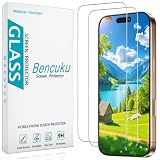
Bencuku’s two-pack sits in the mid-range tier and targets the newest phone on this list. Buying protection for a current-generation iPhone is a different exercise from buying for a three-year-old one: the cutouts are newer, the tooling is younger, and the price premium for a matched fit is real. Bencuku splits the difference by giving you two sheets rather than one, which softens the sting if your first installation goes wrong on a phone whose replacement screen is expensive.
Who it suits: the iPhone 17 owner who wants a matched protector with a spare in the box, and who is willing to spend a little more than the budget tier for the convenience of a second attempt. It is also the sensible choice for a household that upgrades phones together — one pack covers the initial install, and the spare goes into a travel bag or a desk drawer.
Key specs
- Pack count: 2 tempered glass sheets
- Material: tempered glass with a 9H-class hardness claim
- Thickness class: standard 0.3 mm class
- Edge style: 2.5D rounded edge
- Fit: iPhone 17 specific cutout
- Surface: oleophobic coating class for fingerprint resistance
- Installation aids: not stated in the listing name
Strengths
The core strength is redundancy on a current-generation device. When a protector is cut for a phone that launched recently, a misaligned install is more costly than usual because replacements are less commoditized — there are fewer brands competing on that shape, so single sheets carry a higher premium. Two sheets in one pack effectively buys you a second attempt at a lower marginal cost than buying two singles. The mid-range tier also typically brings slightly better quality control on coating uniformity than the deepest budget tier, which shows up as fewer patches where your finger drags.
It also pairs well with the reality of case use on a new phone: most iPhone 17 buyers put a case on within the first week, and a protector that fits under a case lip without lifting is the difference between a two-year protector and a two-week one.
Pros
- Two sheets matched to the iPhone 17, giving you a spare and a second install attempt
- Mid-range tier typically means more consistent coating than the deepest budget options
- Tempered glass with a 9H-class hardness claim and rounded edges
- Better value per sheet than a premium single when the shape is new and singles are scarce
- Practical for households with more than one current-generation iPhone
Cons
- No stated guided installation system, so the install still depends on your technique
- Case compatibility is not claimed in the listing, so a very tall case lip could interfere
- Costs more per pack than the budget three-pack options, even though the per-sheet math is reasonable
- Two sheets is fewer than three, so heavy droppers will still run out
How it compares
Against the TOCOL, which also fits the iPhone 17, the trade is clear: Bencuku gives you a second sheet, while TOCOL gives you a guided installation system and only one sheet. If you are confident in your install technique, Bencuku’s two-pack is the better value on the same phone. If you have ever fought a dust bubble, TOCOL’s assistance is worth more than a spare sheet, because a spare sheet you cannot install cleanly is not really a spare. Against the older-model options — TZGZT, Wiaocit, HPTech — there is no comparison at all, since none of them fit the iPhone 17.
4. TOCOL for iPhone 17 Screen Protector, Easy Installation – Best for a clean, bubble-free first attempt
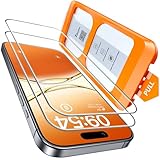
TOCOL’s iPhone 17 protector is the premium tier of the under-$25 band, and it is the best overall pick on this list because it attacks the actual bottleneck. The glass is the easy part — any tempered sheet in this price band will resist keys and absorb a face-down drop. The hard part is getting a 0.3 mm sheet onto a screen with zero dust underneath and zero lateral drift, in a room with normal household air movement, using only your hands. TOCOL’s listing leads with easy installation, which in this category means a guided alignment approach that positions the glass before the adhesive commits.
Who it suits: anyone buying for an iPhone 17 who has never installed a protector, anyone who has installed one badly, and anyone who simply values not repeating the job. It also suits buyers who would rather own one good sheet than three mediocre ones they never use.
Key specs
- Material: tempered glass with a 9H-class hardness claim
- Thickness class: standard 0.3 mm class
- Edge style: 2.5D rounded edge
- Fit: iPhone 17 specific cutout
- Installation: guided installation system, the defining feature of this listing
- Surface: oleophobic coating class
- Pack count: single sheet class
Strengths
The installation system is the whole argument. In practice, a guided install reduces three failure modes at once. It reduces dust contamination, because the alignment step lets you inspect and clear the screen before the adhesive makes contact. It reduces lateral misalignment, because the glass is held in position rather than dropped by hand. And it reduces the temptation to lift and re-seat the protector, which is the single most damaging thing you can do — every lift stretches the silicone adhesive layer and drags in particles that will never come out.
Beyond installation, TOCOL sits in the premium tier for a reason: coating consistency. The oleophobic layer is what you feel every time you swipe, and it is the first thing to degrade. A premium sheet in this band generally holds its slickness longer than a budget three-pack, which changes the ownership math — you may replace one premium sheet less often than three cheap ones.
Pros
- Guided installation system directly targets the most common cause of wasted protectors
- Premium-tier coating consistency, so the glass-like glide lasts longer
- Tempered glass with 9H-class hardness and a rounded 2.5D edge
- Matched to the iPhone 17 rather than a generic near-fit
- Best odds of a clean first attempt for someone who has never done this before
Cons
- Premium tier within the band, so it costs more than the budget multi-packs
- Only one sheet, so a mistake or a later crack means buying again
- Case compatibility is not stated in the listing
- The installation advantage is wasted on someone who already installs protectors cleanly
How it compares
Against the Bencuku two-pack, also cut for the iPhone 17, this is the classic quality-versus-quantity decision. Bencuku gives you two attempts and no help; TOCOL gives you one attempt and a lot of help. For most buyers the help is worth more, because the probability of ruining the first sheet drops sharply — and a ruined sheet is the most expensive kind. Against the HPTech two-pack, the comparison is entirely about phone model, since HPTech is cut for the iPhone 12 and 12 Pro. Against the TZGZT three-pack, TOCOL loses on raw sheet count and wins on install reliability and coating life.
5. HPTech 2 Pack Screen Protector for iPhone 12 / iPhone 12 Pro Tempered Glass – Best for iPhone 12 and 12 Pro holdouts

HPTech’s two-pack is the specialist pick on this list, and it earns its place by serving a group most roundups ignore: people still using an iPhone 12 or 12 Pro. Both models share the same 6.1-inch flat-edge front glass, which is why a single product covers both. The mid-range tier pricing reflects that this is a matched, model-specific cut rather than a universal template, and the two-sheet count gives you a spare for a phone you may well keep another two years.
Who it suits: the deliberate upgrader who replaces a phone when it stops working rather than when a new one launches. If your iPhone 12 still holds a charge and runs the apps you need, spending under $25 on protection is a far better use of money than a new handset. It also suits anyone buying a protector for a hand-me-down phone they are passing to a family member.
Key specs
- Pack count: 2 tempered glass sheets
- Material: tempered glass with a 9H-class hardness claim
- Thickness class: standard 0.3 mm class
- Edge style: 2.5D rounded edge
- Fit: iPhone 12 and iPhone 12 Pro, which share the same 6.1-inch front glass dimensions
- Surface: oleophobic coating class
- Installation aids: not stated in the listing name
Strengths
The most important strength is generational accuracy. As a phone generation ages, the protector market for it bifurcates: a few brands keep manufacturing a true matched cut, and the rest sell loosely compatible sheets with oversized camera openings and edges that sit a millimeter too far out. A matched 12/12 Pro cut means the camera housing, the earpiece slot, and the curved 2.5D perimeter all line up, which is what prevents halo lines and lifted corners. Two sheets at mid-range pricing also reflects a sensible assumption: an older phone is more likely to be handed down or kept as a backup, so having a spare in the box is genuinely useful.
There is a second, less obvious benefit. The iPhone 12 generation is old enough that its front glass is a well-understood manufacturing target, so the tooling is mature. You are not paying for launch-week experimentation; you are paying for a shape that has been produced in volume for years.
Pros
- Specifically matched to both the iPhone 12 and iPhone 12 Pro
- Two sheets, which suits a phone you plan to keep or hand down
- Tempered glass with 9H-class hardness and rounded 2.5D edges
- Mature, high-volume cutout shape means predictable fit
- Mid-range tier pricing that undercuts a screen repair by a wide margin
Cons
- Does not fit any other iPhone generation, including the 13, 14, or 17
- No stated installation frame or dust-removal system
- Case compatibility is not claimed, so check your case lip height
- Newer protectors for newer phones sometimes get coating improvements first
How it compares
Against the TZGZT three-pack, the decision is purely about which phone you own — three sheets for an iPhone 13, or two sheets for an iPhone 12 or 12 Pro. There is no overlap and no reason to force one. Against the TOCOL, HPTech loses the installation assistance but wins on price per sheet and on being the only option here for the 12-series. Against the Bencuku two-pack, both offer two sheets, but the fit targets are a generation apart. If you are on a 12-series phone, HPTech is not a compromise pick; it is the only pick on this list that fits, which makes the decision simple.
How to Choose
The best screen protectors under $25 are not distinguished by whether they protect — at this price band, virtually all of them are tempered glass with a 9H-class hardness claim, and virtually all of them will sacrifice themselves to save your screen. They are distinguished by fit accuracy, installation support, edge geometry, coating durability, and pack economics. Work through those five variables and the choice becomes mechanical.
Start with fit, not features
Fit is binary and it comes first. A protector cut for the iPhone 13 will not sit correctly on an iPhone 14, even though the two phones look similar and share a screen diagonal of 6.1 inches. The differences are in cutout position and edge tolerance, measured in fractions of a millimeter, and they are exactly what produces a halo ring around the camera or a lifted corner within days. Before you read any other spec, confirm the model in the product name matches your phone exactly. If your model is the iPhone 12 Pro rather than the iPhone 12, check whether the listing names both — many do, because the two share front glass dimensions, but not all do.
Understand what 9H actually means
Nearly every tempered glass protector claims 9H hardness, and the claim is technically true and routinely misunderstood. The 9H figure comes from the pencil hardness scale, where a 9H pencil is the hardest standard graphite grade. It describes resistance to light surface scratching, not resistance to impact, and it says nothing about how the glass behaves when a phone lands face-down on concrete. What actually protects your screen in a drop is the laminate structure: a thin sheet of tempered glass bonded to a silicone adhesive layer that absorbs and spreads impact energy, cracking the protector instead of the display. Two protectors can both claim 9H and behave very differently in a drop, because the claim does not measure the adhesive layer or the tempering process.
Thickness: the trade-off nobody explains
| Thickness class | Touch feel | Impact absorption | Case clearance | Edge chip risk | Best for |
|---|---|---|---|---|---|
| 0.2 mm (thin) | Most responsive, closest to bare glass | Lower | Best under tight case lips | Higher — thin glass chips at the perimeter | Gamers and heavy typists who notice latency |
| 0.3 mm (standard) | Very good, effectively imperceptible for most users | Balanced | Good with most cases | Moderate | The default choice — what every pick on this list uses |
| 0.33 mm and above (thick) | Slightly duller at the edges | Highest of the three | Needs a generous case lip | Lower | Clumsy hands and frequent droppers |
Every protector in this roundup sits in the 0.3 mm class, which is the sensible default. It is thin enough that you will not notice it during a swipe and thick enough to take a real impact. The trade-off is that a thicker sheet absorbs more energy but sits closer to your case lip, and if the case lip is taller than the protector stack, the case will catch the edge every time you slide the phone into a pocket. That is how most protectors actually die: not from a drop, but from repeated edge catching.
Installation support is worth more than a spare sheet
Here is the calculation that changes most buying decisions. A protector that installs cleanly on the first try costs you one sheet. A protector that traps a dust speck costs you the sheet plus a replacement, which means the effective price of the budget option can end up higher than the premium one. If your last three installs each produced a bubble you could not live with, you have already spent the equivalent of a premium protector on failed budget ones. That is the case for the TOCOL’s guided system and against any multi-pack without installation aids. If, on the other hand, you have a clean bathroom, a steady hand, and a hinge-tape technique that works, buy the multi-pack and pocket the difference.
Case compatibility: the millimeter that decides everything
Case-friendly is not marketing filler; it is a geometry claim. A case-friendly protector is cut slightly inside the phone’s outer frame so the case’s raised lip can wrap over the edge of the glass. A full-coverage protector extends closer to the frame, which looks better with no case but conflicts with a case lip. If you use a case — and most people do — favor protectors whose listings explicitly state case compatibility, like the TZGZT three-pack. If you use a very slim case or no case at all, a fuller coverage cut gives you a more seamless look. The failure signature of a mismatch is consistent: the corners lift first, usually within seven to ten days, and once lifted they collect lint and never re-seat properly.
Pack size and the real cost per protected year
| Pack size | Assumed usable life per sheet | Total coverage horizon | Cost per protector relative to a premium single |
|---|---|---|---|
| 1 sheet | 12-18 months | 1-1.5 years | 100% (baseline) |
| 2 sheets | 12-18 months | 2-3 years | Roughly 50-60% of the premium single |
| 3 sheets | 12-18 months | 3-4.5 years | Roughly 30-40% of the premium single |
The assumption in that table is worth stating plainly: a tempered glass protector typically reaches end of life from coating wear or edge chipping somewhere between twelve and eighteen months of normal use, not from catastrophic cracking. Most people replace a protector because it feels rough or looks scuffed, not because it saved the screen that day. That is why pack size matters more than most buyers expect. A three-pack at the budget tier typically costs about what one premium sheet costs, which puts your cost per installed protector at roughly a third. If you keep your phone three years — a normal ownership cycle — a three-pack covers the entire period with a spare left over, while a single premium sheet leaves you shopping again in year two.
Coating: the spec that decides how the protector feels in month six
The oleophobic coating is the invisible layer that makes glass feel like glass. It repels skin oil, so fingerprints wipe away with a shirt sleeve instead of smearing. It degrades with use — abrasion from pockets, bags, and thumbs — and the degradation is the most noticeable change a protector undergoes. Premium-tier protectors generally hold the coating longer, which is the honest justification for paying more within the band. You can slow the decline by cleaning with a dry microfiber cloth rather than alcohol-based wipes, since solvents strip the coating faster than friction does. Avoid abrasive cleaners entirely; they will dull the surface in a way no coating can recover from.
A step-by-step installation that explains why each step matters
- Work in a steamy bathroom. Run the shower for a few minutes first. Humidity pulls airborne dust out of the air, and airborne dust is the number one cause of bubbles that will not push out.
- Clean in two passes. Wipe the screen with the supplied wet wipe to remove oil, then dry it with the microfiber cloth. Oil left behind creates a haze under the adhesive that looks like a bubble but will not move.
- Use dust-removal tape on the whole surface, not just the visible specks. Press tape across the screen and peel it slowly. Particles you cannot see under normal light are the ones that show up as a bump under glass.
- Align before you commit. If your protector came with a frame or tray, use it. If not, hinge-tape the sheet along one edge so it swings like a door, then check the camera cutout and earpiece slot line up on both sides.
- Lay it down from one edge and let the adhesive do the work. Do not press the center. The silicone layer spreads outward from the contact point and pushes air ahead of it. Pressing the middle traps a ring of air you cannot remove.
- Chase remaining bubbles outward with a card wrapped in cloth. Work from the center to the nearest edge. Small bubbles within the first day often disappear on their own as the adhesive settles; large ones will not.
- Wait before you case it. Give the adhesive several hours to bond before sliding a tight case over the edges, or you risk lifting a corner you just seated.
Common mistakes that waste protectors
The most expensive mistake is lifting a seated protector to fix a speck. Every lift stretches the adhesive and pulls in new particles, and the second attempt is almost always worse than the first. The second most common is buying a protector before buying the case, then discovering the case lip is taller than the glass stack. The third is cleaning with alcohol, which strips the coating months early. The fourth is tolerating a chipped edge for months; a chipped protector is a weak point, and the crack propagates across the sheet under normal pocket pressure. Replace it. That is what the spare sheets are for.
Frequently Asked Questions
Are screen protectors under $25 good enough to actually protect a phone screen?
Yes. Tempered glass in this price band uses the same basic laminate structure as more expensive sheets: a hardened glass layer bonded to a silicone adhesive that absorbs impact and spreads it across the surface. The protector cracks so the display does not. What you are paying extra for above this band is usually installation hardware, coating longevity, and fit precision on newer phone models, not a fundamentally different level of protection.
What does 9H hardness really mean?
It refers to the pencil hardness scale, where 9H is the hardest standard graphite grade, and it describes resistance to light surface scratching rather than impact. It is not a measure of drop protection, and it does not tell you anything about the adhesive layer or the tempering quality. Treat 9H as a baseline claim that nearly all tempered glass protectors make, not as a differentiator between products.
Should I choose tempered glass or a film protector?
Tempered glass is the better default for most people because it feels like the bare screen, resists scratching far better, and absorbs impact by sacrificing itself. Film protectors are thinner and conform better to curved edges, and they never crack, but they scratch more easily and offer minimal impact protection. In the under-$25 band, tempered glass is now widely available, so the old reason to choose film — price — has largely disappeared.
How do I install a screen protector without bubbles or dust?
Install in a steamy bathroom to reduce airborne dust, clean the screen with a wet wipe followed by a dry microfiber cloth, then press dust-removal tape across the whole surface and peel it slowly. Align the sheet using a frame if one is supplied, or hinge-tape it along one edge, then lay it down from that edge and let the adhesive spread outward rather than pressing the center. Chase any remaining bubbles toward the nearest edge with a cloth-wrapped card.
Will a screen protector fit with my phone case?
It depends on two measurements: how far the protector extends toward the frame, and how tall the case’s raised lip is. Case-friendly protectors are cut slightly inside the frame so the lip can wrap over them, which is why listings that state case compatibility are safer if you always use a case. If you use a very slim case or none at all, a fuller coverage cut will look more seamless.
Do screen protectors reduce touch sensitivity or interfere with fingerprint unlocking?
A 0.3 mm tempered glass protector is thin enough that most people notice no difference in touch response, and it is the standard thickness for this reason. Under-display fingerprint sensors generally work through it, though a thicker sheet or a trapped air pocket can slow recognition. If unlocking feels unreliable, re-seat the protector to remove any bubble over the sensor area before assuming the protector is incompatible.
How often should I replace a screen protector?
Plan on twelve to eighteen months of normal use, and replace sooner if the edges have chipped or the surface has lost its slick feel. Chips matter because cracks propagate across the sheet under ordinary pocket pressure, and a worn coating is usually the first thing you notice — fingerprints start smearing instead of wiping away. Buying a two- or three-pack means replacement is a drawer decision rather than a shopping trip.
Do blue-light screen protectors protect my eyes?
Blue-light filtering protectors reduce a portion of blue wavelengths reaching your eyes, but the general research picture on screen blue light and eye health is mixed, and a protector is not a treatment for eye strain. If you experience persistent eye discomfort, headaches, or vision changes, see an eye-care professional rather than relying on a screen accessory. General comfort measures — regular breaks, adequate lighting, and keeping the screen at a comfortable distance — matter at least as much.
Which One Should You Buy?
If you own an iPhone 17 and want the highest odds of a clean installation on the first try, buy the TOCOL for iPhone 17 Screen Protector. The guided system is the difference between one attempt and three, and the premium-tier coating holds its slick feel longer. If you own an iPhone 17 but would rather have a spare sheet than installation help, the Bencuku 2 Pack is the better value on the same phone. If you own an iPhone 13, the TZGZT 3 Pack is the clear pick: three case-friendly sheets at a budget-tier price, which covers your whole ownership horizon with a spare for the drawer. If you own an iPhone 14 and want the lowest possible spend, the Wiaocit Tempered Glass gets you matched tempered glass with a rounded edge for the least money — just plan on supplying your own installation technique. And if you are still using an iPhone 12 or 12 Pro, the HPTech 2 Pack is not a compromise but the only matched option here, and two sheets is the right count for a phone you intend to keep.