Key takeaways
- Perforated stainless steel (2.0 – 2.5mm holes): Best all-around for kitchen sinks. Catches rice, vegetable peels, and coffee grounds while draining a full bowl in 15-25 seconds. Easy to rinse clean.
- Woven micro-mesh (0.5 – 1.0mm): Catches fine particles like tea leaves and quinoa, but slows flow by 40-60% and needs brushing to clear. Better for prep sinks or if you have older narrow pipes prone to buildup.
- Wide-hole basket (3.0 – 4.0mm): Drains fastest but lets small food through. Only suitable if you have a disposal and just want to stop flatware and large scraps.
- Silicone rim vs. all-metal rim: Silicone creates a suction-like seal against stainless steel sinks and prevents the fine debris bypass that happens with all-metal strainers that don’t sit perfectly flat. All-metal looks cleaner but relies on weight and precision machining to seal.
What's inside
- How to Measure for a Sink Strainer That Actually Fits
- Mesh vs. Perforated vs. Micro-Mesh: What Stops Clogs Without Slowing Flow
- Stainless Steel Picks Compared: Specs That Matter
- Decision Matrix: Which Strainer for Your Situation
- Durability and Ownership Realities
- How to Choose Without Wasting Money
- Frequently Asked Questions
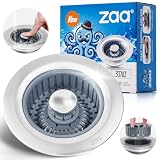
The best sink strainers for kitchen sink use in 2026 are 3.25 to 4.5-inch diameter stainless steel mesh or perforated baskets with a flat silicone rim, 2mm or finer perforations, and a raised center lift — they catch food without pooling water and actually seal against the flange so debris doesn’t slip underneath.
- How to Measure for a Sink Strainer That Actually Fits
- Mesh vs. Perforated vs. Micro-Mesh: What Stops Clogs Without Slowing Flow
- Stainless Steel Picks Compared: Specs That Matter
- Decision Matrix: Which Strainer for Your Situation
- Durability and Ownership Realities
- How to Choose Without Wasting Money
- Frequently Asked Questions
If your strainer is too small it falls in, too large it rocks and leaks, and too fine it slows drainage to a crawl. The three specs that determine whether a strainer works are: exact drain opening diameter, hole size and open area, and how the rim seals. Get those right and any quality stainless steel model will outperform universal silicone caps and cheap chrome-plated baskets.
As an Amazon Associate we earn from qualifying purchases at no extra cost to you.



How to Measure for a Sink Strainer That Actually Fits
Most kitchen sink drains in the US are standard 3.5-inch (89mm) openings, but the strainer needs to sit on the flange, not inside the hole. Measure the wrong place and you will get wobble or bypass.
3-Step Sizing Method
1. Measure the inside diameter of the drain flange: Place a tape measure across the top metal ring where the strainer rests, not the dark drain hole below it. Record to the nearest 1/16 inch.
2. Measure the flange depth: Most flanges are 0.5 to 0.75 inches deep. Shallow baskets (under 1 inch tall) sit flush and are easier to empty. Deep baskets (1.5+ inches) hold more but can block garbage disposals or stoppers.
3. Check for obstructions: If you have a garbage disposal, a 3.25-inch basket often fits better than a wide-rim model that catches on the rubber splash guard. For double-bowl sinks with a central divider, check that the handle or knob doesn’t hit the divider when lifted.
Quick Fit Calculation
Use this to avoid buying the wrong size:
Required strainer outer diameter = Flange inner diameter + 0.25 to 0.5 inches. The extra quarter-inch is the rim overlap that creates the seal. Example: If your flange measures 3.5 inches across, choose a strainer listed as 3.75 to 4.0 inches overall diameter. If it is listed as 3.5 inches overall, it will drop through. Listings that say “fits 3.5-inch drains” usually mean 4.3 to 4.5 inches overall — verify the spec sheet, not just the title.
Mesh vs. Perforated vs. Micro-Mesh: What Stops Clogs Without Slowing Flow
Hole size and total open area control the tradeoff between clog prevention and drainage speed. Finer is not always better.
- Perforated stainless steel (2.0 – 2.5mm holes): Best all-around for kitchen sinks. Catches rice, vegetable peels, and coffee grounds while draining a full bowl in 15-25 seconds. Easy to rinse clean.
- Woven micro-mesh (0.5 – 1.0mm): Catches fine particles like tea leaves and quinoa, but slows flow by 40-60% and needs brushing to clear. Better for prep sinks or if you have older narrow pipes prone to buildup.
- Wide-hole basket (3.0 – 4.0mm): Drains fastest but lets small food through. Only suitable if you have a disposal and just want to stop flatware and large scraps.
- Silicone rim vs. all-metal rim: Silicone creates a suction-like seal against stainless steel sinks and prevents the fine debris bypass that happens with all-metal strainers that don’t sit perfectly flat. All-metal looks cleaner but relies on weight and precision machining to seal.
Stainless Steel Picks Compared: Specs That Matter
All of the models below are widely available in 2026 as stainless steel construction (304 grade is the standard for rust resistance; avoid 201 grade or “chrome plated” if you want long-term corrosion resistance). Dimensions are from manufacturer spec sheets.
| Model / Type | Overall Diameter | Basket Height / Depth | Material & Weight | Hole Size / Type | Rim & Lift Design |
|---|---|---|---|---|---|
| OXO Good Grips Stainless Steel Sink Strainer | 4.5 in (114mm) | 1.0 in (25mm) shallow | 304 stainless steel, 2.8 oz (79g) | 2.0mm perforated | Silicone underside rim, center post handle |
| Kraus Silicone-Rim Strainer (for 3.5 in drains) | 4.33 in (110mm) | 1.25 in (32mm) | 304 stainless steel, 3.2 oz (91g) | 2.2mm perforated | Wide flat silicone rim, recessed knob |
| Danco Stainless Steel Mesh Basket (2-pack utility type) | 4.25 in (108mm) | 1.1 in (28mm) | 430 stainless steel, 1.9 oz (54g) | 1.5mm woven micro-mesh | No silicone, rolled wire rim, loop handle |
| Kohler Duplex Basket Strainer Body | 4.5 in (114mm) | 1.6 in (41mm) deep | 304 stainless steel, 4.1 oz (116g) | 2.5mm perforated | Metal-to-metal seal, flat top knob |
| Generic Extra-Large Wide-Rim Strainer | 4.75 in (121mm) | 0.9 in (23mm) shallow | 304 stainless steel, 2.5 oz (71g) | 2.0mm perforated | Extra-wide silicone rim, no handle (push to lift) |
What this table shows: Weight correlates with seal. Heavier 304 stainless baskets over 2.8 oz stay put when water hits them; light 430 steel or thin wire mesh tends to float and shift. Hole size under 2mm catches more but requires weekly brushing — perforated is lower maintenance than woven mesh.
Decision Matrix: Which Strainer for Your Situation
Match your sink and habits to the design, not just the brand.
| Your Situation | Best Type | Why It Works |
|---|---|---|
| Standard 3.5-inch drain, no disposal, want easy cleaning | Perforated 304 steel, 4.3-4.5 in with silicone rim (e.g., OXO Good Grips, Kraus) | Seals without rocking, 2.0-2.2mm holes balance catch and flow, dishwasher safe |
| Garbage disposal installed | Low-profile 4.25 in basket, recessed knob, 2.2-2.5mm holes | Shallow enough to clear splash guard, perforated drains fast when disposal is running |
| Older home with 1.5-inch narrow pipes that clog easily | Woven micro-mesh 1.5mm with silicone rim | Catches fine starch and coffee grounds that build up in narrow traps, even if slower |
| Farmhouse / fireclay sink with uneven or thick flange | Extra-large 4.75 in wide silicone rim model | Wide soft rim compensates for uneven surface where metal-only rims leak |
| Rental or need cheapest replaceable option | Basic 430 stainless wire mesh 2-pack | Functional and replaceable, but expect discoloration after 6-12 months and less stable seal |
| Want strainer + stopper combo to soak dishes | Kohler or Kraus duplex / stopper-strainer body | Twist or push to seal for soaking, then lift to strain — heavier build seals reliably |
Durability and Ownership Realities
Stainless steel strainers do not fail from the steel itself — they fail from rim wear, handle loosening, and scale buildup.
- What wears first: The silicone rim. After 12-24 months of hot water and dishwasher cycles, thin silicone can curl or harden and lose its seal. Look for models where the silicone is molded around the rim, not just glued underneath. Replacement is cheaper than a new strainer if the brand sells rims separately.
- What causes rust spots: Not the 304 steel, but trapped food acids and leaving a wet basket sitting in the flange overnight. Rinse after each use and leave it lifted or to the side to air dry. Small orange spots are usually surface tea-staining that scrubs off with Bar Keeper’s Friend, not structural rust.
- Cleaning reality: Perforated baskets rinse in 5 seconds under the faucet. Woven mesh traps oil and starch in the weave and needs a soft brush weekly, otherwise flow drops noticeably. Avoid steel wool — it scratches 304 steel and makes future buildup worse.
- Common mistakes: Using a strainer as a stopper by pressing it down blocks flow and stresses the rim. Using a 2-inch bar sink strainer in a kitchen sink leaves a gap that funnels debris around the edges. Over-tightening a screw-on handle cracks the spot weld.
- Lifespan expectation: A 304 stainless perforated strainer with a quality silicone rim typically lasts 3-5 years with daily use before the rim needs replacement. All-metal 304 models can last 5+ years but need a perfectly flat flange to seal without silicone.
Maintenance That Keeps Flow Fast
Empty the basket into the trash or compost, not through the strainer. Once a week, soak for 10 minutes in hot water with a drop of dish soap, brush the underside where biofilm forms, and check the rim for food trapped underneath. If water starts pooling around the strainer, the holes are not clogged — the rim seal is clogged.
How to Choose Without Wasting Money
You do not need a set of three sizes. One correctly sized 304 stainless perforated strainer with a silicone seal covers 90% of kitchen use and typically falls in the general market range of $8 to $22. Micro-mesh sets are cheaper per piece but cost more in time spent cleaning. Deep duplex stopper bodies cost more ($20 to $40 range) but replace both strainer and stopper if you soak dishes often.
Prioritize in this order: 1) Correct overall diameter for your flange, 2) 304 stainless steel marking, 3) Silicone underside rim if your sink is standard stainless, 4) 2.0-2.2mm perforated holes, 5) A low, stable handle that does not snag. Everything else is cosmetic.
Frequently Asked Questions
Will a 4.5-inch strainer fit a 3.5-inch drain?
Yes, that is the intended pairing. The drain is measured by the hole, the strainer by the outer rim. A 4.3 to 4.5-inch overall diameter is designed to sit on top of a 3.5-inch drain flange with overlap. Always check both numbers in the specs.
Do silicone rims slow drainage?
No, the silicone is on the outer sealing ring only, not over the holes. It actually improves drainage by preventing water from bypassing around the edge and forcing it through the perforations where food is caught.
Can I put my sink strainer in the dishwasher?
Most 304 stainless perforated strainers are dishwasher safe, but frequent high-heat cycles age silicone faster. Hand rinsing after each use and dishwashing once a week is the better balance for longevity.
Why does water still pool even with a clean strainer?
Three common causes: the basket is too fine (micro-mesh under 1mm), the rim is not sealing and creating suction, or the sink trap below is partially clogged. Try lifting the strainer slightly — if water rushes, the issue is the strainer seal or fineness; if it still drains slowly, the clog is downstream.