Key takeaways
- 100–120 mm: Suitable for smoother trails, gravel, and light singletrack.
- 130–150 mm: The most versatile range for general trail riding.
- 160–180 mm: Best for steep, rough descents and repeated large impacts.
The best electric mountain bikes for trail adventures are mid-drive models with 140–160 mm of suspension, a removable 500–800 Wh battery, 29-inch wheels, and geometry matched to the kind of trails you actually ride—not simply the bike with the biggest motor.
Our top picks


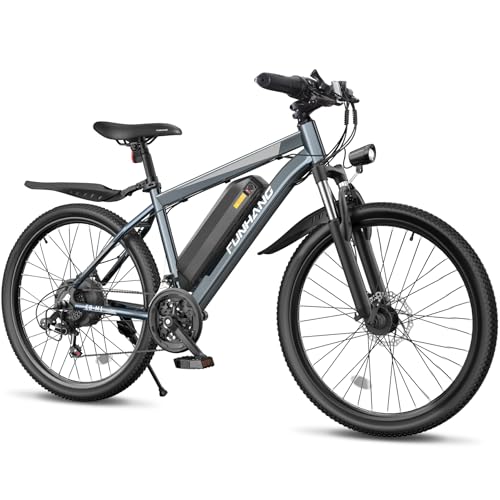
As an Amazon Associate we earn from qualifying purchases at no extra cost to you. Ratings are shown as listed on Amazon.
Quick picks by riding situation
| Rider situation | Best bike type | Useful specification | Typical 2026 market range |
|---|---|---|---|
| Occasional trail rider on a budget | Hardtail e-MTB | 250–500 W nominal motor, 400–625 Wh battery, 100–120 mm fork | $1,800–$3,500 |
| Mixed singletrack and climbing | Full-suspension trail e-MTB | 50–85 Nm mid-drive, 500–750 Wh battery, 130–150 mm travel | $3,500–$6,500 |
| Technical descents and frequent use | Enduro e-MTB | 85–100 Nm motor, 700–800 Wh battery, 160–180 mm travel | $5,500–$10,000+ |
| Long-distance rides or lighter handling | Light-assist trail e-MTB | 50–60 Nm motor, 400–600 Wh battery, 140–160 mm travel | $4,500–$9,000 |
Best electric mountain bikes by use case
Best all-round choice: a full-power trail e-MTB
For most riders, a full-suspension trail bike with a 70–85 Nm mid-drive motor is the safest choice. Models such as the Trek Rail, Specialized Turbo Levo, Giant Trance X E+, Canyon Spectral:ON, and Orbea Wild typically occupy this category, although equipment and prices vary by build.
Expect roughly 140–160 mm of rear and front suspension, hydraulic disc brakes, a dropper seatpost, and a battery between 625 and 800 Wh. This combination handles fire-road climbs, rocky singletrack, roots, and moderate jumps without making the bike excessively specialized.
Choose this category if you ride weekly, regularly face long climbs, or want enough battery capacity for two to four hours of varied trail riding. The trade-off is weight: many full-power models weigh approximately 23–27 kg before accessories.
Best for technical descending: an enduro e-MTB
An enduro electric mountain bike is appropriate when descending confidence matters more than nimble low-speed handling. Bikes such as the Santa Cruz Bullit, Specialized Turbo Kenevo, Trek Rail in longer-travel configurations, and comparable enduro models use slack head angles, longer wheelbases, robust wheels, and around 160–180 mm of suspension travel.
The extra travel absorbs larger impacts and reduces the chance of bottoming out, but it does not make every trail easier. Enduro bikes are heavier, less agile through tight turns, and often use high-power motors that consume battery quickly on steep climbs. They make sense for lift-access terrain, aggressive riding, and repeated technical descents—not necessarily for a flat local trail network.
Best for natural handling: a light-assist trail bike
Light-assist models, including bikes in the Orbea Rise, Specialized Turbo Levo SL, and similar categories, use smaller motors and batteries to reduce weight. A typical system produces about 50–60 Nm of torque and weighs several kilograms less than a full-power setup.
These bikes feel closer to conventional mountain bikes when cornering, lifting the front wheel, or carrying the bike. They are a strong match for fit riders who want assistance on climbs but still want to pedal actively. Range is not automatically poor: a 400–600 Wh battery can work well because the lighter motor and bike may require less energy.
Do not choose light assist solely because it sounds more refined. On sustained steep climbs, a full-power motor will generally deliver more support with less rider effort.
Best lower-cost option: a hardtail e-MTB
A hardtail has a suspension fork but no rear shock. It is usually lighter, simpler, and less expensive than a full-suspension bike. A hardtail works well for gravel connectors, smooth forest trails, commuting, and moderate singletrack.
Look for hydraulic disc brakes, a through-axle front wheel, a 100–120 mm air fork, a wide-range drivetrain, and a removable battery. Avoid buying based only on motor wattage: frame quality, braking, and wheel standards matter more when trails become rough.
Hardtails transmit roots and rocks directly through the rear wheel, so they are less comfortable and less forgiving on technical descents. If your usual routes are genuinely rocky, spending more on a basic full-suspension bike may provide better value than upgrading a hardtail later.
Motor placement: why mid-drive usually wins on trails
A mid-drive motor sits near the bottom bracket and drives the bicycle chain through the gears. It can use the bike’s gearing to climb efficiently, keeps weight near the center of the frame, and usually provides more natural handling on uneven terrain. For trail riding, a mid-drive system from Bosch, Shimano, Brose, Yamaha, or similar established suppliers is generally preferable.
Hub motors place the motor in the front or rear wheel. They can be affordable and useful for paved paths or mild dirt roads, but they do not benefit from the bicycle’s gear range in the same way. Rear-wheel weight can also affect traction and suspension response. A hub motor is reasonable for an inexpensive utility e-bike; it is rarely the best choice for technical mountain-bike trails.
Torque matters more than a peak wattage headline. Approximately 50–65 Nm is adequate for moderate trails, 70–85 Nm suits steep and frequent climbing, and 85–100 Nm is aimed at heavy bikes, aggressive riding, or very steep terrain. Higher torque can also increase drivetrain wear if the rider shifts under heavy load.
Battery range: calculate before you buy
Battery capacity is measured in watt-hours (Wh). A simple planning estimate is:
Estimated distance = battery Wh ÷ average consumption in Wh per mile.
For example, a 750 Wh battery used at an average of 22 Wh per mile gives about 34 miles in ideal calculated conditions. Real trail range is lower or higher depending on rider weight, elevation, temperature, tire pressure, assist mode, wind, and how often the motor delivers maximum power.
As a practical guide, a 500 Wh battery may provide roughly 15–30 miles of varied trail riding, while a 750 Wh battery may provide approximately 22–45 miles. These are planning ranges, not guarantees. Steep climbs and high assist can reduce them sharply.
Battery capacity also affects carrying and charging. A removable 625–750 Wh battery may weigh about 3–4 kg. If you live in an apartment or need to charge indoors, confirm that the battery is removable and that the charger fits your storage arrangement. For very long rides, check whether the motor system supports an approved range extender rather than assuming any auxiliary battery will work.
Suspension travel, tires, and frame fit
- 100–120 mm: Suitable for smoother trails, gravel, and light singletrack.
- 130–150 mm: The most versatile range for general trail riding.
- 160–180 mm: Best for steep, rough descents and repeated large impacts.
More suspension travel is not a free upgrade. It adds weight and can make climbing and tight corners less efficient. A 140–150 mm trail bike is often a better all-purpose choice than a 170 mm enduro bike if your rides include substantial pedaling.
Twenty-nine-inch wheels roll over obstacles efficiently and hold speed well, making them a strong default for taller riders and rough trails. Mixed-wheel setups—29 inches at the front and 27.5 inches at the rear—can improve maneuverability and fit on some long-travel bikes. Wide tires around 2.4–2.6 inches balance grip and rolling speed; 2.5–2.6-inch tires are useful for aggressive trails, while narrower tires reduce drag on smoother routes.
Do not select frame size from height alone. Compare the manufacturer’s reach, stack, standover height, and seat-tube length. As a starting point, a rider with a 30-inch inseam should verify that the lowered dropper post and standover leave comfortable clearance, especially on a full-suspension frame. If between sizes, shorter reach usually feels more maneuverable; longer reach tends to feel more stable at speed.
Ownership costs and durability realities
The parts that usually wear first are brake pads, chains, cassettes, tires, chainrings, and rear suspension bearings. Electric assistance increases chain load, so clean and lubricate the chain regularly and shift before the motor is pushing at maximum torque. A chain-checking tool is inexpensive and can prevent a worn chain from damaging a costly cassette.
Budget for approximately $100–$250 per year for ordinary consumables if you ride occasionally, and more for weekly riding in mud or rough terrain. Tires may last anywhere from 500 to 1,500 trail miles depending on rubber compound, rider weight, braking, and rocks. Tubeless setups reduce pinch-flat risk but still require sealant checks every few months.
After wet rides, rinse mud with low-pressure water, dry the drivetrain, and avoid directing a pressure washer at bearings, motor seals, or suspension pivots. Store the battery cool and dry, avoid leaving it completely empty, and follow the manufacturer’s charging guidance. Check that replacement batteries, chargers, and diagnostic support will remain available in your region before buying an unfamiliar system.
How to choose in five steps
- Identify your normal terrain: smooth paths, general singletrack, or technical enduro trails.
- Choose suspension travel based on that terrain rather than choosing the largest number.
- Select a mid-drive torque level that matches your hills and desired effort.
- Choose battery capacity from your longest planned ride, adding a margin of about 20 percent.
- Confirm frame fit, removable-battery access, brake quality, service availability, and total weight.
For a first trail e-bike, the strongest balance is usually a 140–150 mm full-suspension model with a 70–85 Nm mid-drive motor, a 625–750 Wh removable battery, 29-inch wheels, and 2.4–2.6-inch tubeless-ready tires. Spend more on reliable suspension, brakes, wheels, and dealer support before paying extra for a larger display or cosmetic component upgrades.