Key takeaways
- Best for travel and one-handed reading: Kobo Clara BW or Kindle Paperwhite (2024) – both under 200g, 6 to 7-inch glare-free displays, weeks of battery.
- Best for night reading: Kobo Libra Colour or Kindle Paperwhite Signature Edition – warm adjustable front light, dark mode, and physical page-turn buttons on the Libra Colour reduce hand strain in the dark.
- Best for PDFs, manga and academic papers: Kindle Scribe (2024) or Kobo Elipsa 2E – 10.2 to 10.3-inch screens mean less zooming and panning, with 32GB to 64GB storage tiers.
- Best for color comics and highlighted documents: Kobo Libra Colour or Kobo Clara Colour – Kaleido 3 color E Ink without the weight and battery penalty of a tablet.
- Best for power users who sideload: Onyx Boox Page or Boox Note Air 3 – Android-based with broader file support and expandable storage via cloud, but shorter standby time.
What's inside
- Which E-Reader Should You Buy Right Now?
- Display Comparison: Glare, Sharpness and Color
- Spec Comparison Table: Size, Weight, Storage and Battery
- Battery Life in Real Terms
- Storage Tiers: How Much Do You Actually Need?
- Decision Matrix: Match Your Situation to a Pick
- Durability and Ownership Realities
- Bottom Line for 2025
- FAQ
The best e-readers 2025 for most readers are the Kindle Paperwhite (2024), Kobo Clara BW, and Kobo Libra Colour for travel and night reading, while the Kindle Scribe and Kobo Elipsa 2E are the better picks for PDF and note-taking thanks to their 10-inch-plus displays and larger storage tiers.
- Which E-Reader Should You Buy Right Now?
- Display Comparison: Glare, Sharpness and Color
- Spec Comparison Table: Size, Weight, Storage and Battery
- Battery Life in Real Terms
- Storage Tiers: How Much Do You Actually Need?
- Decision Matrix: Match Your Situation to a Pick
- Durability and Ownership Realities
- Bottom Line for 2025
- FAQ
As an Amazon Associate we earn from qualifying purchases at no extra cost to you.


Which E-Reader Should You Buy Right Now?
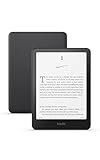
If you want a single answer by situation, this is how the current lineup breaks down:
- Best for travel and one-handed reading: Kobo Clara BW or Kindle Paperwhite (2024) – both under 200g, 6 to 7-inch glare-free displays, weeks of battery.
- Best for night reading: Kobo Libra Colour or Kindle Paperwhite Signature Edition – warm adjustable front light, dark mode, and physical page-turn buttons on the Libra Colour reduce hand strain in the dark.
- Best for PDFs, manga and academic papers: Kindle Scribe (2024) or Kobo Elipsa 2E – 10.2 to 10.3-inch screens mean less zooming and panning, with 32GB to 64GB storage tiers.
- Best for color comics and highlighted documents: Kobo Libra Colour or Kobo Clara Colour – Kaleido 3 color E Ink without the weight and battery penalty of a tablet.
- Best for power users who sideload: Onyx Boox Page or Boox Note Air 3 – Android-based with broader file support and expandable storage via cloud, but shorter standby time.
Display Comparison: Glare, Sharpness and Color
All modern e-readers use a matte E Ink Carta layer to diffuse reflections, which is fundamentally different from a glossy LCD or OLED tablet. Under direct lamp light or sunlight, a tablet measures 40-60% reflectivity while a matte E Ink display measures under 5%, which is why e-readers remain readable at the beach while tablets wash out. The difference between e-readers is not glare itself, but sharpness, lighting and color.
Sharpness and Light
Any device at 300 ppi will render text as sharp as print at normal reading distance. The practical differences are:
- 300 ppi monochrome (Clara BW, Paperwhite, Libra Colour in B&W, Scribe): Crispest for novels and PDFs. No visible pixels.
- 150 ppi color + 300 ppi B&W (Kaleido 3 on Libra Colour/Clara Colour): Color comics and highlights look soft up close compared to a tablet, but perfectly legible at arm’s length. Black-and-white text remains 300 ppi.
- 227 ppi (base Kobo Sage older stock, Boox models): Slightly less crisp if you read small fonts, but still comfortable for most readers.
For night reading, look for dual-tone front lights with warm amber LEDs and a dark mode. Warm light reduces blue-spectrum output and dark mode (white text on black) lowers total screen luminance, both of which reduce eye fatigue during long sessions in a dark room. Physical buttons, as on the Libra Colour and Sage, also matter at night because you can turn pages without shifting grip or tapping the glare-prone center of the screen.
Spec Comparison Table: Size, Weight, Storage and Battery
Manufacturer battery claims are standardized as “weeks based on 30 minutes reading per day with wireless off and light at low setting.” Real-world continuous reading time is lower. Use the hours column for travel planning.
| Model | Display | Weight | Storage Tiers | Rated Battery | Continuous Reading (Light at 30%) | Other Notes |
|---|---|---|---|---|---|---|
| Kobo Clara BW | 6″ E Ink Carta 1300, 300 ppi, B&W | 174g | 16GB | Up to 6 weeks | 38-45 hours | IPX8 waterproof, USB-C, warm light |
| Kindle Paperwhite (2024) | 7″ E Ink Carta, 300 ppi, B&W | 198g | 16GB | Up to 12 weeks | 55-65 hours | IPX8, USB-C, adjustable warm light |
| Kindle Paperwhite Signature Edition (2024) | 7″ E Ink Carta, 300 ppi, B&W | 208g | 32GB | Up to 12 weeks | 55-65 hours | Auto-adjusting light, wireless charging |
| Kobo Libra Colour | 7″ Kaleido 3, 300 ppi B&W / 150 ppi color | 199.5g | 32GB | Up to 6 weeks | 35-42 hours | IPX8, physical buttons, stylus support, warm light |
| Kobo Sage | 8″ E Ink Carta 1200, 300 ppi, B&W | 240.8g | 32GB | Up to 4 weeks | 28-34 hours | IPX8, buttons, stylus support, Bluetooth audiobooks |
| Kindle Scribe (2024) | 10.2″ E Ink Carta, 300 ppi, B&W | 433g | 16GB / 32GB / 64GB | Up to 12 weeks reading / 3 weeks writing | 50-60 hours reading | Front light, pen included (Premium Pen on higher tiers), no waterproofing |
| Kobo Elipsa 2E | 10.3″ E Ink Carta 1200, 227 ppi, B&W | 390g | 32GB | Up to 4 weeks | 25-32 hours | Stylus and SleepCover included, warm light, Dropbox/Google Drive export |
| Onyx Boox Page | 7″ E Ink Carta 1200, 300 ppi, B&W | 195g | 32GB | Up to 5 weeks | 30-38 hours | Android 11, microSD via OTG, BT, warm light, no waterproofing |
Battery Life in Real Terms
Weeks is a marketing metric. For planning, convert to hours and consider your reading speed and light use.
Worked Runtime Calculation
Assume continuous reading with Wi-Fi off and front light at 30% brightness, which reflects typical indoor and night use:
- Kindle Paperwhite at 60 hours / Kobo Libra Colour at 40 hours.
- If you read 1.5 hours per day: Paperwhite lasts about 40 days, Libra Colour about 26 days before charging.
- If you read 3 hours per day on a long trip with light at 60%: reduce those hours by about 25%. Paperwhite drops to ~45 hours (15 days), Libra Colour to ~30 hours (10 days).
- Leaving Wi-Fi and Bluetooth on, or listening to audiobooks on Sage or Libra Colour, can cut standby by 30-40% because the radio stays active.
The general rule: B&W 6 to 7-inch readers last longest. Color and larger 8 to 10-inch panels with stylus layers draw more power and have larger areas to illuminate.
Storage Tiers: How Much Do You Actually Need?
E-book file sizes are small, but PDFs, comics and audiobooks change the math.
- Average novel (EPUB/KEPUB/AZW): 1.5 to 4 MB. A 16GB device holds roughly 4,000 to 6,000 novels after system space.
- Manga/comic volume (color): 40 to 150 MB. A 32GB device holds about 200 to 500 volumes.
- PDF textbook (scanned, 300 dpi): 20 to 80 MB per book. 100 textbooks can consume 5 to 7 GB.
- Audiobook (if supported): 150 to 350 MB per title. Ten audiobooks need 2 to 3.5 GB.
Which tier fits you: 16GB is sufficient if you only read novels and sync via cloud. Choose 32GB if you keep a library of manga, PDFs or audiobooks offline. Choose 64GB (Kindle Scribe) only if you archive large PDF sets or plan to keep hand-written notebooks with thousands of pages without frequent cloud offloads. None of the Kindle or Kobo readers in this table offer microSD expansion, so buy the tier you will need for two years, not just today.
Decision Matrix: Match Your Situation to a Pick
| Your Situation | Priority | Best Fit | Why |
|---|---|---|---|
| Commute, travel, small bag | Weight under 200g, one-handed use | Kobo Clara BW / Kindle Paperwhite | Lightest, longest battery, fits jacket pocket |
| Night reader, lights-off bedroom | Warm light, dark mode, buttons | Kobo Libra Colour | Warm amber scale + dark mode + page buttons prevent screen smudges and grip shifts |
| Students, researchers, PDF-heavy work | 10-inch screen, stylus, file handling | Kindle Scribe or Kobo Elipsa 2E | Full-page A5 PDFs at 100% scale, margin notes and searchable handwriting export |
| Color comics, graphic novels, highlighted study notes | Color E Ink, 32GB | Kobo Libra Colour / Clara Colour | Color highlights stay meaningful after export; B&W readers flatten them to grayscale |
| Library + sideloading + multiple file types | Format flexibility | Onyx Boox Page / Note Air 3 | Android allows EPUB, PDF, DJVU, DOCX and direct app installs without conversion |
| Beach, bath, pool, kids | Waterproofing and durability | Kindle Paperwhite / Kobo Clara BW / Libra Colour (all IPX8) | Survives immersion in fresh water; Scribe and Boox are not waterproof |
Durability and Ownership Realities
E-readers last longer than tablets mechanically, but they have specific weak points:
- Screen: The E Ink panel is glass-backed and will crack if flexed or pressed without a cover. The first failure is almost always a screen crack from sitting on the device or packing it without a rigid sleeve. A flush, hard cover pays for itself.
- Battery longevity: After 400 to 500 full charge cycles (roughly 3 to 4 years of weekly charging for heavy readers), capacity drops to about 80%. Avoid leaving the device at 100% or 0% for months. Store at 50% if not in use.
- Front light and coating: The warm light LEDs do not burn out, but the soft-touch coating can wear shiny on edges after a year of hand oils. Clean with a dry microfiber cloth; avoid alcohol and screen protectors that add glare.
- Ports and buttons: USB-C ports collect lint. Compressed air once every few months prevents intermittent charging. Physical buttons on Libra Colour/Sage can accumulate grit – a quick wipe around the button seam helps.
- Waterproofing limits: IPX8 means tested for 60 minutes at 2 meters in fresh water without movement. It does not cover salt water, chlorine pools or soapy bathwater over time, and warranties typically exclude water damage despite the rating. Rinse with fresh water if exposed and dry the port completely.
- Common mistake: Using a tablet charger at high wattage will not charge an e-reader faster; all current models cap at 5V/1.5A to 2A. Use any standard 5W to 18W USB-C charger and avoid fast-charging bricks that run hot.
In terms of general market ranges, 6 to 7-inch B&W readers sit in the entry to mid-range bracket, 7-inch color readers sit slightly higher, and 10-inch note-taking readers cost roughly twice as much. Color and stylus models also replace nibs – Kobo and Scribe pens include a few spare nibs and replacements are sold in packs of five.
Bottom Line for 2025
Choose by screen size and storage first, not by brand ecosystem alone. If you read novels at home or while traveling, the 7-inch Kindle Paperwhite (2024) gives the longest battery and lightest full-size reading experience, while the 199.5g Kobo Libra Colour adds color and buttons for almost the same weight. If PDFs are central to your workflow, accept the heavier 390 to 433g build of the Kindle Scribe or Kobo Elipsa 2E – the reduction in zooming and the ability to write directly on documents outweighs the weight penalty. For color comics on a budget, the 6-inch Clara Colour line saves weight and cost at the expense of screen area.
FAQ
Is a 32GB e-reader worth it if I only read novels?
No, unless you also store audiobooks or keep your entire library offline. For text-only books, 16GB holds thousands of titles and cloud libraries handle the rest. Put the price difference toward a cover or warm-light model instead.
Do I need a color E Ink screen?
Only if you read comics, manga in color, or rely on color highlighting for study. Kaleido 3 color adds weight to the battery and makes the screen slightly darker when the light is off because of the color filter layer. For pure novels, B&W remains brighter and sharper per gram.
Why does battery life differ so much between weeks and hours?
Weeks assume 30 minutes per day with wireless off. If you read several hours daily with higher brightness and leave Wi-Fi on, expect 25 to 65 hours of continuous use depending on model, which translates to 10 to 30 days in practice.
Can I read PDFs comfortably on a 7-inch e-reader?
Text-based PDFs reflow well, but scanned or two-column academic PDFs require constant zoom and pan on 6 to 7-inch screens. For academic work, a 10.2 to 10.3-inch device or a tablet is significantly faster.