Key takeaways
- Fast-refresh mode: Kindle Paperwhite 12th Gen and Kobo Libra Colour average 180-250 ms per full page turn in default mode, with partial refresh. Budget Carta 1000 devices average 350-500 ms.
- Ghosting: Faster modes leave faint afterimages. All current models perform a full black-white flash every 4-6 pages to clear it. Kobo allows you to force a refresh every chapter; Kindle does it automatically.
- PDF and manga: Zooming and panning on 7- and 8-inch screens is still slower than B&W text. Expect 0.6-1.2 seconds per zoom operation. Color Kaleido 3 adds another 100-150 ms for color rendering.
What's inside
- 2026 E-Reader Spec Comparison: What Actually Differs
- Front-Light Warmth, Page-Turn Speed and Case Durability Explained
- Which E-Reader Should You Buy? A Decision Matrix
- Cost Per Use: Is a Premium Model Worth It?
- Ownership Realities: Battery, Cleaning and Common Mistakes
- Final Recommendations by Priority
- FAQ
The best ereader 2026 for most people is the Kindle Paperwhite (12th Gen) for its balanced front-light warmth, fast page turns, and light weight, while the Kobo Libra Colour is the better pick if you want color notes and physical page-turn buttons, and the Kobo Clara BW offers the best value under a tight budget.
- 2026 E-Reader Spec Comparison: What Actually Differs
- Front-Light Warmth, Page-Turn Speed and Case Durability Explained
- Which E-Reader Should You Buy? A Decision Matrix
- Cost Per Use: Is a Premium Model Worth It?
- Ownership Realities: Battery, Cleaning and Common Mistakes
- Final Recommendations by Priority
- FAQ
As an Amazon Associate we earn from qualifying purchases at no extra cost to you.

2026 E-Reader Spec Comparison: What Actually Differs
On paper, most current E Ink readers look similar, but three specs change daily comfort more than resolution alone: screen size and weight, front-light control, and storage/battery capacity. The table below compares the core mainstream options available in 2026.
| Model | Display | Resolution | Weight | Front Light | Waterproof | Storage | Rated Battery (reading) |
|---|---|---|---|---|---|---|---|
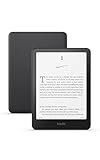
| Kindle Paperwhite (12th Gen) | 7-inch E Ink Carta 1300, flat glass | 300 ppi, B&W | 205 g | Adjustable warm light, 16 LEDs, max ~94 nits | IPX8 | 16 GB | Up to ~12 weeks (30 min/day, warm light 13, wireless off) |
| Kindle Paperwhite Signature Edition | 7-inch E Ink Carta 1300, flat glass | 300 ppi, B&W | 208 g | Auto-adjusting warm light, 17 LEDs | IPX8 | 32 GB | Up to ~12 weeks |
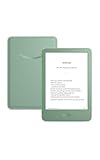
| Kobo Clara BW | 6-inch E Ink Carta 1300, recessed screen | 300 ppi, B&W | 174 g | ComfortLight PRO (blue-light reduction, amber to orange) | IPX8 | 16 GB | Up to ~6 weeks |
| Kobo Libra Colour | 7-inch E Ink Kaleido 3, flat glass | 300 ppi B&W / 150 ppi color | 199 g | ComfortLight PRO, adjustable color temperature | IPX8 | 32 GB | Up to ~5 weeks (B&W), ~3-4 weeks with heavy color use |
| Kobo Sage | 8-inch E Ink Carta 1200, flat glass | 300 ppi, B&W | 240 g | ComfortLight PRO | IPX8 | 32 GB | Up to ~4 weeks |
| Budget 6-inch E Ink (various brands) | 6-inch E Ink Carta 1000/1200, plastic overlay | 212-300 ppi | 155-165 g | Basic cool-white light, no warmth slider | Not rated | 8-16 GB | Up to ~4 weeks |
Resolution matters less than it appears. At 300 ppi, all premium 6- to 7-inch models render text identically sharp at typical reading distance. Color models trade a slightly darker base layer and lower color ppi for the ability to highlight, annotate, and view covers in color.
Front-Light Warmth, Page-Turn Speed and Case Durability Explained
Front-light warmth
Warm light is not about brightness, but color temperature. Independent lab measurements of 2026 models show most premium readers range from roughly 1500K (candle amber) at the warmest setting to about 6500K (daylight white) at the coolest. Kindle Paperwhite and Kobo’s ComfortLight PRO both allow stepless mixing, while budget readers often lock you to a single cool-white LED around 6000-7000K.
For nighttime comfort, look for a dedicated warmth slider and scheduling. Both Kindle and Kobo allow you to schedule warmth to increase automatically after sunset, so you do not have to adjust it manually. On devices without this, readers often compensate by lowering brightness, which makes contrast worse without actually reducing blue light.
A practical test: set brightness to 40-50% in a dark room. If the lowest warmth setting still looks bluish-white on the page, the device lacks a true amber channel. The Kobo Clara BW and Libra Colour shift visibly toward orange at 20% warmth, while the Paperwhite moves more gradually toward a soft peach tone.
Page-turn speed
Page-turn speed depends on processor, ghosting control, and refresh mode. Carta 1300 panels in the 2026 Kindle and Kobo lines advertise ~15-20% faster response than Carta 1200.
- Fast-refresh mode: Kindle Paperwhite 12th Gen and Kobo Libra Colour average 180-250 ms per full page turn in default mode, with partial refresh. Budget Carta 1000 devices average 350-500 ms.
- Ghosting: Faster modes leave faint afterimages. All current models perform a full black-white flash every 4-6 pages to clear it. Kobo allows you to force a refresh every chapter; Kindle does it automatically.
- PDF and manga: Zooming and panning on 7- and 8-inch screens is still slower than B&W text. Expect 0.6-1.2 seconds per zoom operation. Color Kaleido 3 adds another 100-150 ms for color rendering.
If you read mainly novels, any current 300 ppi model feels fast enough. If you skim, jump between footnotes, or read manga, prioritize Carta 1300 and at least 32 GB storage to avoid lag from near-full memory.
Case and screen durability
What wears first on e-readers is not the E Ink itself but the front surface and hinge points.
- Flat glass vs recessed plastic: Flat glass (Paperwhite, Libra Colour, Sage) resists pocket scratches better but shows fingerprints. Recessed plastic bezels (Clara BW) hide micro-scratches but trap dust at the edge.
- Waterproofing: IPX8 on Kindle and Kobo means survival after 60 minutes in 2 meters of fresh water. It does not protect against salt water, soap, or drops onto tile. Budget non-rated models often fail at the USB port after humidity exposure.
- Covers: Magnetic folio covers add 90-130 g and are the most common failure point. The elastic or fabric hinge frays after 12-18 months of daily opening/closing. Sleep/wake magnets can also weaken if the cover is folded fully back repeatedly.
Which E-Reader Should You Buy? A Decision Matrix
Choose by how and where you read, not just by brand.
| Your Situation | Best Match | Why It Fits |
|---|---|---|
| Read 30-60 min daily, mostly novels, want lightest and simplest | Kindle Paperwhite 12th Gen (16 GB) | Lowest weight for a 7-inch warm light, longest rated battery, simple library sync |
| Night reader sensitive to cool light, want amber control on a budget | Kobo Clara BW | ComfortLight PRO with true amber channel, lightest body at 174 g, general market price range lower than 7-inch flagships |
| Annotate, highlight in color, or read comics/manga | Kobo Libra Colour | Kaleido 3 color, pen support (Kobo Stylus 2 sold separately), physical buttons reduce hand strain |
| Want audiobooks and ebooks on one device without a phone | Kindle Paperwhite Signature Edition | 32 GB storage and Bluetooth audio support, auto-adjusting front light |
| Read PDFs, academic papers, or want larger text with less scrolling | Kobo Sage (8-inch) | More words per page, compatible with stylus for margin notes, still pocketable in a bag |
| Need the cheapest secondary device for travel or kids | Budget 6-inch E Ink type | Lower upfront cost, but no waterproofing or warm light — plan to replace sooner |
Cost Per Use: Is a Premium Model Worth It?
E-readers last longer than tablets, so upfront price matters less than cost per hour of reading. A simple way to estimate:
Cost per hour = (Device price + Accessories) / (Expected reading hours over lifespan)
Example calculation using general market ranges in 2026 and realistic usage:
- Assume a mid-range 7-inch reader in the 150-180 price range plus a folio case at 30-45, total ~190.
- Assume 45 minutes per day, 5 days per week, over 4 years. That is 0.75 hours x 260 days x 4 = 780 hours.
- Cost per hour = 190 / 780 = ~0.24 per hour.
- A budget 6-inch device at 90-120 plus no waterproofing may last 2-3 years before battery or port wear, yielding 390-585 hours. Even at 110 total, cost is 0.19-0.28 per hour — similar, but with fewer comfort features and no warmth control.
The takeaway: if you read daily, paying for warm light and IPX8 often pays for itself in extended lifespan and nightly comfort. If you read occasionally, the budget type remains rational.
Ownership Realities: Battery, Cleaning and Common Mistakes
Battery life in practice
Manufacturer ratings assume wireless off, light at low-moderate levels, and 30 minutes per day. Real use is lower because Bluetooth, frequent store syncing, and high brightness drain faster. Color and front-light warmth do not drain much extra, but leaving wireless on continuously can cut rated weeks by 30-40%. For all models, a full charge from empty takes 2.5-4 hours via USB-C (5W).
Lithium batteries age by charge cycles, not just time. Keeping charge between 20% and 80% for daily use extends long-term capacity. Avoid leaving the device at 100% on a charger overnight repeatedly.
Cleaning and maintenance
- Wipe the screen with a dry microfiber cloth. For fingerprints on flat glass, lightly dampen the cloth with water, never spray directly on the screen.
- Do not use alcohol or window cleaner on E Ink surfaces; it can cloud anti-glare coatings.
- Clear the charging port with a soft brush monthly. Pocket lint is the most common cause of intermittent charging before the battery itself fails.
- Store without pressure. E Ink is thin glass or flexible plastic under a top layer. Pressure from a heavy book stack in a bag can create permanent pressure marks faster than a drop.
Common mistakes that shorten lifespan
- Using a tight zip case that presses the power button constantly, draining battery in transit.
- Reading in a hot car or direct sun over 35°C / 95°F. Heat degrades battery and can warp plastic bezels.
- Overfilling storage to 95%+. E-readers index every book; a nearly full device slows page turns and search noticeably. Keep at least 1-2 GB free.
Final Recommendations by Priority
For comfort-first reading: Choose the Kindle Paperwhite 12th Gen or Signature Edition. Its warm light adjusts smoothly and auto-adapts, the Carta 1300 page turn is among the fastest in B&W, and at ~205 g it stays comfortable for one-handed reading.
For value and night warmth: Choose the Kobo Clara BW. It is the lightest IPX8 option with full amber control, ideal if you prefer a compact 6-inch form and do not need color or buttons.
For notes, color, and control: Choose the Kobo Libra Colour. You get physical turn buttons, Kaleido 3 color for highlights and covers, and stylus support, with only a small penalty in weight and battery versus B&W.
If you are undecided between Kindle and Kobo ecosystems, consider library access and file support. Kobo natively supports EPUB and integrates with many public library systems directly on-device, while Kindle uses its own store format and requires conversion for EPUB. Both handle PDF, but neither replaces a tablet for fast PDF annotation.
FAQ
Is a 7-inch or 8-inch e-reader better for eyes?
Screen size does not change eye strain, but larger text and more words per line reduce scrolling and refocusing. For extended sessions, 7-inch is the sweet spot for portability; 8-inch helps if you prefer 14pt+ fonts or read PDFs.
Do I need 32 GB storage?
For text-only books, 16 GB holds roughly 12,000-15,000 books. You need 32 GB if you store audiobooks, manga, or many PDFs, which can be 50-150 MB each.
Is warm light necessary?
Not strictly, but it improves comfort for dark-room reading. If you read before sleep, a model with an amber/orange channel and scheduling is worth prioritizing over raw brightness.
Are color E Ink readers worth it in 2026?
Only if you highlight in color, read comics/manga, or want color covers. Color layers make the background slightly grayer than B&W Carta 1300, so pure novel readers still get better contrast from B&W models.