Key takeaways
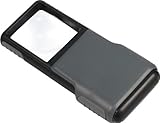
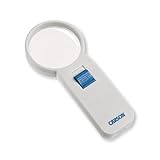
- Handheld (classic round or rectangular): Most versatile. Good for short passages, menus, labels, and books when you can hold the magnifier. Easiest to find in 2.5x to 5x with glass or acrylic lenses.
- Lighted handheld: Same as above with built-in LEDs. The light improves contrast on small or low-contrast print without needing a bright desk lamp. Best for extended reading, evening use, and aging eyes.
- Full-page sheet / fresnel lens: Ultra-light, flat plastic sheet that covers a whole page. Provides low magnification (typically 1.8x to 3x) but lets you read line-to-line without moving your hand constantly. Least distortion in the center, more blur at the edges.
- Hands-free / stand magnifier: Sits on the page or hangs around the neck. Frees both hands for holding a book open. Ideal if you have hand tremor, arthritis, or read for more than 20 minutes at a time.
- Bar / linear magnifier: Narrow strip that magnifies one or two lines at a time. Keeps your place and reduces skipping lines, but slow for full pages.
What's inside
The best magnifying glass for reading small print for most adults is a lighted rectangular handheld magnifier with 3x to 5x magnification and a lens at least 4 inches wide, because it balances readable field of view, low distortion, and reduced eye strain during longer sessions.
As an Amazon Associate we earn from qualifying purchases at no extra cost to you.


How to Choose the Right Type for Reading
Magnification power, lens size, and lighting matter more than marketing claims. Higher magnification is not always better for reading — it shrinks the area you can see at once and makes you hold the lens closer to the page, which increases eye fatigue.
- Handheld (classic round or rectangular): Most versatile. Good for short passages, menus, labels, and books when you can hold the magnifier. Easiest to find in 2.5x to 5x with glass or acrylic lenses.
- Lighted handheld: Same as above with built-in LEDs. The light improves contrast on small or low-contrast print without needing a bright desk lamp. Best for extended reading, evening use, and aging eyes.
- Full-page sheet / fresnel lens: Ultra-light, flat plastic sheet that covers a whole page. Provides low magnification (typically 1.8x to 3x) but lets you read line-to-line without moving your hand constantly. Least distortion in the center, more blur at the edges.
- Hands-free / stand magnifier: Sits on the page or hangs around the neck. Frees both hands for holding a book open. Ideal if you have hand tremor, arthritis, or read for more than 20 minutes at a time.
- Bar / linear magnifier: Narrow strip that magnifies one or two lines at a time. Keeps your place and reduces skipping lines, but slow for full pages.
For comfortable reading, look for: diopter-corrected glass or high-grade acrylic, aspheric lens design to reduce edge distortion, and edge-to-edge clarity rather than just center clarity. Weight under 6 ounces is noticeably more comfortable after 15+ minutes of handheld use.
9 Best Magnifying Glass Options for Reading Small Print Compared
The options below are organized by format so you can match your reading situation, not just magnification number. All magnification values refer to optical magnification.
| Option & Type | Optical Magnification | Lens Size / Material | Weight | Lighting / Power | Best For |
|---|---|---|---|---|---|
| 1. MagniPros Large Lighted Rectangular Handheld | 3x (45 diopter) with 10x inset spot | 4.5 x 6.5 in / Acrylic, aspheric | 7.2 oz | 12 SMD LEDs / 3x AAA, ~30 hours | Extended book and newspaper reading |
| 2. Eschenbach Mobilux LED Handheld | 3.5x (10 diopter) | 3.9 x 2.0 in rectangular / PXM glass | 4.9 oz | LED / 2x AA, ~25 hours | Low distortion, daily use |
| 3. Carson LumiCraft Lighted Round Handheld | 2.5x with 5x bifocal spot | 4.3 in round / Acrylic | 5.1 oz | LED / 2x AAA, ~20 hours | Lightweight general purpose |
| 4. Fancii Lighted Handheld with Stand | 3x with 6x inset | 3.5 in round / Acrylic | 3.8 oz | 2 LEDs / 2x AAA, ~18 hours | Travel and occasional reading |
| 5. Full-Page Fresnel Sheet Magnifier | 2x – 3x (varies by distance) | 8.0 x 10.5 in / PVC fresnel | 1.6 oz | None (uses ambient light) | Hands-free full-page reading |
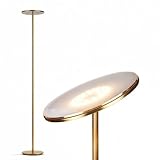
| 6. Brightech LightView Pro Magnifying Floor/Desk Lamp | 1.75x (3 diopter) – 2.25x available | 5.0 in round / Glass | 42 oz (weighted base) | Dimmable LED ring / AC powered | Long sessions at a desk or armchair |
| 7. Hands-Free Neck Magnifier with Dual Lenses | 1.5x to 3.5x interchangeable | 4.0 x 5.5 in / Acrylic | 2.9 oz (plus 1.5 oz cord) | Optional clip-on LED | Arthritis, tremor, crafts + reading |
| 8. Eschenbach Visolux+ Stand Magnifier with Light | 2.8x (7 diopter) | 3.9 x 3.1 in / PXM | 7.8 oz | LED / 2x AA, ~35 hours | Stable, flat-on-page reading |
| 9. Acrylic Bar Magnifier | 2x | 8.0 x 1.5 in strip / Acrylic | 1.2 oz | None | Keeping place, column reading |
What the numbers mean in practice
A 3x rectangular lens measuring 4.5 x 6.5 inches shows roughly 35-40 words at once at a 4-inch focal distance, so you move the magnifier far less than with a small 2-inch round lens at 5x, which might show only 12-15 words and requires more hand movement. Fresnel sheets show the whole page but with a shorter focal length — you must hold the sheet about 2-3 inches above the page for 2x, and edge text will stretch slightly.
Glass lenses are heavier but more scratch resistant and optically clearer than standard acrylic. PXM and other high-grade plastics approach glass clarity at about 40% less weight, which is why many premium handheld models use them for reading.
Decision Matrix: Pick by Your Situation
Use this to match your needs before comparing magnification alone.
| If You… | Your Priority | Choose This Type | Why |
|---|---|---|---|
| Read small print in books for 30+ minutes daily | Eye strain and field of view | Large lighted rectangular handheld (Option 1 or 2) or stand magnifier (Option 8) | Wide lens reduces scanning; light keeps contrast high without leaning closer |
| Only need help with fine print on labels, receipts, medicine inserts | Portability | Small lighted round handheld (Option 3 or 4) | Fits in a pocket or purse, quick one-hand use |
| Have shaky hands or hand pain | Hands-free stability | Fresnel sheet (Option 5), neck magnifier (Option 7), or lamp magnifier (Option 6) | No sustained grip needed; image stays stable |
| Read in low light or at night | Built-in illumination | Any LED model (Options 1-4, 6, 8) | LED color temperature ~5000K improves black-on-white contrast |
| On a limited budget | Lowest cost | Fresnel sheet or bar magnifier (Option 5 or 9) | Generally in the $5-$20 market range vs. $30-$90 for lighted glass models |
| Lose your place easily or read narrow columns | Tracking | Bar magnifier (Option 9) | Isolates 1-2 lines and acts as a guide |
Understanding Magnification, Field of View, and Eye Strain
Magnification strength is measured in X or diopters (D). To convert: X = (D / 4) + 1. So a 12 diopter lens = 4x. For reading small print (6-8pt like in paperbacks or contracts), 2.5x to 3.5x is the sweet spot. Above 5x, you enter the range used for inspecting details, not continuous reading — text becomes harder to follow because you see fewer words and must keep the lens very close to the page with precise focus.
Eye strain comes from three factors: working distance, lighting, and lens distortion. A larger lens lets you hold the magnifier farther from your eyes. A lighted lens lets you reduce overhead glare and not hunch forward. An aspheric lens keeps straight lines straight at the edges, so your eyes do not constantly refocus when you scan.
For extended sessions, follow the 20-20-20 approach: every 20 minutes, look 20 feet away for 20 seconds, and keep the print at a distance where the text is clear without stretching your neck forward. If you need stronger than 5x to read comfortably, or if one eye sees significantly differently, talk to an eye care professional about whether prescription correction or a low-vision aid would be more appropriate. This article is general information only and not medical advice.
Worked Example: How Long Lighted Models Actually Last
Battery life determines real ownership cost. Take a lighted handheld rated for 30 hours on 3 AAA batteries, used 20 minutes per day for reading:
20 minutes = 0.33 hours per day. 0.33 x 365 days = 120 hours per year. 120 / 30 hours per set = 4 battery sets per year, or 12 AAA batteries annually.
With rechargeable AAA batteries (about 800 mAh each), you would recharge roughly every 6-8 weeks under the same use. Models with built-in rechargeable lithium cells avoid buying batteries but will eventually lose capacity after 2-3 years of regular charging. Check whether the battery compartment is easy to open and whether LEDs are rated for 10,000+ hours — LEDs rarely burn out before the housing wears out.
Durability and Ownership Realities
What wears first is not the lens, but the housing and light:
- Scratches: Acrylic scratches easier than glass. Wipe with a microfiber cloth only, not paper towels or shirt sleeves. Store with a pouch or sleeve. Fresnel sheets scratch if folded or stacked under books.
- Hinges and switches: Folding handles and push-button LED switches are the most common failure point on low-cost handhelds. A solid one-piece handle with a recessed slide switch lasts longer.
- Battery corrosion: Remove alkaline batteries if you will not use the magnifier for a month or more. White crust around contacts means leak — clean gently with a dry cotton swab and replace batteries.
- Cleaning: Never use window cleaner or alcohol on acrylic or fresnel lenses. Use lukewarm water and a drop of dish soap, then pat dry. Glass lenses can tolerate a lens cleaner but still avoid harsh chemicals on the frame.
- Common mistake: Pressing the magnifier flat against the page. Magnifiers need an air gap (their focal length) to focus. Holding it directly on the text will make everything blurry and cause you to assume you need higher magnification.
Weight also affects durability perception. A 7-8 ounce handheld feels solid but will cause wrist fatigue when held above a book for more than 10 minutes. If you read in bed or in an armchair, a 2-3 ounce fresnel sheet or a stand model that rests on the page is easier long-term than the heaviest lighted model, even if the optics are slightly less sharp.
Which Magnifying Glass for Reading Should You Buy?
For daily book and newspaper reading at home, a large lighted rectangular handheld in the 3x to 3.5x range such as the MagniPros large model or the Eschenbach Mobilux LED offers the best compromise of field of view, edge clarity, and weight. Choose glass or PXM if you prioritize clarity and scratch resistance, acrylic if you prioritize low weight.
If you read for long periods at a fixed chair or desk, a lighted stand magnifier or a magnifying lamp eliminates hand fatigue entirely and provides the most comfortable posture. For occasional use or travel, a compact 2.5x lighted round model is enough and far more portable.
Budget-conscious readers who need hands-free help for a full page can start with an 8 x 10 inch fresnel sheet — it weighs almost nothing and covers the whole page — and add a lighted handheld later for low-light situations. Bar magnifiers are a useful second tool rather than a primary magnifier, especially for those who lose their place line-to-line.
FAQ
What magnification do I need for small print in books?
For most small book print (around 8-10pt), 2.5x to 3.5x is sufficient. If you can read headlines but not footnotes, stay in that range and prioritize a larger lens and good lighting first. Magnification above 5x is typically for very tiny print such as 4-6pt inserts and is harder to use for continuous reading.
Is a bigger lens always better?
A bigger lens shows more text at once and reduces how often you move the magnifier, but it also adds weight and can introduce more edge distortion in low-quality lenses. A 4 to 6 inch rectangular lens is generally better for reading than a 2 inch round lens at the same power, provided the lens is aspheric and well made.
Do lighted magnifiers cause more eye strain?
No, when used correctly. Even, diffused LED light improves contrast and lets you keep the page at a comfortable distance. Avoid shining the LED directly into your eyes and avoid using maximum brightness on glossy paper, which can create glare.