Key takeaways
- Budget: basic recline with wipe-clean upholstery, a removable tray and fixed or swing-away leg rests. Suitable for short daily sessions.
- Mid-range: better padding, adjustable headrest, larger casters, higher weight ratings and easier recline mechanisms.
- Premium: tilt-in-space mechanisms, custom seating, modular supports, and clinician fitting. These are often prescribed or specified through a therapist.
A wheeled geri chair with a reclining back and adjustable leg rests suits people who need to be repositioned and supported for several hours a day, a standard recliner or lift chair suits those who can still stand and transfer on their own, and a transport wheelchair suits short trips. Geri chairs are mobility and care furniture, so the choice should involve the user’s doctor, physical or occupational therapist, or caregiver. This guide explains the types, the features makers list, and how to compare them without making medical claims.
Our top picks


As an Amazon Associate we earn from qualifying purchases at no extra cost to you.
What a Geri Chair Is
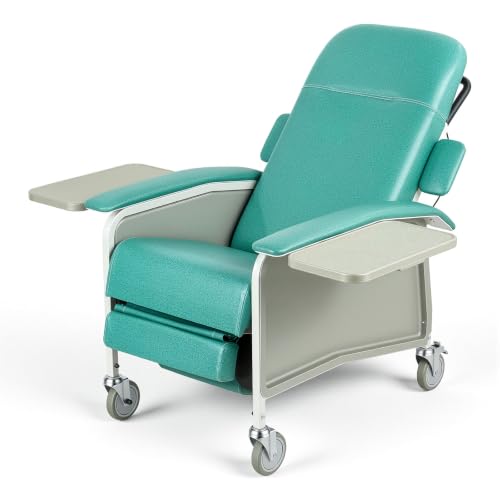
A geri chair, also called a geriatric chair or reclining chair on wheels, is a padded, supportive chair with a tilting or reclining back, a lifting leg rest, a tray, and usually four casters with brakes. It is used in care homes and private homes by people who need extra postural support and who are moved by a caregiver. It differs from a lift chair, which uses a motor to raise the seat for a person who can stand with minimal help.
At a Glance: Geri Chair and Related Chair Types
| Type | Best for | Key features makers list | Limits |
|---|---|---|---|
| Standard geri chair (recliner on wheels) | Caregiver-assisted sitting for long periods | Reclining back, adjustable leg rest, wipe-clean upholstery, locking casters, removable tray | Needs space to move; not a mobility aid for self-propelling |
| Tilt-in-space geri chair | People who need to be tilted back to shift weight | Seat and back tilt together, headrest, side supports | Premium tier; heavier; staff or caregiver training advised |
| Bariatric geri chair | Larger users | Wider seat and higher stated weight capacity, reinforced frame | Wider doorways needed |
| Lift recliner | People who can stand with a little help | Motorised lift, remote, recline | Needs a power outlet; not for those unable to stand |
| Transport chair | Short outings with a pusher | Folds, light frame | Not designed for long-term sitting |
| Reclining wheelchair | Daily mobility with recline | Large or small wheels, elevating leg rests | Less cushioned than a geri chair |
Features to Compare
Weight capacity and size
Check the stated maximum user weight and the seat width and depth in the maker’s specifications. Capacities vary widely by model, from standard to bariatric frames. Choose a chair whose rating is comfortably above the user’s weight, and never exceed it.
Recline and tilt
Reclining backs let the user lean back, while tilt-in-space designs tilt the seat and back together, keeping the hip angle fixed. Therapists often discuss the difference when pressure and positioning are a concern. Ask the user’s clinician which style is appropriate rather than choosing on price alone.
Leg rests and footplates
Elevating leg rests raise the legs to a stated angle. Look at how smoothly the leg rest locks and whether it can swing away for transfers. A rest that cannot be locked securely is a hazard.
Upholstery
Most geri chairs use vinyl or similar wipe-clean material because it is easy to disinfect. Breathable fabrics are more comfortable for some users but need more care. Makers list cleaning agents that are safe for the covering, and those instructions matter for longevity.
Casters and brakes
Four swivel casters with locks make a geri chair easy to position. Look at the caster size, since larger casters roll more easily on carpet and over door thresholds. Always engage the brakes before transfers.
Trays
A removable tray helps with meals and activities. A tray is not a restraint, and a chair should not be used to restrict a person’s movement. Follow local care regulations and the guidance of the care team.
Pressure care
Cushion choice affects comfort, but no chair or cushion can prevent pressure injuries by itself. Anyone at risk should have their skin checked regularly, be repositioned on the schedule set by a nurse or doctor, and see a clinician for sore, red or broken skin.
Brands and Lines Often Mentioned
Medical-equipment makers such as Drive Medical, Graham-Field, Invacare, Pride Mobility and Medline sell geri chairs, tilt-in-space chairs and reclining wheelchairs in various configurations. Model lines and availability change, so read each maker’s current product page for the exact specifications. Reviewers and care-equipment retailers generally describe the Drive and Graham-Field style geri chairs as the standard home-care options, and tilt-in-space designs from clinical suppliers as the premium tier. Treat any specific figure as the maker’s claim.
Budget Tiers
- Budget: basic recline with wipe-clean upholstery, a removable tray and fixed or swing-away leg rests. Suitable for short daily sessions.
- Mid-range: better padding, adjustable headrest, larger casters, higher weight ratings and easier recline mechanisms.
- Premium: tilt-in-space mechanisms, custom seating, modular supports, and clinician fitting. These are often prescribed or specified through a therapist.
Fit, Space and Safety Notes
- Measure doorways, hallways and turning circles before buying. Many geri chairs are wider than standard chairs.
- Check the folded and reclined dimensions against the space available.
- Use brakes whenever the chair is stationary.
- Follow the manual for assembly, weight limits and cleaning.
- Inspect the frame, casters and locking mechanisms periodically, and stop use if something is loose or damaged.
- Caregivers should learn safe transfer and lifting techniques; a physical therapist or nurse can demonstrate them.
- Do not leave a user unattended in a reclined position if their condition requires supervision.
Pick X If… Decision Table
| Pick this | If… |
|---|---|
| Standard geri chair | A caregiver moves the user and they need to recline for comfort |
| Tilt-in-space chair | A therapist advises changing the seating angle without changing hip angle |
| Bariatric geri chair | The user’s weight exceeds standard ratings |
| Lift recliner | The user can stand with light help and wants to sit at home |
| Transport chair | You need a light folding chair for appointments |
| Reclining wheelchair | Daily mobility outside the home with recline is needed |
Alternatives
- Lift chair: a motorised seat that tilts forward to help a person stand. See the dedicated lift chair guide for details.
- Hospital-style recliner: sturdier clinical recliners are used in care settings.
- Rental or loan equipment: hospice, hospital and community loan programs often supply chairs for short periods, which can help if needs may change.
Choosing Between Home Use and Care-Home Use
Care-home chairs are usually specified by staff and built for daily cleaning, frequent repositioning and heavy use, so they often carry higher stated weight ratings and sturdier frames. Home chairs tend to prioritize a more domestic look and lower cost, and may be lighter. A family caring at home should ask the supplier how the chair copes with daily wiping, whether replacement parts such as casters, trays and cushions are sold, and how long the maker supports the model.
Questions to Ask a Supplier or Therapist
- What seat width, depth and back height suit the user’s body?
- Does the user need head support, side supports or a tilt mechanism?
- How many people are needed to move the chair safely?
- Can the leg rests and arms be removed for transfers?
- What are the maker’s stated cleaning and inspection instructions?
Answers to these questions are better taken from a clinician who knows the user than from a product listing. Equipment loan programs and trial periods can also let a household find out whether a chair suits the person and the home before a purchase. Keep the manual, note the model and serial number, and ask the supplier about servicing so that wheels, brakes and recline locks can be inspected as the maker advises.
Frequently Asked Questions
What is the difference between a geri chair and a lift chair?
A geri chair is a wheeled, reclining chair designed to be pushed by a caregiver, while a lift chair is a stationary recliner with a motor that raises the seat. A lift chair suits someone who can stand with a little help. A geri chair suits someone who needs ongoing postural support and repositioning.
Who should use a geri chair?
Geri chairs are typically used by people with limited mobility who need supported sitting, often in care homes. Whether one is suitable depends on the person’s condition, so ask a doctor, nurse or occupational therapist before buying.
Does Medicare or insurance cover a geri chair?
Coverage varies by plan and country, and rules for reclining or tilt chairs are often stricter than for standard wheelchairs. Contact your insurer or the supplier and ask a clinician about documentation. This article cannot confirm any particular coverage.
Can a geri chair be used as a bed?
Geri chairs recline, but they are not designed as a replacement for a bed unless the maker says otherwise. Long periods in one position can raise skin and circulation concerns, so follow the care plan from the user’s medical team.
How do I clean a geri chair?
Use the cleaning products the maker lists for the upholstery, usually mild soap and water or a disinfectant that is safe for vinyl. Wipe the tray, frame and casters regularly. Avoid harsh solvents that could crack the covering.
How wide should a geri chair be?
The seat should fit the user comfortably without pinching or leaving large gaps at the sides. Makers list seat widths, and a therapist can help match the size. Also check that the overall width passes through the doors in your home.