Key takeaways
- Weight rating. Use the maker’s stated limit for both the ball and the frame, and do not exceed it.
- Flooring. Use on a flat, non-slip surface. Wheels can roll on hard floors, so lock them if the frame has locks.
- Sharp objects. Keep the ball away from sharp edges, staples and heat sources.
- Start slowly. Reviewers and health organizations suggest short sessions at first, switching back to a regular chair when you feel tired.
- Talk to a professional. If you have back pain, balance problems, are pregnant or have a medical condition, check with a doctor or physiotherapist before sitting on a ball.
- Children. Supervise, since falls are more likely on unstable seats.
- Temperature. Cold rooms and heat change ball pressure, so check inflation regularly.
For most people a balance ball chair works best as a short-session alternative to a regular chair, not a full replacement, and the best match is usually a ball with a stable frame and wheels, such as the Gaiam Classic Balance Ball Chair or a similar base-supported model, for a home desk, with a plain burst-resistant exercise ball for those who just want to try the idea. Choose size by height, check the maker’s weight rating, and talk to a health professional first if you have back, balance or pregnancy-related concerns.
Our top picks


As an Amazon Associate we earn from qualifying purchases at no extra cost to you.
What a balance ball chair is
A balance ball chair replaces the seat with an inflatable ball, sometimes held in a metal or plastic frame. The idea is that the unstable surface prompts small posture adjustments. Makers describe this as encouraging active sitting. Independent outlets and health organizations generally note that evidence for lasting benefits is mixed, and that sitting on a ball for long periods can cause fatigue or discomfort for some people. For that reason this guide treats these chairs as a way to vary posture, not a cure for anything.
At a glance
| Type | Examples | Best for | Key stated points | Limits |
|---|---|---|---|---|
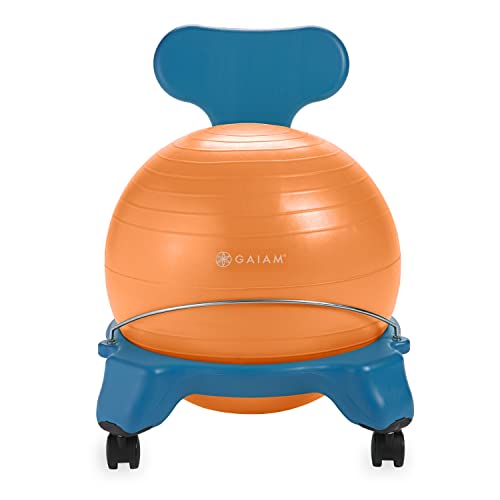
| Ball in a frame with wheels | Gaiam Classic Balance Ball Chair, similar frame chairs | Home desks, first-time users | Makers list a base that holds the ball and wheels for rolling; often includes a pump | Frame adds weight; check floor and caster compatibility |
| Ball with a stability ring | Rings sold with many exercise balls | Budget tier; storage-friendly | Keeps the ball from rolling away when you stand | Still unstable; no back support |
| Ball chair with back support | Models with a backrest, including Gaiam variants | Users who want some back support | Backrest is listed by the makers on certain models | Less movement; heavier; higher tier |
| Office-grade ball chair | Safco Zenergy and similar | Workplaces and classrooms | Marketed with a frame and casters for office use; check the stated weight rating | Mid-range to premium tier |
| Plain burst-resistant exercise ball | Various brands | Short sessions and exercise | Sizes by diameter; often anti-burst rated by the maker | No frame, so it moves under you |
Gaiam Classic Balance Ball Chair
Gaiam is one of the best-known names in this category. Its balance ball chair places an exercise ball into a metal frame on wheels, which reviewers often cite as the easiest way to try the concept because the ball stays under you and can be rolled to the desk. The maker lists different ball sizes and a hand pump with some versions. As with other ball chairs, it is not designed to replace an ergonomic chair for a full day, and reviewers suggest starting with short sessions.
Frame chairs with a backrest
Some versions add a back support or a tilting backrest to a ball seat. This can help if you want the occasional bounce without leaning forward constantly. The compromise is that a backrest reduces the freedom to move, and the chair is bulkier. It sits in the mid-range tier.
Office-grade ball chairs
Workplace-oriented models, such as Safco’s Zenergy line, use sturdier bases and are intended for office floors. If your employer or school buys the chair, ask for the maker’s weight rating and compliance statements. These are mid-range to premium and usually come assembled or with simple assembly steps.
A plain exercise ball
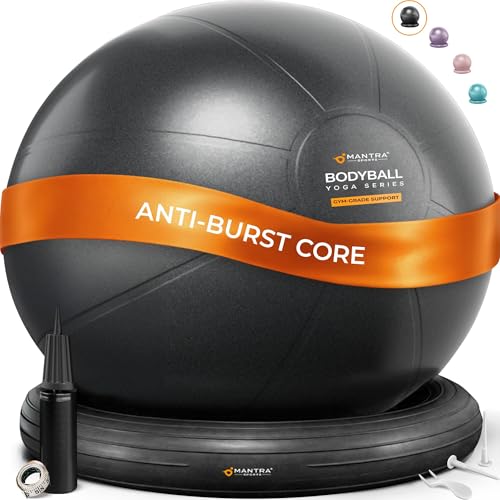
A plain burst-resistant ball is the cheapest way to try active sitting. Makers describe anti-burst construction, which means that if the ball is punctured it deflates slowly rather than popping suddenly. This is a safety feature worth looking for, though it does not make a ball indestructible. A ring or cradle prevents rolling away. Without a frame or back, a plain ball is better as a short-term seat or for exercise than as a main chair.
Sizing
Makers publish size charts by height and typically suggest that your thighs are roughly parallel to the floor, or slightly downward, when seated. As a rough guide, shorter users need smaller diameters, taller users need larger ones, and a ball inflated softly sits lower than a fully inflated ball. If you work at a desk, remember that the seat height must still allow your forearms to be comfortable on the keyboard. Follow the maker’s inflation instructions and do not overinflate.
Safety and comfort notes
- Weight rating. Use the maker’s stated limit for both the ball and the frame, and do not exceed it.
- Flooring. Use on a flat, non-slip surface. Wheels can roll on hard floors, so lock them if the frame has locks.
- Sharp objects. Keep the ball away from sharp edges, staples and heat sources.
- Start slowly. Reviewers and health organizations suggest short sessions at first, switching back to a regular chair when you feel tired.
- Talk to a professional. If you have back pain, balance problems, are pregnant or have a medical condition, check with a doctor or physiotherapist before sitting on a ball.
- Children. Supervise, since falls are more likely on unstable seats.
- Temperature. Cold rooms and heat change ball pressure, so check inflation regularly.
Budget tiers
Budget tier: an anti-burst exercise ball with a ring. Cheap, and good to test the idea.
Mid-range tier: framed ball chairs on wheels, such as Gaiam’s, with pump and sizing options.
Premium tier: office-grade or backrest models designed for regular workplace use, often with sturdier frames and longer warranties.
Pick X if you…
| Pick this | If you… |
|---|---|
| Framed ball chair on wheels | want to try active sitting at a home desk with minimal fuss |
| Ball with backrest | want occasional movement but some support |
| Office-grade ball chair | buy for a workplace or classroom and need a sturdier base |
| Plain anti-burst ball | only want a low-cost trial or an exercise ball |
| A regular ergonomic chair | sit more than a few hours at a time |
Alternatives
- Wobble stools: allow small tilting movement with a firm base.
- Kneeling chairs: open the hip angle, but not suitable for everybody.
- Standing desk converters: reduce seated time while keeping a standard chair for breaks.
- A good ergonomic chair: for full-day use, with adjustable lumbar and armrests.
Care
Wipe the ball with mild soapy water and dry it, avoiding harsh solvents that can weaken the material. Store out of direct sunlight, away from heaters. Check the frame bolts occasionally and replace any ball that shows cuts, bulges or wear. Replace casters if they stick.
Building a routine around a ball seat
If you decide to try a ball chair, introduce it gradually. A common approach is to sit on it for short stretches, such as a quarter of an hour, then return to a regular chair when your back or core feels tired. Keep your feet flat, hips slightly above your knees and your screen at eye level so you are not hunching forward. Avoid leaning on the desk to compensate for fatigue, because that defeats the point of the exercise. Many people use the ball for phone calls, email or reading, while keeping a supportive chair for longer focused work. Keep a standard chair nearby so you can switch quickly. Pay attention to how you feel afterwards, and stop if you notice pain, numbness or dizziness. Over time, you may find a mixed approach of ball, stool, standing and conventional seating is more comfortable than any single seat.
Frequently Asked Questions
Can a balance ball chair replace my office chair?
Most reviewers and ergonomics guidance suggest using one for limited periods. Without back support, many people tire and slouch, so alternate with a supportive chair.
What size ball should I choose?
Use the maker’s height chart. Your hips should be at about knee height or slightly higher while seated, and your feet flat on the floor.
Are balance ball chairs safe?
They are generally safe for healthy adults when used on a flat surface within the weight rating. Anti-burst balls reduce the risk of sudden deflation, but injuries from falls can still occur.
Do they help with back pain?
The evidence is mixed, and some people feel worse. If you have back pain, speak to a doctor or physiotherapist instead of relying on a ball chair.
How often should I re-inflate the ball?
Balls lose air slowly. Check pressure and shape every week or two and top up following the maker’s instructions.
Can children use one?
Smaller balls exist, but children should be supervised and should not use adult-sized frames. Follow the maker’s age guidance.