Key takeaways
- Budget: basic wood, metal or plastic chairs, often flat-packed, adequate for light use.
- Mid-range: padded chairs with sturdier frames, a wider choice of fabrics, and better joints.
- Premium: solid hardwood or designer chairs, high-grade upholstery and longer warranties.
For most households, an upholstered dining chair with a solid or engineered wood frame and a seat height of roughly 17 to 19 inches suits everyday meals, wipe-clean faux leather or performance fabric suits families with children, and a molded or slatted chair in wood or plastic suits small spaces and tight budgets. The best dining chair depends on your table height, how long you sit, and how easy the covering is to clean. This guide compares the main styles and what to look for before buying.
Our top picks

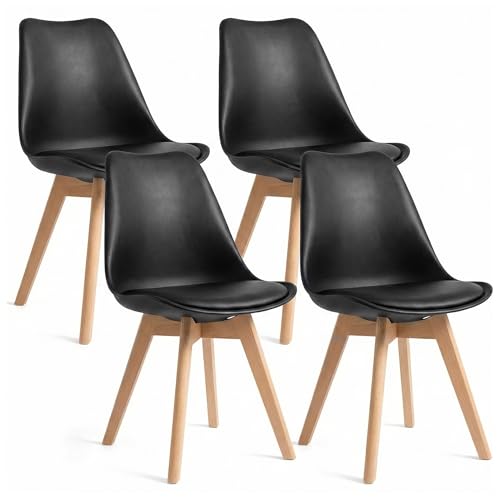


As an Amazon Associate we earn from qualifying purchases at no extra cost to you.
At a Glance: Dining Chair Styles
| Style | Best for | Features makers list | Limits |
|---|---|---|---|
| Upholstered side chair | Long meals and comfort | Padded seat and back, wood or metal legs | Fabric can stain; needs cleaning |
| Wooden chair (such as Windsor or ladder-back) | Traditional rooms and durability | Solid hardwood or engineered frame, optional seat pad | Harder seat; heavier |
| Faux leather or vinyl chair | Families with young children | Wipe-clean surface | Can peel with age; warmer in summer |
| Molded plastic or polypropylene chair (for example Eames-style shells) | Small spaces, kitchens, stackable seating | Light, easy to clean, stackable on some | Less cushioned; style varies |
| Armchair / captain’s chair | Table ends and larger users | Arm rests, wider seat | Needs space; may not slide under the table |
| Counter or bar stool | Raised counters | Taller seat height and foot rail | Wrong height for standard tables |
| Bench | Seating more people and kids | Longer seat, tucks away | No back support for most |
How to Choose Dining Chairs
Match the height to the table
A common furniture guideline is a gap of around 10 to 12 inches between the seat and the underside of the table top. Standard dining tables are typically about 28 to 30 inches high, which pairs with seats of roughly 17 to 19 inches. Counter-height tables need taller stools. Measure your table’s height and apron clearance, and compare with the chair’s stated seat height and arm height.
Comfort
Seat depth, padding and back angle determine how long you can sit. Reviewers often say a slightly reclined back and a padded seat suit long meals, while straight wooden chairs are fine for short ones. If you work at the table, a chair with lumbar support is a sensible choice.
Materials
Solid hardwood frames are durable but heavier and costlier. Engineered wood and metal frames are common in the budget and mid-range tiers. Upholstery choices include polyester, linen blends, velvet, performance fabrics, vinyl and leather. Read the maker’s cleaning code and any stain-resistance claim, which is the maker’s own statement.
Weight capacity
Makers publish stated weight limits, which vary by model. Choose chairs rated well above the heaviest user, and check the joints for stability, especially on chairs with thin legs.
Size and spacing
Allow roughly 24 inches of table edge per diner as a common rule of thumb. Wide chairs and armchairs need more room, and pushing a chair back requires clear floor behind it. Measure the room and the distance to walls or sideboards.
Floor protection
Chair legs can scratch wood floors. Felt pads or glides protect floors, and replaceable ones are inexpensive. Check the maker’s instructions for assembly and care.
Brands and Lines Often Mentioned
Reviewers and furniture outlets often mention IKEA (for example its Ingolf, Nordviken and other dining ranges), Herman Miller (Eames molded chairs through licensed makers), Safavieh, Christopher Knight Home, Flash Furniture, Hillsdale and Poly and Bark. IKEA covers the budget tier, while Herman Miller and licensed Eames-style designs are premium. Range names and availability change, so read each maker’s current page for specifications and finishes.
Budget Tiers
- Budget: basic wood, metal or plastic chairs, often flat-packed, adequate for light use.
- Mid-range: padded chairs with sturdier frames, a wider choice of fabrics, and better joints.
- Premium: solid hardwood or designer chairs, high-grade upholstery and longer warranties.
Fit, Assembly and Care Notes
- Order a spare set of fabric samples if possible, since colours look different in your light.
- Check how the chair is delivered: fully assembled or flat-packed. Flat-packed chairs need tools and time, and loose bolts should be re-tightened periodically.
- Vacuum fabric seats regularly and blot spills quickly.
- Do not lean back on two legs, as this can damage the frame.
- Keep cleaning agents compatible with the upholstery. Follow the care tag.
- Replace chairs with cracked frames or wobbling joints rather than trying to repair them under load.
Pick X If… Decision Table
| Pick this | If… |
|---|---|
| Upholstered chair | You sit for long meals or work at the table |
| Wooden chair | You want durability and a classic look |
| Faux leather chair | You have small children and want easy wiping |
| Molded plastic chair | The space is small or you need stacking |
| Armchair | You want a host chair at table ends |
| Bench | You need flexible seating for extra guests |
Alternatives
- Dining bench: seats more people and tucks under the table.
- Stackable or folding chairs: useful for occasional guests.
- Office-style chair with wheels: for tables that double as workspaces, though not all suit a dining room.
Choosing for Specific Situations
Small Dining Rooms and Apartments
In a tight space, narrow-profile chairs, stackable chairs and benches make better use of floor area. Chairs without arms tuck fully under the table, leaving walkways clear. Light-colored or open-back designs make a room feel less crowded.
Large Families and Frequent Guests
Wipe-clean seats, sturdy joints and a mix of chairs and benches work well when more people sit down. Keep two or three folding or stackable chairs in storage for extra guests. Choose finishes that hide scratches and can be touched up.
Older Adults
Chairs with arms and a firm seat of suitable height make sitting and standing easier. Avoid very low seats and chairs on castors unless they have locking wheels. Anyone with balance, joint or mobility concerns should ask a doctor or therapist about suitable seating.
Working at the Dining Table
If the table doubles as a desk, look for supportive backs, padded seats and lumbar support. Adjustable office-style chairs are sometimes used, but they can look out of place. A cushion can improve a hard seat for long sessions.
Construction Details That Matter
Reviewers and furniture makers point to several signs of a well-built chair. Joints held with dowels, corner blocks or metal brackets resist loosening better than a single screw. Legs that splay slightly outward are more stable than straight legs. Seat frames of solid or laminated wood last longer than thin particleboard. Foam density affects how long a seat keeps its shape, and makers sometimes state it. Read the warranty, since it indicates how long the maker expects the chair to hold up, and keep spare hardware from flat-packed chairs.
Mixing and Matching Styles
Many designers suggest that chairs do not need to match exactly. A common approach is to use armchairs at the ends and side chairs along the sides, or to pair a bench on one side with chairs on the other. Keep seat heights consistent so that diners sit at similar levels, and keep a unifying element such as color, material or leg shape. Mixed sets are also a practical way to add seating gradually when budget is limited, and they hide the fact that one chair has been replaced.
Sustainability and Materials
Some makers state that wood is sourced from managed forests or that fabrics use recycled fibers. These are the maker’s claims, so look for named certifications on the product page rather than general wording. Second-hand solid wood chairs are another option: they can be re-glued, re-covered and refinished, often for a lower tier of cost than new chairs of similar build quality.
Frequently Asked Questions
What height should dining chairs be?
A common range is a seat around 17 to 19 inches high for a table about 28 to 30 inches high. Leave roughly a hand’s width or more between the thigh and the table underside. Counter-height tables need counter stools instead.
How many chairs fit around a table?
A rule of thumb is about 24 inches of table edge per person. Wide or armchairs need more room. Measure the table and the chairs before buying a set.
What is the most durable dining chair material?
Solid hardwood frames are usually the most durable, while quality metal frames are also strong. Upholstery wears faster than frames. Check the maker’s stated warranty, since terms differ.
What fabric is best for kids?
Wipe-clean faux leather, vinyl or tightly woven performance fabric is easier to clean. Check the maker’s cleaning code and any stain-resistance statements. Avoid fabrics that hide stains only until a deep cleaning is needed.
How do I stop chairs from scratching the floor?
Fit felt pads or glides on the legs, and replace them when they wear. On rugs, ensure the legs can glide without catching. Lifting rather than dragging chairs also helps.
Are armchairs or side chairs better?
Side chairs fit more easily around a table, while armchairs give more support but need more space. Many households use armchairs at the ends and side chairs along the sides. Make sure the arms can slide under the table.