Key takeaways
- Do not stare directly into the light. Place it at the side or angle recommended in the manual.
- Talk to a doctor first if you have an eye condition, take medicines that increase sensitivity to light, have bipolar disorder or have had skin cancer, since light therapy can be unsuitable for some people.
- Side effects such as headache, eyestrain, nausea or agitation have been reported; stop and seek advice if they persist.
- Morning use is the usual pattern, as late evening use may disturb sleep for some people.
- Follow the maker’s electrical guidance, and do not use damaged cords or cover the lamp.
- Keep out of reach of young children and do not use it as a substitute for professional treatment.
If you want a bright light therapy lamp for winter mood and energy, the strongest starting points are a UV-filtered 10,000 lux panel from a specialist maker such as Carex, Northern Light Technologies or Verilux, with a compact travel or desk model as a budget option and a larger panel as the premium choice. Because light therapy is a health-related product, talk to a doctor before using one for depression, seasonal affective disorder (SAD) or sleep problems, and follow the maker’s manual.
Our top picks


As an Amazon Associate we earn from qualifying purchases at no extra cost to you.
What light therapy lamps are and are not
A light therapy lamp is a bright, usually white light box that is used in the morning, typically for a set period at a set distance. Health organizations such as the Mayo Clinic describe light therapy as a common option discussed for seasonal affective disorder, usually using about 10,000 lux of light, and they emphasize that people should discuss it with a clinician. A lamp is not a cure for any condition, it is not a replacement for medical care, and it is not meant for tanning. If you feel persistently low, have thoughts of harming yourself or have worsening symptoms, seek professional help urgently instead of relying on a lamp.
At a glance
| Type | Examples | Best for | Key stated points | Limits |
|---|---|---|---|---|
| Standard 10,000 lux panel | Carex Day-Light Classic, Verilux HappyLight models | Home or office desks | Makers state UV-filtered white light and a lux rating at a given distance | Lux depends on distance; panel is fixed-size |
| Large, wide-field panel | Northern Light Technologies Boxelite and similar | Users who want a wider light field | Makers emphasize large surface area and medical-device listings where they apply | Mid-range to premium tier; takes more desk space |
| Compact or travel lamp | Smaller Verilux and Carex models | Travellers, small desks | Portable and lighter; some are rechargeable | Lower output or needs closer distance |
| Floor-standing lamp | Tall adjustable models | Users who like overhead or angled light | Stand and tilt let you position the light above eye level | Larger footprint; higher tier |
| Dawn simulators | Sunrise alarm lights | Gentle wake-up routine | Gradually brighten before wake-up time | Usually lower brightness, so not equal to a light box |
Carex Day-Light Classic family
Carex is one of the best-known US light therapy brands. Its Day-Light Classic lamps are typically described by the maker as providing 10,000 lux of UV-filtered white light at a specified distance. Reviewers often describe them as straightforward, with a tilting panel and a simple on/off control. The distance needed to reach the stated lux varies by model, so read the maker’s chart: a lamp that reaches 10,000 lux at a foot away is different from one that needs to be much closer.
Verilux HappyLight
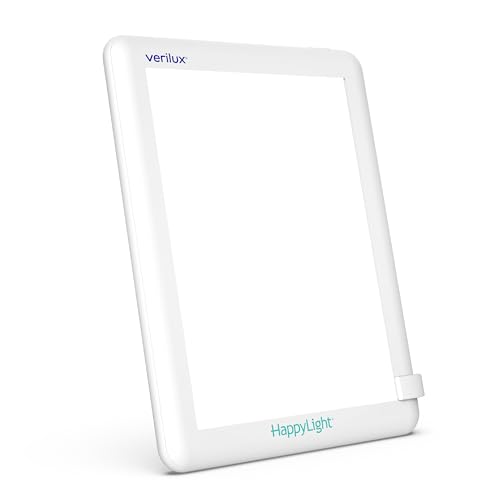
Verilux makes a wide range under the HappyLight name, including desktop, compact and floor-standing lamps. The maker lists UV-free LED light and adjustable brightness on some models. This range suits shoppers who want multiple formats at budget to mid-range tiers. Some compact versions are designed for portability and are appealing for travel, but they typically have a smaller light surface, so the distance matters.
Northern Light Technologies
Northern Light Technologies is a specialist maker whose Boxelite and related lamps are widely discussed by outlets as high-quality units with a larger panel area. The maker states that its devices meet certain standards and emphasizes UV filtering. They tend to be in the mid-range to premium tier. Larger panels let you move around a little without leaving the light field.
Compact and travel lamps
If you travel or work in tight spaces, a smaller lamp can fit in a bag or on a shelf. The trade-off is that small panels demand a shorter distance for the same lux, and you may need longer sessions. Read the maker’s guidance on distance and time carefully.
Dawn simulators
Sunrise alarm lights increase brightness gradually before wake time. Some users like this gentle start. They are not the same as a 10,000 lux light box, and makers generally present them as wake-up aids and not medical devices.
What to look for
Lux and distance
Lux is a measure of light intensity, and it falls as distance grows. Choose a lamp whose stated lux at your realistic sitting distance matches what a clinician or the maker suggests.
UV filtering
Look for a maker statement that UV light is filtered out or not produced. Avoid lamps with no stated UV information.
Panel size
A bigger surface gives more comfortable positioning, a smaller panel is more portable.
Glare and color
Some people find bright white light harsh. Panels with diffusers are more comfortable, and some lamps offer dimmer settings.
Timers and controls
Simple controls help build a routine. A timer can prevent you from overshooting the session length recommended by a clinician.
Certification and claims
Be cautious of lamps making medical promises. Check whether the maker lists any regulatory status for the model and read the manual and warnings.
Safety notes
- Do not stare directly into the light. Place it at the side or angle recommended in the manual.
- Talk to a doctor first if you have an eye condition, take medicines that increase sensitivity to light, have bipolar disorder or have had skin cancer, since light therapy can be unsuitable for some people.
- Side effects such as headache, eyestrain, nausea or agitation have been reported; stop and seek advice if they persist.
- Morning use is the usual pattern, as late evening use may disturb sleep for some people.
- Follow the maker’s electrical guidance, and do not use damaged cords or cover the lamp.
- Keep out of reach of young children and do not use it as a substitute for professional treatment.
Budget tiers
Budget tier: compact lamps and basic panels with UV filtering. Good for trying the idea but check the distance.
Mid-range tier: Carex and Verilux full-size panels, adjustable stands and timers.
Premium tier: larger panels from specialist makers, floor-standing models, and units with extra features.
Pick X if you…
| Pick this | If you… |
|---|---|
| Carex Day-Light Classic | want a straightforward, well-known 10,000 lux panel for a desk |
| Verilux HappyLight | want a choice of sizes, from compact to full-size |
| Northern Light Technologies Boxelite | want a larger panel and a specialist maker |
| Compact travel lamp | move between places and can sit close |
| Dawn simulator | mainly want a gentler wake-up and not a light box |
Alternatives
- Daylight walks: outdoor light in the morning is a free option many clinicians mention.
- Talking therapy and medical care: for persistent or severe symptoms, professional care is the right path.
- Bright office lighting: improving room lighting can be helpful but is not equal to a light box.
Building a simple morning routine
Most guidance describes using a light box early in the day, soon after waking, while you do something calm such as eating breakfast or reading. Position the lamp slightly above eye level and to one side, at the distance the maker specifies for the stated lux, and let the light reach your eyes indirectly without staring into it. Keep a consistent schedule, since irregular use makes it harder to judge whether it helps. Keep a short note of mood, energy and sleep so you and your clinician can see changes over a few weeks. Combine the lamp with other sensible habits such as getting outside in daylight, regular exercise and a steady sleep routine. If symptoms are severe, if you are unsure the lamp is suitable, or if you feel worse after starting, stop and ask a doctor for advice instead of increasing the time or brightness on your own.
Frequently Asked Questions
How long should I use a light therapy lamp each day?
Many sources describe sessions of around 20 to 30 minutes at 10,000 lux in the morning, but individual plans vary. Ask a clinician and follow the maker’s manual.
Is 10,000 lux required?
It is the figure most often cited for SAD, but lower-lux lamps may require longer sessions. A doctor can suggest what fits your situation.
Can I use my lamp while reading or working?
Yes, many people sit near the lamp while having breakfast or using a computer, as long as the light reaches the eyes from the side or above without staring at it.
Is light therapy safe for everyone?
No. People with some eye conditions, bipolar disorder or light-sensitizing medicines should seek medical advice first.
Do light therapy lamps emit UV?
Reputable makers state that their lamps filter or exclude UV light. Choose a model with a clear UV statement and do not use a tanning lamp instead.
When will I notice a difference?
Some people report changes within days to weeks, others notice nothing. If you have no improvement or feel worse, speak to a doctor.