Key takeaways
- Tip-over safety: Tall bookcases can tip, especially with children or pets nearby. Use the wall anchors or anti-tip straps provided or recommended by the maker, and place heavy items on lower shelves.
- Weight limits: Read the stated load per shelf. Spread heavy books across shelves and avoid stacking above the limit.
- Assembly: Tighten hardware as instructed and recheck it after a few weeks. Level the unit if the floor is uneven.
- Wall type: For wall-mounted shelving, find studs when possible and use anchors rated for your wall material.
- Dust and humidity: Wipe with a dry or slightly damp cloth as the maker’s care guide suggests, and keep wood away from damp walls.
- Clearance: Leave space for door swings, baseboards, radiators and vents.
For small spaces, a tall and narrow bookcase or a ladder-style leaning shelf suits most renters and apartment dwellers, wall-mounted shelves suit those who need to keep floor space clear, and cube organizers suit people who want to mix books with baskets; the right pick depends on how many books you own, how much wall you can safely drill into, and how much floor depth you can give up.
Our top picks
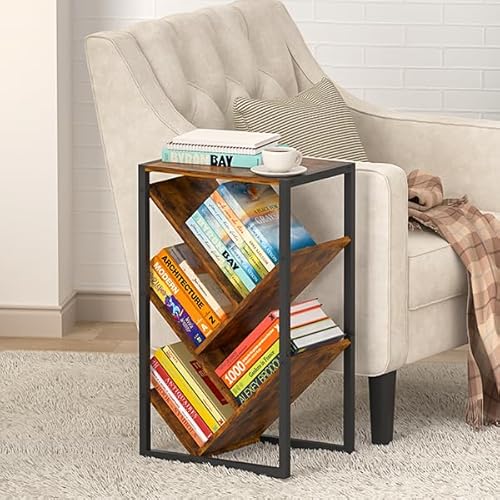


As an Amazon Associate we earn from qualifying purchases at no extra cost to you.
Think in footprint, not just shelf count
In a small room, the question is how much floor and wall you give up for each shelf. A bookcase that is 12 inches deep and 70 inches tall uses far less floor than a wide, low unit with the same number of shelves. Going vertical makes sense when you have ceiling height, but tall furniture needs to be secured. Measure the wall width, ceiling height, baseboard thickness and any outlets, vents or windows the unit would cover before choosing.
Book size matters too. Standard paperbacks fit shallow shelves, while art books, cookbooks and oversized hardbacks need greater depth and sturdier shelves. Many bookcases list a per-shelf weight limit; paper is heavy, so a full shelf of hardcovers can exceed the limit of a thin board.
At a glance: styles compared
| Style | Best for | Typical strengths | Limits |
|---|---|---|---|
| Narrow tall bookcase | Studio apartments, hallways, beside a desk | Many shelves on a small footprint; classic look | Needs wall anchoring; shelves are shallow |
| Ladder or leaning shelf | Renters, corners, dorm rooms | Tapered depth, open airy look, easy to move | Lower capacity per shelf; leans on the wall, so floor and wall care is needed |
| Wall-mounted floating shelves | Rooms where floor space is precious | Frees the floor; fits odd spaces such as above a desk or door | Requires drilling and proper anchors; limited weight per shelf |
| Cube organizer | Mixed use: books, bins, display items | Modular, can be stacked or placed horizontally | Cubes are small for oversize books; thin backs can sag |
| Corner shelf | Dead corners | Uses space that is otherwise wasted | Awkward to reach; shallower shelves toward the corner |
| Over-door or behind-door rack | Very tight rooms | Uses hidden wall space | Limited capacity; can interfere with door operation |
| Storage bench with shelves | Entryways and window seats | Combines seating and storage | Few shelves; not for a large collection |
Picks by situation
Renters who cannot drill
Choose a freestanding unit. Ladder-style shelves from makers such as Sauder, Bush Furniture, Walker Edison and Prepac are common, and their open design leaves the room looking less crowded. Leaning units typically transfer weight to both floor and wall, so place them on a flat floor, and read the maker’s guidance about the angle and any stabilizing hardware. Even for freestanding furniture, an anti-tip strap is a good idea when the unit is tall; if the lease forbids drilling, ask the landlord whether small anchors are acceptable.
Small bedrooms and studios
A narrow tall bookcase placed by the bed or at the end of a wall adds capacity without cutting into the walkway. Look at models with adjustable shelves so you can change spacing for taller books. A closed back panel keeps the unit rigid, while an open back looks lighter and allows you to see the wall color.
Rooms with no spare floor
Floating shelves keep the floor clear. Look for shelves with a concealed bracket or a metal rail system that distributes weight across studs. Use the anchors the maker supplies only when they suit your wall type; drywall, plaster and brick all need different hardware. For heavy hardcovers, use shorter spans and put brackets in studs where possible.
Mixed book and decor storage
Cube units let you combine books with fabric bins that hide clutter. Check the stated per-cube capacity and keep heavier books in the lower cubes.
Budget tiers
| Tier | What you typically get | Trade-offs |
|---|---|---|
| Budget | Engineered wood or laminate in simple designs; tool-light assembly | Thinner shelves can bow under heavy loads; edges and finishes show wear sooner |
| Mid-range | Thicker shelves, metal-and-wood designs, adjustable shelf positions | Larger shipping boxes and longer assembly |
| Premium | Solid wood or high-quality veneer, refined joinery, higher stated weight capacities | Cost and weight, which makes moving harder |
Safety, fit and care
- Tip-over safety: Tall bookcases can tip, especially with children or pets nearby. Use the wall anchors or anti-tip straps provided or recommended by the maker, and place heavy items on lower shelves.
- Weight limits: Read the stated load per shelf. Spread heavy books across shelves and avoid stacking above the limit.
- Assembly: Tighten hardware as instructed and recheck it after a few weeks. Level the unit if the floor is uneven.
- Wall type: For wall-mounted shelving, find studs when possible and use anchors rated for your wall material.
- Dust and humidity: Wipe with a dry or slightly damp cloth as the maker’s care guide suggests, and keep wood away from damp walls.
- Clearance: Leave space for door swings, baseboards, radiators and vents.
Pick this if…
| Pick this if you… | Choose |
|---|---|
| Rent and want to avoid drilling | A freestanding ladder shelf or narrow bookcase with an anti-tip strap |
| Own a large collection but have a narrow wall | A tall, narrow bookcase with adjustable shelves |
| Need to keep the floor clear | Wall-mounted shelves anchored into studs |
| Want to hide clutter along with books | A cube organizer with bins |
| Have an unused corner | A corner shelf |
| Own oversized art or cookbooks | A deeper unit with thick shelves, or a floating shelf with short spans |
Alternatives to a standard bookcase
- Headboard bookcase: Combines bed and storage, though the weight above your head is worth thinking about; follow the maker’s guidance.
- Rolling cart: Moves where needed and holds paperbacks, but has limited capacity.
- Library-style wall hooks and rails: A flexible way to hang small shelves where studs are available.
- E-reader: Not a shelf at all, but it reduces the number of books you must store.
Arranging books to make the most of a small space
Group books by size so shelves can be set closer together. Place the tallest books on the lowest shelves and keep the top shelves for lighter items such as paperbacks and small decor. Turn some books horizontally to stack small groups, which creates visual breaks and uses wasted headroom. If your collection is growing, rotate rarely read books into under-bed boxes or a closet and keep favorites on display.
Light color finishes, open backs and slender frames tend to make a room look larger. Dark, heavy cases can feel imposing in a small room. Putting the shelf against the longest wall, or using the wall space above a door or desk, makes the room feel organized rather than cluttered. If you are choosing between two similar units, the one with adjustable shelves and the higher stated per-shelf capacity is usually the safer pick for a book collection that will change over time.
Final buying checklist
Before buying, sketch the room, mark the wall you plan to use, and note the width, depth and height available, including any baseboard or window sill. Count your books by size and decide how many you want on display versus stored elsewhere. Compare the stated shelf capacity, the assembly method and the anchoring hardware for each candidate. A shelf that fits the space with a little room to spare, and that you can secure properly, will serve a small home better than a larger unit that dominates the room.
Frequently Asked Questions
What depth is best for a small-space bookcase?
For paperbacks and standard novels, a depth of about 10 to 12 inches works well and saves floor space. Larger books need more depth, so measure your biggest volumes before buying.
Are ladder shelves stable enough for books?
They can be, provided you stay within the maker’s stated load and place the base on a flat floor. Heavy books should go on the lowest shelves, and you should read the instructions about wall contact and stabilizing hardware.
Do I need to anchor a bookcase to the wall?
For tall units, anchoring is strongly advised by most furniture makers and safety groups, especially with children or pets in the home. Use the anchors suited to your wall type and follow the instructions in the manual.
How much weight can floating shelves hold?
It depends on the shelf, the brackets, the wall and the anchors. Makers state a rating for each product, and that figure assumes proper installation into studs or suitable anchors. Keep your load below it.
Which material is best for heavy books?
Solid wood and thick plywood generally resist sagging better than thin particleboard. Metal frames with sturdy shelves also perform well. Look at the stated per-shelf capacity rather than guessing from the material alone.
How can I stop shelves from bowing?
Choose shelves with a center support or a thicker board, keep spans short, and spread the weight across shelves. Flipping the shelf periodically can slow sagging, as long as the maker allows this.