Key takeaways
- Do not stack items above the top shelf in a way that blocks your view while pushing.
- Keep fingers clear of folding mechanisms and caster brakes.
- Check local building and accessibility guidance for aisle widths if carts will be used by people with mobility needs.
- Replace damaged casters promptly, since a seized wheel can tip a loaded cart.
- Staff with back or shoulder problems should favour lighter carts with ergonomic handles and ask an occupational health professional about suitable equipment.
The best library book cart for a school or community library is usually a sloped-shelf steel or wood book truck from a library supplier such as Demco or Brodart, while a home reader, church library or small office is often better served by a lighter multi-purpose utility cart from a brand such as Seville Classics or Luxor. The deciding factors are shelf angle, caster quality, load rating and whether the cart has to pass through narrow aisles or doorways.
Our top picks


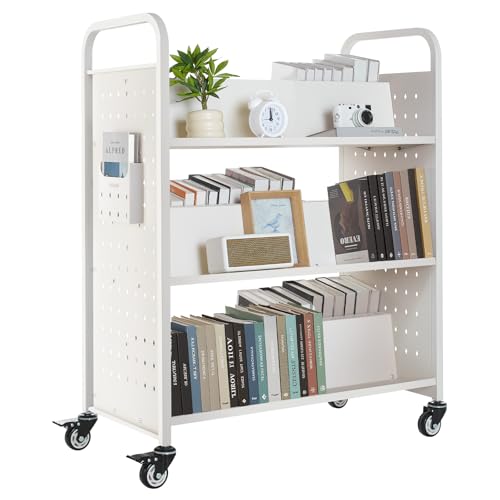

As an Amazon Associate we earn from qualifying purchases at no extra cost to you.
What a book cart actually has to do
A book cart carries returned or reshelving items between the circulation desk and the stacks. Unlike a generic kitchen or office cart, a true book truck typically has shelves that tilt slightly backward so volumes lean against a lip rather than sliding off, and frames sized to fit through stack aisles. Library suppliers describe these features in their catalogs. A utility cart can work for lighter use, but flat shelves allow books to slide when the cart turns or crosses a threshold.
At a glance
| Cart type | Typical brands | Best for | Key points | Limits |
|---|---|---|---|---|
| Steel sloped-shelf book truck | Demco, Brodart, Safco, others | Schools, public libraries, daily reshelving | Makers list tilted shelves, powder-coated frames and swivel casters; check each listing for shelf count and rated capacity | Heavy when loaded; fixed shelf configuration on many models |
| Wood book truck | Demco, library furniture makers | Libraries that want furniture-style appearance | Warmer look that blends with wooden shelving | Heavier, more expensive tier, and can mark if edges are knocked |
| Three-shelf utility cart | Seville Classics, Luxor, Rubbermaid | Home libraries, offices, small churches | Lightweight, easy to store, often folds or ships assembled in a flat pack | Flat shelves, lower load ratings, less durable casters |
| Rolling bookshelf cart (face-out) | Library suppliers, school furniture makers | Classroom libraries, reading corners | Shelves display covers, so younger readers can browse | Holds fewer volumes per cart; footprint is larger |
| Stainless or metal service cart | Various restaurant and healthcare suppliers | Archives, heavy volumes, and cleaning needs | Wipe-clean surface; rated for heavier loads in the makers’ listings | No book-specific tilt; usually the premium tier |
Steel sloped-shelf book trucks
Steel is the standard for busy libraries. Library supplier catalogs describe powder-coated steel frames, shelves that tilt back and end panels shaped for a comfortable push. The main trade-off is weight: a full steel cart takes real effort on carpet. Look for swivel casters on at least two corners and a brake or lock if the cart will be parked on slightly sloped floors. Check the maker’s listed capacity and the number of shelves, because a three-shelf unit is easier to push but holds less than a taller five-shelf model. A tall cart can also become top heavy if overloaded on the upper shelves, so load the bottom shelf first.
Wood book trucks
Wood trucks are more common where aesthetics matter, such as older libraries, reading rooms or heritage buildings. They are usually in the mid-range to premium tier and are heavy. Reviewers and suppliers note that finished wood handles daily use if the finish is maintained, but corners can chip when carts hit shelving. If your library is carpeted, check that the casters are rated for it, since small hard casters can drag.
Lightweight utility carts
For a home library or a classroom with a few hundred books, a three-tier utility cart is often adequate. Models from brands like Seville Classics and Luxor are widely sold and are designed for general use in kitchens, offices and craft rooms. Because shelves are flat, you can add a non-slip liner or a low shelf lip to keep books from sliding. These carts are budget-tier and easier to move, but makers typically list lower load capacities than library-specific trucks, so confirm that the rating matches your heaviest load, such as hardback reference volumes.
Face-out and display carts
Rolling display carts, sometimes called mobile browsers, suit early readers. Covers face outward in shallow slots, which helps children choose a book quickly. They hold fewer volumes than a traditional truck and are better for rotation than reshelving. Keep them away from direct sunlight to protect covers.
Features that matter
Shelf angle and lip
Sloped shelves reduce slipping, and a front lip stops books from sliding forward. If your carts handle oversized picture books or large atlases, check that the shelf depth and height match.
Casters
Larger wheels roll more easily over thresholds and carpet. Rubber or polyurethane tread is generally quieter on hard floors than hard plastic. Locking casters prevent rolling during loading.
Load rating
Books are denser than they look. A shelf of hardbacks can weigh much more than a similar shelf of paperbacks. Use the maker’s stated capacity, spread weight evenly and avoid exceeding it.
Width and turning radius
Measure your narrowest aisle and doorways before ordering. Many stack aisles are tight, and a cart wider than the aisle will be hard to use.
Assembly and care
Many carts ship flat. Check whether tools are included and whether welded or bolted construction is stated. Wipe metal with a damp cloth and dry it, and keep wood away from moisture.
Budget tiers
Budget tier: lightweight utility carts with flat shelves and small casters. Fine for light home or office use.
Mid-range tier: steel sloped-shelf trucks from library suppliers, with better casters and the correct shelf geometry. This is the tier most schools and small libraries target.
Premium tier: wood furniture-grade trucks, heavy-duty or specialty carts and archival or stainless options. They justify their cost where appearance, hygiene or heavy loads matter.
Safety and accessibility notes
- Do not stack items above the top shelf in a way that blocks your view while pushing.
- Keep fingers clear of folding mechanisms and caster brakes.
- Check local building and accessibility guidance for aisle widths if carts will be used by people with mobility needs.
- Replace damaged casters promptly, since a seized wheel can tip a loaded cart.
- Staff with back or shoulder problems should favour lighter carts with ergonomic handles and ask an occupational health professional about suitable equipment.
Pick X if you…
| Pick this | If you… |
|---|---|
| Steel sloped-shelf truck | reshelve daily and want purpose-built geometry |
| Wood book truck | want furniture styling to match existing shelving |
| Three-shelf utility cart | have a small home or office collection and limited budget |
| Face-out display cart | serve young readers who choose by cover |
| Stainless service cart | need wipe-clean surfaces or heavy-duty capacity |
Alternatives to consider
- Folding hand trucks or carts: useful for moving boxed donations between rooms, not for display.
- Rolling storage bins: good for temporary book fairs but lack shelves.
- Used library trucks: libraries and schools sometimes sell surplus carts; inspect the casters and welds first.
How to match a cart to your space
Start with the route the cart will travel. Measure the narrowest aisle between stacks, the width of every doorway, and any thresholds or ramps. Then estimate the load: a school library that reshelves a few dozen paperbacks per day needs less capacity than a university branch moving heavy hardback volumes. Think about who will push the cart too. Student volunteers and older staff may prefer lighter frames with larger wheels, while a full-time circulation team can handle a heavier steel truck that lasts longer. If you have more than one floor, check whether the cart fits the elevator and whether it can be locked during transport. Finally, consider storage: some carts nest or fold, which helps when the cart is only used during peak return periods. Makers publish dimensions in their listings, so compare the footprint, the shelf count and the stated capacity side by side instead of relying on a photo. A little planning here prevents the most common complaint, which is a cart that is too wide, too heavy or too small for the job it was bought to do.
Frequently Asked Questions
What is the difference between a book cart and a utility cart?
A book cart usually has tilted shelves and a lip to keep books in place, plus a frame sized for library aisles. A utility cart has flat shelves meant for general items, so books may slide when you turn.
How many books does a cart hold?
It depends on the shelf count and book thickness. A three-shelf cart often holds a few dozen standard volumes per shelf for paperbacks, fewer for hardbacks. Rely on the maker’s stated capacity rather than guessing.
Are wooden carts worth it?
They suit places where appearance matters and budgets allow. Steel carts are generally lighter on cost and tougher in daily service, so wood is more a style choice than a performance one.
Do I need locking casters?
They are useful when loading on uneven floors or when children are nearby. At least two locking casters keep a loaded cart from drifting.
How wide should the cart be?
Choose a width that clears your narrowest aisle with a little room to spare. Measure the doorways and elevator too if the cart moves between floors.
How do I clean and maintain a book cart?
Wipe surfaces with a damp cloth and mild cleaner, dry metal thoroughly and check casters and fasteners from time to time. Follow the maker’s care instructions for wood finishes.