Key takeaways
- Chosen oil from above
- Papertowels or lint-free cloth
- Aluminum foil or sheet pan
- Oven with ventilation or exhaust fan
- Dish soap, warm water, and a non-metal brush
What's inside
The best oil to season cast iron for most people is refined grapeseed oil or canola oil because they balance a high smoke point, neutral flavor, low cost, and reliable polymerization, while refined avocado oil is best if you want the highest heat tolerance and flaxseed oil offers the hardest initial finish but at a higher price and with a greater tendency to flake.
As an Amazon Associate we earn from qualifying purchases at no extra cost to you.


7 Best Oils to Season Cast Iron Compared
Seasoning is not just coating metal with oil. It is heating a very thin layer of oil past its smoke point so it polymerizes into a hard, dry, nonstick plastic-like layer bonded to the iron. The oil you choose affects how easily that bond forms, how durable it is, how much smoke and odor you get, and whether it leaves a taste on food.
| Oil | Smoke Point (Refined) | Polymerization | Flavor After Seasoning | Typical Cost Range (per 16 oz) | Availability |
|---|---|---|---|---|---|
| Canola Oil | 400°F / 204°C | Very Good – Even, durable layers | Neutral | $3 – $6 | Excellent |
| Grapeseed Oil | 420°F / 216°C | Excellent – Hard, slick finish | Neutral | $5 – $9 | Good |
| Refined Avocado Oil | 480°F / 249°C | Good – Requires higher heat to fully polymerize | Very neutral | $8 – $14 | Good |
| Vegetable Oil (Soybean) | 400°F / 204°C | Very Good – Similar to canola | Neutral | $3 – $6 | Excellent |
| Refined Sunflower Oil | 440°F / 227°C | Good – Light, even coat | Neutral | $4 – $7 | Good |
| Flaxseed Oil (Food-Grade, Cold-Pressed) | 225°F / 107°C (unrefined) | Excellent initially, prone to chipping over time | Slightly nutty / bitter if not fully polymerized | $9 – $16 | Moderate – refrigerated section |
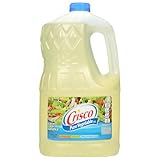
| Vegetable Shortening (e.g., Crisco) | 490°F / 254°C (after melting) | Very Good – Thick protection, great for storage | Neutral | $4 – $8 per 16 oz equivalent | Excellent |
1. Canola Oil – Best All-Around Value
Canola is the default recommendation for a reason. Its smoke point of around 400°F is high enough to polymerize cleanly in a home oven at 450-475°F without excessive smoke, and low enough that you do not need to push your oven to its limit. It is highly unsaturated, which means it cross-links well, and it leaves no detectable flavor. For routine maintenance seasoning after cooking, canola is inexpensive enough to use liberally and wipe off.
2. Grapeseed Oil – Best for Slick, Thin Layers
Grapeseed oil is high in polyunsaturated fats, which is exactly what you want for hard polymerization. It forms a very thin, hard film that builds to a smooth patina faster than canola with fewer sticky spots. Its 420°F smoke point is ideal for oven seasoning at 450°F. Downside is cost and a shorter shelf life than canola – buy smaller bottles if you only use it for seasoning.
3. Refined Avocado Oil – Best High-Heat Option
Do not confuse this with unrefined or extra-virgin avocado oil. Refined avocado oil has the highest smoke point on this list at around 480°F. That is useful if you often sear at very high heat on gas grill or broiler and want seasoning that will not break down. The trade-off: you must heat it to 500°F to fully polymerize it, which creates more smoke and odor and may exceed what some ovens or ventilation can handle. It is also the most expensive per ounce.
4. Vegetable (Soybean) Oil – Best Budget Alternative to Canola
Most bottles labeled “vegetable oil” in the US are 100% soybean oil. Chemically it behaves almost identically to canola for seasoning, with the same 400°F smoke point, neutral flavor, and good polymerization. Choose whichever is cheaper at your store.
5. Refined Sunflower Oil – Best Neutral High-Oleic Option
High-oleic or refined sunflower oil at 440°F sits between grapeseed and avocado. It polymerizes evenly and stays completely flavorless. It is a good pick if grapeseed is unavailable and you want a slightly higher smoke point than canola without the price of avocado oil.
6. Flaxseed Oil – Hardest Finish, Highest Maintenance
Flaxseed oil became popular after claims that its very high alpha-linolenic acid content creates the hardest seasoning. It does dry into an extremely hard layer at first, but that hardness makes it brittle. Over months of heating, cooling, and scraping, flaxseed-only seasoning is more likely to chip and flake in sheets than seasoning built from canola or grapeseed. It also has a very low smoke point when unrefined, so it smokes heavily before polymerizing, smells strongly, and costs significantly more. It must be refrigerated and goes rancid quickly. Most cast iron restorers now recommend against using it as your sole oil.
7. Vegetable Shortening – Best for Long-Term Storage and Cast Iron Beginners
Solid shortening like Crisco is hydrogenated soybean and palm oil. It melts to a clear, refined oil with a very high smoke point and a semi-solid texture that makes it easy to apply an ultra-thin layer without pooling. Because it is solid at room temperature, it leaves a slightly waxy protective coat that resists rust during long storage. It is forgiving for beginners who tend to leave too much oil on the pan.
Avoid extra-virgin olive oil and unrefined coconut oil for initial seasoning. Extra-virgin olive oil smokes at 375-405°F, leaves a bitter, green flavor in the seasoning, and its particles burn before a strong polymer can form. Virgin coconut oil smokes around 350°F and leaves a coconut aroma that transfers to savory foods.
Decision Matrix: Which Oil Should You Pick?
Match your situation to the best choice, not just the highest smoke point:
| Your Situation | Recommended Oil | Why |
|---|---|---|
| You want cheap, easy, and reliable for your first pan | Canola or Vegetable Oil | Low cost, neutral flavor, forgiving smoke point, available everywhere |
| You want the slickest nonstick build-up for eggs and fish | Grapeseed Oil | Highest polyunsaturated content for a hard, thin, even patina |
| You sear steaks at 500°F+ or use a grill/broiler often | Refined Avocado Oil | Seasoning resists breakdown at extreme heat when fully polymerized |
| You restore and store pans for months between use | Vegetable Shortening | Easy thin application and waxy residue protects against humidity and rust |
| You want to experiment and do not mind extra cost and smoke | Flaxseed Oil (1-2 base layers only) | Very hard initial layer, but build subsequent layers with canola/grapeseed to prevent flaking |
| You cook for sensitive palates and need zero flavor transfer | Refined Sunflower or Refined Avocado | Most neutral after baking, no nutty or beany notes |
How to Season Cast Iron Properly (Step-by-Step)
The method matters more than the oil brand. Thick oil equals sticky, gummy seasoning. Thin layers equal hard, nonstick seasoning.
What You Need
- Chosen oil from above
- Papertowels or lint-free cloth
- Aluminum foil or sheet pan
- Oven with ventilation or exhaust fan
- Dish soap, warm water, and a non-metal brush
Steps
1. Clean and dry completely: Wash the pan with warm water and a small amount of dish soap. Modern dish soap will not destroy seasoning, but it will remove loose grease and food. Scrub off any rust or sticky residue. Rinse and towel dry, then place on a burner over low heat for 2-3 minutes until water fully evaporates. The iron should feel hot to the touch.
2. Apply an ultra-thin coat: While the pan is warm but not hot, add 1/2 teaspoon of oil. Rub it over every surface – inside, outside, handle, and bottom – with a paper towel. Then take a clean dry paper towel and wipe it all off as if you made a mistake and want to remove it. What remains is the correct amount. This is the most common mistake; if the pan looks shiny or wet, you left too much.
3. Heat past the smoke point: Place foil or a sheet pan on the lower oven rack to catch drips. Place the pan upside down on the middle rack. Heat to 25-50°F above your oil’s smoke point. For canola, vegetable, and grapeseed, use 450-475°F. For refined avocado and shortening, use 500°F. Bake for 60 minutes. The pan will smoke – turn on the vent and open a window.
4. Cool gradually: Turn off the oven and let the pan cool inside for 45-60 minutes. Do not quench with water. It should look matte, dry, and slightly darker, not sticky or blotchy.
5. Repeat 2-3 times for new or stripped pans: One cycle is enough for routine maintenance. For a new Lodge or stripped vintage pan, do 3 thin cycles back-to-back. Three thin layers are far more durable than one thick one.
Durability and Ownership Realities
Even the best oil will not create permanent nonstick in one day. Understanding what actually happens extends the life of your pan:
- What wears first: The cooking surface in the center and the sidewalls where utensils scrape. Expect lighter color there after fried eggs or acidic foods. This is normal, not failure. A 30-second stovetop seasoning after cleaning rebuilds it.
- Acid and water are the enemies: Simmering tomato sauce or wine for 20+ minutes will dull seasoning faster than any oil choice. If you cook acidic foods, do a quick stovetop re-season afterward. Never soak cast iron or leave it wet overnight; surface rust can form in hours.
- Consumables to budget: Paper towels, a plastic scraper, and a chainmail scrubber or stiff brush. Avoid steel wool unless you intend to strip and re-season. You will also use oil continuously – a 16 oz bottle of canola should last 25-30 maintenance seasonings at about $0.15 per use, while the same volume of refined avocado oil costs $0.50-$0.85 per use.
- Common mistakes that cause stickiness: Using too much oil, not reaching the smoke point, and not preheating the pan before cooking. If your pan feels gummy after seasoning, you did not wipe enough off or bake long enough. Scrub with hot water, heat dry, and redo a thinner layer hotter.
- Cleaning without stripping: Clean while still warm. Rinse with hot water, use a scraper or brush, and use a drop of soap if needed. Towel dry immediately and warm on low heat for 2 minutes. Add a few drops of oil, wipe to a dry sheen, and heat until it just starts to smoke then remove from heat. This maintains the patina without a full oven cycle.
Cost Per Use: Quick Calculation
If you oven-season monthly and stovetop-season weekly, you use roughly 1/2 teaspoon (about 0.08 oz) per maintenance. Over a year that is about 62 uses or ~5 oz of oil. With canola at $4 per 16 oz, yearly seasoning cost is about $1.25. With refined avocado oil at $11 per 16 oz, the same routine costs about $3.40. The difference is small annually, but if you do 3-4 initial restoration layers at once, avocado oil can add $2-$4 per restoration compared to canola. For most owners, starting with canola or grapeseed and reserving avocado oil for high-heat users saves money without sacrificing performance.
Frequently Asked Questions
Is flaxseed oil really the best science-based choice?
No. While flaxseed is high in omega-3s that polymerize readily, hardness does not equal durability. Multiple thin layers of more flexible oils like canola and grapeseed resist thermal expansion and mechanical stress better over years of use, which is why most professional restorers no longer recommend flaxseed-only seasoning.
Can I mix oils?
Yes. Many owners use flaxseed for one initial layer then switch to grapeseed or canola for the next two. You can also use canola for everyday maintenance regardless of what you started with. Just keep each layer ultra-thin and bake above that oil’s smoke point.
What temperature should I season at?
Always 25-50°F above the smoke point of the specific oil you are using. Seasoning below the smoke point does not polymerize; it just bakes sticky oil onto the pan. Use 450-475°F for canola, vegetable, and grapeseed, and 500°F for refined avocado and shortening.
Does seasoning add unhealthy fats to food?
Once polymerized, the oil is no longer an oil – it is a dry, solid polymer bonded to the iron. It does not transfer as dietary fat in meaningful amounts. For general dietary questions about cooking oils, talk to your primary care provider or a registered dietitian.