Key takeaways
- Lodge 10.25″ Skillet at ~$45 / (4 uses x 52 weeks x 20 years = 4,160 uses) = ~$0.011 per use
- Field Company No.8 at ~$180 / 4,160 uses = ~$0.043 per use
- Le Creuset 5.5-qt at ~$350 / (2 uses per week x 52 x 25 years = 2,600 uses) = ~$0.13 per use
- Lodge Enameled 5.5-qt at ~$90 / 2,600 uses = ~$0.035 per use
What's inside
- Best Cast Iron Cookware Compared: Specs That Affect Daily Use
- How We Ranked: Heat Retention, Seasoning, Weight, Handles, and Price
- Which Cast Iron Should You Choose? A Decision Matrix
- Cost Per Use: Why Cheap Cast Iron Often Wins
- Durability and Ownership Realities Most Listings Skip
- Top Picks by Category in 2026
- How to Decide Before You Buy
- Frequently Asked Questions
The best cast iron cookware in 2026 for most everyday cooks is the Lodge 10.25-inch Pre-Seasoned Skillet for skillets, the Lodge 5.5-qt Enameled Dutch Oven for Dutch ovens on a budget and the Le Creuset 5.5-qt Round Dutch Oven if you want premium enamel, and the Lodge Pre-Seasoned Reversible Grill/Griddle for griddles — because they hit the best balance of heat retention, usable pre-seasoning, manageable weight, and price for daily stovetop and oven use.
- Best Cast Iron Cookware Compared: Specs That Affect Daily Use
- How We Ranked: Heat Retention, Seasoning, Weight, Handles, and Price
- Which Cast Iron Should You Choose? A Decision Matrix
- Cost Per Use: Why Cheap Cast Iron Often Wins
- Durability and Ownership Realities Most Listings Skip
- Top Picks by Category in 2026
- How to Decide Before You Buy
- Frequently Asked Questions
That ranking changes quickly if you prioritize lighter weight, smoother cooking surfaces, or better handle comfort. Below is how the top categories break down by the criteria that actually matter for everyday cooking.
As an Amazon Associate we earn from qualifying purchases at no extra cost to you.



Best Cast Iron Cookware Compared: Specs That Affect Daily Use
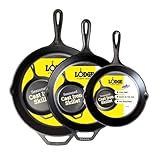
Cast iron varies more than listings suggest. Wall thickness drives heat retention and weight, pour spouts and handle shape affect safety, and factory seasoning is never truly non-stick on day one. These are the models that consistently rank highest for home cooks in 2026:
| Model | Type | Size / Capacity | Weight | Material / Finish | Handle Design | General Price Range |
|---|---|---|---|---|---|---|
| Lodge Cast Iron Skillet 10.25″ | Skillet | 10.25″ diameter, 1.8L capacity | 5.0 lbs (2.27 kg) | Bare cast iron, vegetable oil pre-seasoned | Single long handle + helper handle, no stay-cool | $30 – $60 |
| Field Company No.8 Skillet | Skillet | 10.25″ diameter, 1.6L capacity | 4.5 lbs (2.04 kg) | Lighter-weight bare cast iron, triple-seasoned | Longer handle, polished interior | $150 – $210 |
| Smithey Ironware No.12 Skillet | Skillet | 12″ diameter, 2.4L capacity | 8.0 lbs (3.63 kg) | Polished bare cast iron, pre-seasoned | Ergonomic long handle + helper handle | $200 – $270 |
| Victoria Cast Iron Skillet 12″ | Skillet | 12″ diameter, 2.3L capacity | 7.3 lbs (3.31 kg) | Bare cast iron, flaxseed oil pre-seasoned | Extra-long curved handle + helper handle | $40 – $70 |
| Lodge Enameled Dutch Oven 5.5-qt | Dutch Oven | 5.5 qt (5.2L), 10.75″ diameter | 13.2 lbs (5.99 kg) with lid | Cast iron with porcelain enamel interior/exterior | Loop side handles, stainless knob to 500F | $70 – $120 |
| Le Creuset Round Dutch Oven 5.5-qt | Dutch Oven | 5.5 qt (5.2L), 10.2″ diameter | 11.5 lbs (5.22 kg) with lid | Enameled cast iron, light sand interior | Wide loop handles, phenolic/stainless knob | $320 – $400 |
| Staub Round Cocotte 4-qt | Dutch Oven | 4 qt (3.8L), 9.5″ diameter | 11.8 lbs (5.35 kg) with lid | Enameled cast iron, black matte interior, self-basting spikes | Compact loop handles | $280 – $360 |
| Lodge Reversible Grill/Griddle LDP3 | Griddle | 16.75″ x 9.5″, fits over 2 burners | 7.8 lbs (3.54 kg) | Bare cast iron, pre-seasoned, ribbed grill / flat griddle | No handles, flat edge | $40 – $70 |
How We Ranked: Heat Retention, Seasoning, Weight, Handles, and Price
1. Heat Retention and Evenness
Thicker walls retain heat longer but heat unevenly at first and take 4-7 minutes to preheat on medium-low. In this group, Smithey No.12 and Lodge skillets hold searing heat longest due to mass, while Field Company heats faster and cools faster because it is cast thinner. For Dutch ovens, Le Creuset and Staub retain braising heat more evenly than lighter enameled alternatives because the enamel layer adds thermal mass without hot spots, and Staub’s spiked lid returns condensation more effectively for long simmers.
2. Pre-Seasoning Quality
No factory seasoning equals a mature seasoning. Lodge and Victoria ship with a functional vegetable/flaxseed oil base that prevents rust and releases food moderately well after 3-4 thin oil heat cycles. Smithey and Field Company ship with smoother, polished surfaces and multiple seasoning layers, so eggs and fish release sooner, but all bare cast iron still requires building your own polymerized layer through cooking fatty foods and proper cleaning for the first month.
3. Weight and Maneuverability
Weight is the biggest everyday tradeoff. A 12-inch bare skillet at 7-8 lbs becomes 11-12 lbs with food, which is difficult for one-handed pouring. If you have wrist issues, cook for one or two, or have a glass-top stove with weight limits, a 10.25-inch skillet at 4.5-5.0 lbs is significantly more usable. Enameled Dutch ovens are heavy by design – a 5.5-qt at 11-13 lbs plus 4-5 lbs of stew is a two-hand lift, so check your oven rack height and storage.
4. Handle Ergonomics
Traditional Lodge handles are short, get fully hot, and offer little knuckle clearance – you will need an oven mitt or silicone grip every time. Victoria, Smithey, and Field Company use longer, slightly angled handles with better balance and a helper handle that actually fits a mitt. For Dutch ovens, Le Creuset’s wider loops are easier with thick mitts than Lodge’s tighter loops, which matters when moving a hot, full pot from stovetop to oven.
Which Cast Iron Should You Choose? A Decision Matrix
Match your situation to the format, not just the brand:
| Your Situation | Best Pick | Why It Fits |
|---|---|---|
| First cast iron, daily family cooking, budget conscious | Lodge 10.25″ Skillet + Lodge 5.5-qt Enameled Dutch Oven | Lowest cost, readily available replacement parts like knobs, forgiving seasoning, heavy enough for good sear |
| Small kitchen, cooking for 1-2, limited storage | Field Company No.8 (10.25″) or Lodge 10.25″ | Lighter, easier to lift and store, fits smaller burners without overhang |
| Sear steaks and cook large batches, have strength/storage | Smithey No.12 or Victoria 12″ | Larger surface, better fond development; Smithey smoother for fish, Victoria better value |
| Bread baking, braises, and stews 2+ times per week | Le Creuset 5.5-qt or Staub 4-qt | Superior enamel durability, tighter lids, oven-safe to 500F, no seasoning maintenance |
| Stovetop breakfasts, pancakes, tortillas, camping stove | Lodge Reversible Grill/Griddle | Covers two burners, flat side for even griddle heat, grill side for sear marks, no need for two pans |
| Want light cast iron without switching to carbon steel | Field Company No.8 | Thin-wall cast, 10% lighter than Lodge with smoother finish, still retains cast iron heat profile |
Cost Per Use: Why Cheap Cast Iron Often Wins
Cast iron rarely wears out, so cost per use drops fast compared to non-stick. Here is a realistic calculation for everyday use:
Assumptions: You cook 4 times per week, 52 weeks per year. Bare cast iron and enameled cast iron last 20+ years with normal care; a typical PTFE non-stick skillet lasts 2-3 years before coating degrades.
- Lodge 10.25″ Skillet at ~$45 / (4 uses x 52 weeks x 20 years = 4,160 uses) = ~$0.011 per use
- Field Company No.8 at ~$180 / 4,160 uses = ~$0.043 per use
- Le Creuset 5.5-qt at ~$350 / (2 uses per week x 52 x 25 years = 2,600 uses) = ~$0.13 per use
- Lodge Enameled 5.5-qt at ~$90 / 2,600 uses = ~$0.035 per use
Even the premium options cost pennies per use over their lifespan. The real cost difference is upfront and in care time, not replacement frequency. If you rarely cook stews, the Lodge enameled Dutch oven delivers 80% of the performance at about 25% of the upfront cost.
Durability and Ownership Realities Most Listings Skip
What Actually Wears First
- Bare cast iron: Not the iron itself, but the seasoning. Acidic foods like tomato sauce or wine braises strip young seasoning, leaving dull, grey patches and metallic taste. After a year of regular use, seasoning is resilient, but early on limit acidic cooks to under 30 minutes.
- Enameled cast iron: The enamel. Chips start at rim edges and lid rims from utensil knocks or stacking without protectors. Light interior enamel (Le Creuset) stains but shows food fond better; black matte (Staub) hides staining but makes browning harder to judge. Chipped enamel cannot be re-seasoned and can expose iron to rust.
- Knobs and handles: Phenolic knobs on older Dutch ovens are limited to 390-425F. Replace with stainless knobs if you bake bread at 450-500F. Bare iron handles will rust at the hanging hole if left wet.
Cleaning and Common Mistakes That Ruin Seasoning
- Do not soak bare cast iron overnight and do not put it wet into a cabinet. Dry on low heat for 2-3 minutes after washing, then wipe with a micro-thin layer of neutral oil while warm.
- Skip harsh dishwasher cycles for any cast iron. For enameled, dishwasher detergents dull the exterior over time; hand wash with baking soda paste for stains.
- Avoid thermal shock: Do not plunge a 450F Dutch oven into cold water. It can craze enamel and warp thin cast iron. Let it cool to 150F or below first.
- Use chain mail scrubbers or coarse salt for stuck bits on bare iron instead of steel wool, which strips seasoning down to bare metal. If you do strip it, you must re-season with 3-4 oven cycles of thin flaxseed or grapeseed oil at 450F.
Setup and Maintenance With Reasons
For new bare cast iron, even pre-seasoned:
- Wash once with warm soapy water to remove factory dust and oils. Dry completely.
- Heat empty on medium-low for 2 minutes, add 1/2 tsp neutral oil with high smoke point, wipe in with paper towel until it looks dry, not pooled. Heat until it just smokes, then cool. Repeat 2-3 times. This builds a thin polymerized layer rather than sticky, rancid oil buildup.
- Cook with adequate fat and preheat for the first 10 uses. Preheat skillet on medium-low 5 minutes, test with water droplet – it should sizzle and dance, not instantly smoke.
- For enameled, no seasoning needed. Before first use, simmer water with a teaspoon of baking soda to remove factory residue, then season with use: avoid dry-heating empty enameled pots above medium, as empty enamel can overheat and discolor.
Top Picks by Category in 2026
Best Skillet Overall: Lodge 10.25-Inch Pre-Seasoned
Best combination of heat retention, helper handle utility, and general price range that keeps cost per use lowest. At 5.0 lbs it is manageable for most stoves and users, fits in a standard oven, and holds heat well enough for a proper steak sear after a full preheat. Seasoning is basic but functional and improves quickly. Main downsides are the hot, short primary handle and rougher cooking surface compared to polished options.
Best Lightweight / Premium Skillet: Field Company No.8 or Smithey No.12
Choose Field Company if you want lighter weight and easier handling; choose Smithey if you want a smoother, more refined sear surface and are comfortable with 8 lbs. Both reduce the rough texture that makes Lodge grab food early on, but you pay 3-5x more for that polish.
Best Dutch Oven Value: Lodge 5.5-Quart Enameled
Holds braises and bakes bread well, with a true 5.5-qt capacity that fits a 4-lb chicken. Enamel is not as chip-resistant or evenly applied as Le Creuset or Staub, and the lid fit is less precise, so you may lose slightly more moisture on long simmers. Still the practical choice if you use a Dutch oven weekly but not daily.
Best Dutch Oven Overall: Le Creuset 5.5-Quart Round
Lighter than Lodge despite similar capacity, with a more durable, easier-to-clean interior and better heat distribution on low burner settings. Worth it if you braise, make stews, or bake sourdough frequently and want the lid and enamel to stay tight for a decade. Staub 4-qt is better for smaller households and prefers its black interior for searing, but its 4-qt size is tight for family portions.
Best Griddle: Lodge Reversible Grill/Griddle LDP3
The two-in-one design saves storage and covers two burners for pancakes, tortillas, or bacon. It is heavy and has no raised edges, so grease can spill if overloaded, and it requires two-burner heat management to avoid a hot center and cool edges. For single-burner use, a round 10.5-inch Lodge griddle is easier to handle.
How to Decide Before You Buy
Measure your burner and oven first. A 12-inch skillet overhangs a standard 8-inch electric burner by 2 inches per side, creating a 100F+ temperature difference between center and edge unless you preheat in the oven. Check that a 5.5-qt Dutch oven with lid fits on your oven rack with 2 inches of clearance on top for air circulation. If you have a smooth glass cooktop, confirm its weight limit is above 15 lbs before choosing a large Dutch oven.
If you cook under 3 times per week, start with one 10.25-inch skillet. If you cook most days and make soups or bread, add a 5.5-qt enameled Dutch oven before adding a griddle, since the Dutch oven replaces both a pot and a bread oven.
Frequently Asked Questions
Is enameled cast iron better than bare cast iron?
Neither is universally better. Bare cast iron sears hotter and can be restored indefinitely, but requires seasoning maintenance and reacts with acidic foods when young. Enameled cast iron is non-reactive, needs no seasoning, and is better for braises, sauces, and bread, but enamel can chip and cannot be repaired at home.
Can I use cast iron on a glass or induction cooktop?
Yes for both, but lift rather than slide to avoid scratching glass, and ensure the pan bottom is flat. Most quality cast iron is induction compatible. Avoid heating empty bare iron on high on glass tops, which can create excessive localized heat.
Do I need to season enameled cast iron?
No. Do not season the enamel interior; oil will just become sticky. Only the exposed cast iron on the rim may get a light oil wipe to prevent rust if chipped.