Key takeaways
- Five spiral binding machines that turn printed pages into lay-flat spiral-bound books for home, school, and office, with punch and coil guidance.
A quick note on the wording first, because it decides what this guide covers. The search phrase behind this article spells the word as “spiril,” which is a typo for “spiral,” and it asks for printers that make spiral-bound books. No printer does that job on its own. A printer puts ink on paper, and a separate machine then punches the pages and winds a plastic coil through the holes to make the finished spiral-bound book. That second machine is the product this guide compares. Every pick below is a spiral coil binding machine: a punch-and-bind unit that turns a stack of printed pages into a book that lies flat, folds back on itself, and stays open on the page being used.
As an Amazon Associate, we earn from qualifying purchases.
Table of Contents
- Quick Answer
- Our Top Picks
- How to Choose
- Who Should Skip
- Frequently Asked Questions
- Final Verdict
- Product and ASIN Reference
Quick Answer
Choose the TruBind TB-S20A for most home and small-office binding, because it punches 20 sheets per stroke, winds coils electrically, and binds books up to 440 sheets thick. Lighter users can save space with the TruBind TB-S12, and heavy users should look at the all-electric Akiles CoilMac EPI 41 Plus.
Our Top Picks
1. TruBind TB-S20A Coil Binding Machine
The TruBind TB-S20A is the most balanced machine in this guide, and it suits the widest range of book projects. It punches up to 20 sheets of 20 lb paper in a single stroke, so a 200-sheet workbook takes ten pulls of the handle rather than twenty or thirty. The 46 fully disengageable dies let the user switch off individual punches, which matters whenever a page is narrower than letter size or when a half-punched hole would weaken the edge. An electric coil inserter spins the plastic coil through the punched holes, which removes the slowest and most tiring part of the job, and a heavy-duty coil cutting and crimping tool comes in the box for finishing the coil ends. Adjustable depth margins at 2.5, 4.5, and 6.5 mm plus an adjustable side margin keep the holes square and centered, and the finished book binds up to 440 sheets thick with the right coil size. The open throat lets wider sheets pass through, so legal-size pages and landscape layouts are workable. At 15 pounds it is heavy enough to stay put on a desk while punching, yet light enough to move to a shelf between projects.
Specs
- Type: Spiral coil binding machine
- Punch capacity: 20 sheets of 20 lb paper per stroke
- Bind capacity: Up to 440 sheets
- Pitch: 4:1 plastic coil
- Dies: 46 fully disengageable dies
- Coil inserter: Electric coil inserter
- Margin: Adjustable depth at 2.5, 4.5, and 6.5 mm, plus adjustable side margin
- Dimensions: 18 x 15 x 10 inches
- Weight: 15 pounds
- Color: White
- Material: Plastic
- Warranty: 2-year warranty
- Included: Heavy-duty coil cutting and crimping tool, 110v AC adapter
- ASIN: B00CHDA6NE
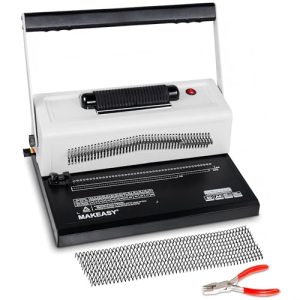
2. MAKEASY Spiral Coil Binding Machine

The MAKEASY spiral coil binding machine is the sturdy mid-range option for buyers who want a metal body and a complete starter kit in one box. It punches up to 20 sheets of 80 g paper per stroke through 46 fully disengaging pins, and the pins can be switched off one by one to match odd page sizes without leaving half holes at the edge. The electric coil inserter winds the coil through the punched stack, which keeps long binding sessions moving and spares the wrist when a whole class set of workbooks needs binding in one afternoon. The adjustable side margin lines the stack up squarely before each punch, and the machine handles letter, A4, and A5 pages, so a household that prints in more than one paper size does not need a second machine. The metal construction gives the punch a firm feel, and at 17 pounds the unit stays planted on the work surface. The box includes a set of coil spines and a crimper plier, so the first book can be finished the day the machine arrives without a separate supply order. The compact footprint of 16.5 x 7 x 12 inches leaves room on a desk beside the printer.
Specs
- Type: Spiral coil binding machine
- Punch capacity: 20 sheets of 80 g paper per stroke
- Pitch: 4:1 plastic coil
- Pins: 46 fully disengaging pins
- Coil inserter: Electric coil inserter
- Margin: Adjustable side margin
- Paper sizes: Letter, A4, A5
- Material: Metal
- Color: Black and white
- Dimensions: 16.5 x 7 x 12 inches
- Weight: 17 pounds
- Included: 1 box coil spines and crimper plier
- ASIN: B0BQ6JHKMQ
3. TIANSE BM-S20A Spiral Coil Binding Machine
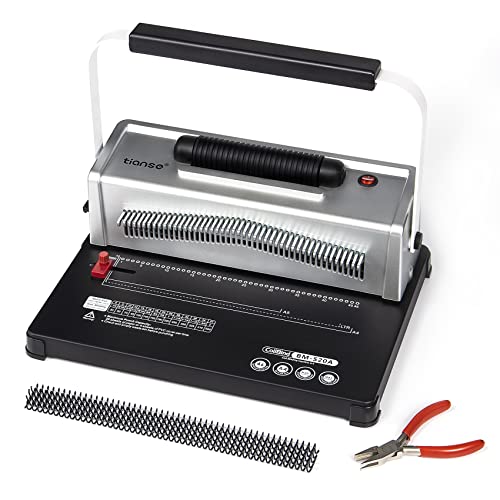
The TIANSE BM-S20A is the value-minded mid-range machine in this group, and it earns its place with a generous starter kit and a straightforward manual punch. It punches up to 20 sheets of 80 g paper per stroke, and the 46 disengaging pins let the user shape the hole pattern to the page instead of forcing every page to the same full-width pattern. The electric coil inserter takes over the winding step, which is the part of the job that slows down when a thick manual or a full set of student workbooks is on the bench. Letter, A4, and A5 pages all fit, and the adjustable side margin keeps the punch line straight from the first sheet to the last. The box includes 100 pieces of 5/16 inch plastic coil spines and a plier, which covers many books before a refill is needed, and the spines suit books of around 50 sheets. The machine weighs 18.5 pounds, so it holds still during punching, and its footprint of 19.4 x 17.9 x 15.35 inches suits a dedicated craft table or a home office corner better than a crowded desk.
Specs
- Type: Spiral coil binding machine
- Punch capacity: 20 sheets of 80 g paper per stroke
- Pitch: 4:1 plastic coil
- Pins: 46 disengaging pins
- Coil inserter: Electric coil inserter
- Margin: Adjustable side margin
- Paper sizes: Letter, A4, A5
- Model number: BM-S20A-NEW
- Dimensions: 19.4 x 17.9 x 15.35 inches
- Weight: 18.5 pounds
- Included: 100pcs 5/16 inch plastic coil spines and plier
- ASIN: B0BN3PG348
4. TruBind TB-S12 Coil Binding Machine
The TruBind TB-S12 is the budget pick, and it is the right machine for light, occasional binding rather than daily production. It punches up to 12 sheets of 20 lb paper per stroke, which is enough for a short cookbook, a meeting handout, or a thin workbook, and it binds books up to 440 sheets thick once the coil is wound in. The electric coil inserter is the feature that sets it apart from the cheapest manual machines, because it spins the coil through the holes instead of making the user thread it hole by hole. The 4:1 pitch matches the standard plastic coils sold for home binding, and the adjustable side margin keeps the hole row straight. Heavy-duty coil crimping pliers come in the box, and the two-year warranty matches the larger TB-S20A, which is unusual at this tier. At 15.22 pounds and 17.26 x 8.26 x 13.26 inches, it is easy to lift onto a table for a binding session and back onto a shelf when the job is done. The trade-off is speed: a 200-sheet book needs about seventeen punch strokes instead of ten, so buyers who bind thick books every week should step up to a 20-sheet machine.
Specs
- Type: Spiral coil binding machine
- Punch capacity: 12 sheets of 20 lb paper per stroke
- Bind capacity: Up to 440 sheets
- Pitch: 4:1 plastic coil
- Coil inserter: Electric coil inserter
- Margin: Adjustable side margin
- Model number: TB-S12
- Dimensions: 17.26 x 8.26 x 13.26 inches
- Weight: 15.22 pounds
- Warranty: 2-year warranty
- Included: Heavy-duty coil crimping pliers
- ASIN: B00GJXSIHO
5. Akiles CoilMac EPI 41 Plus Coil Binding Machine
The Akiles CoilMac EPI 41 Plus is the premium pick, built for buyers who bind often and want the machine to do the heavy work. Both the punch and the coil inserter run on electric power, so a thick stack moves through the machine with a foot switch instead of a long handle pull, and the operator keeps both hands free to hold the pages square. The punch handles up to 20 sheets per lift across a 13 inch punch length, and the fully disengageable dies let the user shape the hole pattern for odd sizes. The oval holes at 4:1 pitch let the coil turn freely, which makes page turning smoother and helps the finished book lie flat through heavy daily use. Binding capacity reaches up to 2 inches, which covers thick training manuals, year-long planners, and full course books. The machine measures 21 x 15 x 17 inches and carries a 1-year warranty, and free supplies come in the box to get the first projects finished. This is a commercial-grade unit in size and weight, so it belongs on a sturdy table or a dedicated binding station rather than a small desk, and it suits a print shop, a busy school office, or a home business that sells spiral-bound books.
Specs
- Type: Spiral coil binding machine
- Operation: All-electric punch and inserter
- Punch capacity: Up to 20 sheets per lift
- Punch length: 13 inches
- Pitch: 4:1 oval holes
- Dies: Fully disengageable dies
- Bind capacity: Up to 2 inches
- Control: Foot switch
- Dimensions: 21 x 15 x 17 inches
- Warranty: 1-year warranty
- Included: Free supplies
- ASIN: B00IO5L0WU
How to Choose
Start with punch capacity, because it sets the pace of every binding session. Punch capacity is the number of sheets the machine cuts in one stroke, and it decides whether a thick book takes ten strokes or thirty. A 20-sheet punch suits anyone who binds workbooks, manuals, or course packs regularly, while a 12-sheet punch is fine for short books bound a few times a month.
Match the coil pitch to the coils you plan to buy. All five machines in this guide use 4:1 pitch, which means four holes per inch, and that is the most common pitch for home and office coil binding. Coils come in many diameters, and the diameter must match the thickness of the finished book: a coil that is too small will not close, and a coil that is too large will let the pages flop. Measure the stack with a ruler, add a small amount of clearance so the pages turn freely, and choose the next coil size up.
Decide how much of the work should be electric. A manual punch with an electric inserter, which four of the five picks here use, is the sweet spot for most buyers: the punch stroke is quick work, while the coil winding is the slow and tiring step that benefits most from a motor. A fully electric machine like the Akiles EPI 41 Plus earns its place when binding is a daily task, because the foot switch frees both hands and the motor takes the strain off the operator.
Check the disengageable dies before buying. Dies are the individual punches across the width of the machine, and disengageable dies can be switched off one at a time. That feature matters whenever a page is narrower than the full punch width, because a switched-off die leaves no half hole at the edge to tear. It also matters for odd sizes like A5, where the hole pattern must stay centered.
Think about where the machine will live. These are bench tools, not desk accessories. The lightest pick here weighs about 15 pounds, and the heaviest is a commercial unit that needs a sturdy table. Measure the space before ordering, and remember that the machine needs room in front for the paper stack and room behind for the handle swing on manual-punch models.
Buy coils, covers, and a crimper at the same time as the machine. A coil binding machine needs plastic coils in the right pitch and diameter, and the finished book looks far better with a clear front cover and a sturdy back cover. Most of the picks here include a starter set of coils and a crimping tool, but the starter set runs out, so order a refill pack with the machine. Coil ends must be cut and crimped after winding, or the coil will work its way out of the holes with use.
Who Should Skip
Skip a spiral binding machine if the books you need are meant to look like shop-bought paperbacks. Coil binding always shows the spine, and a coil-bound book never looks like a glued paperback. Readers who want a retail shelf look should use a print service that offers perfect binding instead, and keep the coil machine for workbooks and manuals where the lay-flat spine is a feature rather than a compromise.
Skip it too if you bind fewer than a couple of books a year. A coil binding machine is a bench tool that earns its shelf space through use, and a buyer who binds one cookbook a year will spend more time storing the machine than using it. A local print shop or office supply store can bind the occasional book for a small fee, and that is the better route for rare jobs.
Skip the larger electric machines if the workspace is a small desk in a shared room. The premium pick here is a commercial unit that needs a sturdy table, a power outlet, and room to work, and it is wasted in a corner where it cannot be used properly.
Finally, skip coil binding itself if the pages must be added to or removed later. A coil can be unwound and rewound, but it is slow work and the coil often kinks, so a binder that needs frequent page changes suits a ring binder or a comb binding system better. Coil binding is at its best for finished books: workbooks, cookbooks, manuals, and planners whose pages are set and will not change.
Frequently Asked Questions
Can a normal printer make a spiral-bound book on its own?
No. A printer only puts ink on paper. Making a spiral-bound book takes three steps: print the pages, punch a row of holes along one edge with a binding machine, and wind a plastic coil through the holes. The machines in this guide handle the punching and winding steps.
What is the difference between spiral binding and coil binding?
There is no difference in the finished book. Spiral binding and coil binding describe the same method: a continuous plastic coil threaded through punched holes along the edge of the pages. Some sellers say spiral and some say coil, and the coils, machines, and hole patterns are the same.
How do I choose the right coil size for a book?
Measure the thickness of the finished stack with a ruler, then choose a coil diameter slightly larger than the stack so the pages turn freely. A coil that is too small will not close around the stack, and a coil that is too large will let the pages flop and snag. Keep a few sizes on hand if you bind books of different thicknesses.
Do I need a crimping tool, and what happens if I skip it?
Yes, a crimping tool is needed for a lasting book. After the coil is wound through the holes, both ends must be cut short and crimped inward, or the coil will slowly work its way out of the holes with use. Most of the machines in this guide include a crimper, and a separate pair is a small addition that protects every book you bind.
Final Verdict
The TruBind TB-S20A is the best spiral binding machine for most buyers, because it pairs a 20-sheet punch with an electric coil inserter, disengageable dies, and a two-year warranty in a machine that fits a home office. Buyers on a tighter budget who bind short books a few times a month should choose the TruBind TB-S12, which keeps the electric inserter and the warranty while trading punch capacity for a lower tier. The MAKEASY and TIANSE machines sit in the middle, and either one suits steady batch binding with a starter kit in the box. The Akiles CoilMac EPI 41 Plus is the pick for daily, high-volume binding, where the all-electric punch and foot switch pay for themselves in saved effort. Whichever machine you choose, order coils in the right pitch and a few diameters at the same time, and check the live listing before ordering.
Product and ASIN Reference
| Product | ASIN |
|---|---|
| TruBind TB-S20A Coil Binding Machine | B00CHDA6NE |
| MAKEASY Spiral Coil Binding Machine | B0BQ6JHKMQ |
| TIANSE BM-S20A Spiral Coil Binding Machine | B0BN3PG348 |
| TruBind TB-S12 Coil Binding Machine | B00GJXSIHO |
| Akiles CoilMac EPI 41 Plus Coil Binding Machine | B00IO5L0WU |
More from Amazon
Programs that pair well with the guide above. Offers and eligibility are set by Amazon and may change.
Read from a large library of eBooks and audiobooks on any device. Check Amazon for current plans.
Explore Kindle UnlimitedAudiobooks and podcasts to listen to on the go. Eligible new members can start with a free trial.
Try Audible freeFree shipping on eligible items, Prime Video and more. Eligible new members can start with a free trial.
Start a Prime free trialAd-free music streaming. Eligible new subscribers can start with a free trial.
Try Music Unlimited freeAs an Amazon Associate we earn from qualifying purchases.