Key takeaways
- Interior width (W): Measure wall-to-wall inside the cabinet at the front edge. Common small cabinets measure 24-28 inches interior for a 30-inch base cabinet.
- Interior depth (D): Measure from the inside of the face frame to the back wall. Most are 20 to 22 inches deep, minus 1 inch for door clearance.
- Pipe clearance height (H) and position: Measure from the cabinet floor to the lowest point of the P-trap or disposal, and note how far the trap is from the back wall and from the left side. Most P-traps sit 12 to 16 inches above the floor and 8 to 12 inches out from the back wall, centered under the drain.
The best under kitchen sink organizer for most small cabinets is an expandable under-sink rack with a height under 15 inches and adjustable width from 15 to 26 inches, because it clears standard drain pipes and disposal traps while doubling usable storage without blocking plumbing access.
As an Amazon Associate we earn from qualifying purchases at no extra cost to you.



How to Measure Your Cabinet Before Choosing an Organizer
Standard under-sink cabinets are not standard inside. The outside width might be 30, 33, or 36 inches, but interior usable width is typically 2 to 3 inches narrower due to side panels and hinges, and the plumbing reduces it further. Measure three dimensions before you shop:
- Interior width (W): Measure wall-to-wall inside the cabinet at the front edge. Common small cabinets measure 24-28 inches interior for a 30-inch base cabinet.
- Interior depth (D): Measure from the inside of the face frame to the back wall. Most are 20 to 22 inches deep, minus 1 inch for door clearance.
- Pipe clearance height (H) and position: Measure from the cabinet floor to the lowest point of the P-trap or disposal, and note how far the trap is from the back wall and from the left side. Most P-traps sit 12 to 16 inches above the floor and 8 to 12 inches out from the back wall, centered under the drain.
Quick Fit Calculation
Use this to avoid buying an organizer that won’t fit around plumbing:
Usable Width = Interior Width – Pipe Zone Width – 0.5 inch for airflow
Usable Height = Lowest Pipe Height – 1 inch for removal clearance
Example for a 30-inch base cabinet with a centered trap: Interior width is 28 inches, pipe zone (trap + supply lines) occupies the center 10 inches. If you use two narrow sliding units on either side instead of one expandable rack, each unit can be a maximum of (28 – 10 – 0.5) / 2 = 8.75 inches wide. An expandable rack that straddles the pipes needs legs placed outside that 10-inch zone and a top shelf height at least 1 inch below the 14-inch trap bottom, so choose a model with 13 inches or less of clearance height.
3 Main Types of Under Kitchen Sink Organizers Compared
Expandable racks, sliding drawers, and tension shelves solve the same problem differently. Your cabinet measurements determine which type actually fits.
| Type | Typical Size Range (W x D x H) | Weight Capacity Per Tier | Assembly Time | Material & Water Resistance | Best For |
|---|---|---|---|---|---|
| Expandable Under-Sink Shelf Rack | 15-26″ W x 8-10″ D x 12-15″ H, 2 tiers | 15-20 lbs upper, 20-30 lbs lower | 10-20 min, no tools | Powder-coated steel + PP plastic, rust-resistant but joints can corrode if standing water remains | Cabinets 24-36″ wide with centered plumbing |
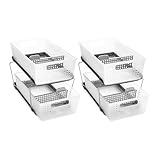
| 2-Tier Sliding Drawer Organizer | 7-9″ W x 14-18″ D x 12-14″ H per unit (sold as 1 or 2-pack) | 12-15 lbs per drawer | 2-5 min, no assembly | ABS plastic + steel slide rails, fully waterproof, rails need drying to prevent stiffness | Narrow cabinets or splitting space on both sides of pipes |
| Tension Shelf / Tension Rod Caddy | 13-20″ W (tension) x 6-8″ D x 1-2″ thick shelf | 8-12 lbs per shelf | 2 min, pressure-fit | Stainless steel + plastic or bamboo, water-resistant, rubber ends wear first | Renters and very small cabinets where drilling is not allowed |
| Stackable Modular Bins with Lids | 10-12″ W x 12-15″ D x 7-9″ H per bin | 10 lbs per bin | 0 min | Polypropylene, fully waterproof and easy to clean | Leaky cabinets and storing chemicals separately |
Water resistance matters more under the sink than anywhere else. Powder-coated steel is durable but will chip and rust at weld points if cleaners pool. Solid plastic, polypropylene, and stainless steel survive prolonged moisture best and can be wiped clean after a leak.
12 Smart Under Kitchen Sink Organizer Ideas for Small Cabinets
1. Expandable 2-Tier Shelf That Straddles the P-Trap
The classic solution for 30-inch and larger cabinets. Look for models like SimpleHouseware or SONGMICS with 8 height positions and legs that adjust independently. Place the lower shelf on the floor for trash bags and sponges, the upper shelf holds spray bottles with the trigger necks facing out. Leave the center open for the trap.
2. Pair of Narrow Sliding Drawers
Instead of one wide unit, use two slim 8-inch pull-out drawers, one on each side of the plumbing. This uses dead space beside pipes that an expandable rack wastes. Brands like YouCopia RollOut and mDesign offer 14 to 18-inch deep drawers that bring items from the back wall to you without kneeling.
3. Tension Shelf Above the Pipes
A tension shelf creates a second level 10 to 12 inches above the cabinet floor, just above the pipe curve. It requires no screws and is ideal for rentals. Use it for light items like microfiber cloths and dish soap refills, not heavy cleaners.
4. Over-Cabinet Door Caddy
A stainless steel basket that hooks over the door without drilling adds 3 to 5 inches of shallow storage for sponges, brushes, and trash bags. Choose one with rubber-coated hooks to protect the door finish and a depth under 4 inches so the door still closes with the organizer loaded.
5. Under-Sink Lazy Susan Turntable
A 9 to 12-inch turntable solves depth problems in 22-inch deep cabinets. Place it in a back corner for oils, wood cleaners, or dishwasher pods. A non-skid base prevents sliding when pipes vibrate. Avoid turntables taller than 4 inches or they will hit the trap.
6. Stackable Clear Bins with Handles
For cabinets with a history of leaks, sealed polypropylene bins outperform open shelves. A 12 x 8 x 7-inch bin holds 4 to 6 spray bottles upright and can be lifted out as a caddy for cleaning. Clear walls let you see levels without pulling the bin.
7. Sliding Under-Sink Drawer with Adjustable Dividers
A single wide sliding drawer (15 to 20 inches wide) with removable dividers keeps bottles from tipping when you pull it. This type often has a U-shaped cutout to work around a pedestal pipe. Check that the cutout width is at least 2 inches wider than your pipe zone.
8. Tension Rods as Bottle Holders
Install two short tension rods vertically or horizontally 6 inches above the floor to create a rail. Hang spray bottles by their triggers to save floor space. This costs under $15 as a general market range and adds storage without a shelf.
9. Adhesive Trash Bag Dispenser on the Door or Side Wall
A wall-mounted dispenser for rolls of trash bags or grocery bags frees an entire shelf. Use damage-free adhesive rated for 5+ lbs on a clean, dry cabinet wall. Place it high on the side panel to stay dry if water pools below.
10. Tiered Riser Shelf for Small Items
A 10 to 12-inch wide 2-tier riser lifts small items like sponges, scrubbers, and soap bars behind taller bottles. Because it is only 6 inches deep, it fits in front of the shut-off valves where deeper organizers cannot.
11. Pedestal-Style Organizer Around the Drain Pipe
A pedestal organizer has a hollow center that wraps around the vertical drain tailpiece. It provides circular storage with a 10 to 14-inch diameter and is useful when the trap is pushed far to the back, leaving little side space.
12. Magnetic Strip or Small Rail Under the Top Frame
Screw or adhere a short magnetic strip or utility rail to the underside of the cabinet’s top frame to hold small metal items like scissors or to hang a lightweight caddy. This uses zero floor space and keeps sharp tools away from cleaners.
Which Organizer Should You Choose? Decision Matrix
| Your Situation | Recommended Solution | Why It Works |
|---|---|---|
| Cabinet 30″+ wide, centered pipes, budget $25-$50 | Expandable 2-tier rack + door caddy | Maximum vertical storage for lowest cost, easy to adjust around pipes |
| Narrow cabinet 24″ or pipes off-center | Two narrow sliding drawers (7-9″ wide each) | Fits beside plumbing where a wide rack cannot, full pull-out access |
| Renter, no drilling or screws allowed | Tension shelf + over-door basket + tension rods | Pressure-fit and hook-on, leaves no holes, fully removable |
| Frequent leaks or storing chemicals | Waterproof plastic drawers or stackable bins | Contains spills, prevents rust, easy to remove and rinse |
| Deep cabinet, hard to reach the back | Sliding drawer + lazy Susan in back corner | Pull-out or spin-to-front access avoids empty lost space |
| Need extra trash bag or tool storage only | Door caddy + adhesive dispenser | Adds capacity without touching floor space or plumbing |
Durability and Ownership Realities
Under-sink organizers fail from moisture and weight, not normal use. Powder-coated steel shelves chip when cleaners with bleach slide across them, exposing steel that rusts within months in humid cabinets. Wipe shelves dry after any drip and place a thin plastic tray or shelf liner on steel tiers.
Sliding rails are the first moving part to stiffen. Plastic glides collect grit and soap residue. Clean rails monthly with warm water, dry fully, and avoid exceeding the 12 to 15 lb per-drawer limit. Overloading causes bowing that permanently misaligns the slide.
Tension shelves lose grip as rubber end caps dry and compress. Check tension every 3 months and clean end caps so they grip the cabinet walls. Do not hang more than 10 lbs on a single tension shelf.
Common mistakes: blocking the shut-off valves, pushing an organizer against supply hoses and kinking them, and covering the leak detector area with a solid mat that hides water. Always leave a clear 3-inch access path to valves and keep the cabinet floor visible or use a clear tray so you can spot leaks early.
To clean, remove all bins monthly, wash with mild dish soap, and dry completely before replacing. Avoid abrasive cleaners on coated steel and avoid stacking heavy bottles more than two high on upper tiers.
FAQ
What height organizer fits under a kitchen sink with a garbage disposal?
With a disposal, the lowest obstruction is often 12 to 14 inches above the floor. Choose an organizer with an upper shelf height of 11 to 13 inches or a low-profile sliding drawer under 12 inches tall. Measure from the floor to the bottom of the disposal housing, not just the P-trap.
Can I put a wood organizer under the sink?
Solid bamboo or sealed wood can work if the cabinet stays dry, but it is less water-resistant than plastic or coated steel. If you use wood, seal it, raise it on small feet to avoid standing water, and inspect for swelling every few months.
How do I keep small bottles from falling over on a sliding drawer?
Use an organizer with dividers or add a small tension rod or spring-loaded drawer divider across the drawer. Storing bottles with the heaviest ones in the back and placing a non-slip liner on the drawer base also reduces tipping when you pull it quickly.