Key takeaways
- The best firewood racks for indoor and outdoor storage are a compact steel hoop or log holder for a few days of indoor fuel, a raised steel rack with a fitted cover for regular outdoor use, and a larger roofed…
The best firewood racks for indoor and outdoor storage are a compact steel hoop or log holder for a few days of indoor fuel, a raised steel rack with a fitted cover for regular outdoor use, and a larger roofed rack or firewood shelter when you store a full winter’s supply.
Our top picks


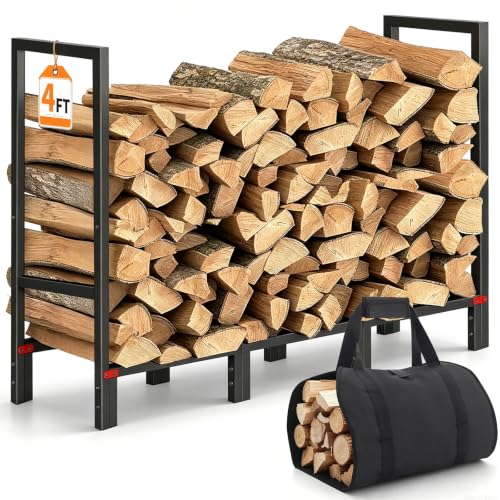
As an Amazon Associate we earn from qualifying purchases at no extra cost to you. Ratings are shown as listed on Amazon.
Quick picks by storage situation
| Situation | Best rack type | Useful capacity | Typical footprint | Why it fits |
|---|---|---|---|---|
| Indoor fireplace or stove | Small steel log holder or hoop | About 0.5–1/8 cord | 18–24 in wide, 12–16 in deep | Keeps a short supply close at hand without dominating the room |
| Covered porch or shed | 36–48 in raised steel rack | About 1/4–1/3 cord | 36–48 in wide, 12–16 in deep | Good balance of capacity, airflow, and manageable loading |
| Exposed outdoor storage | Steel rack with cover and roof overhang | About 1/3–1/2 cord | 48–60 in wide, 14–18 in deep | Raises logs off wet ground and limits rain and snow exposure |
| Heavy winter use | Roofed firewood shelter or modular rack | 1/2 cord or more | 60–96 in wide, 24–36 in deep | Stores enough fuel to reduce repeated hauling |
These capacities are approximate because a cord is stacked wood measuring 128 cubic feet, while a “face cord” or “rick” varies with log length. A rack advertised by width alone can therefore hold much more or less than expected.
Best firewood rack types for indoor and outdoor storage
Best for indoors: a compact steel holder
For indoor use, choose a simple holder made from powder-coated steel, wrought iron, or heavy tubular steel. A 20- to 24-inch-wide holder is usually large enough for a few fires while remaining easy to carry and refill. Open sides improve airflow and let you see whether bark, dirt, or insects have accumulated.
Indoor racks rarely need a full rain cover. A fabric sling or solid bottom can actually trap moisture if logs were brought in before they were properly seasoned. Instead, use a shallow tray beneath the rack if you need to protect flooring from bark and dust. Keep the rack well away from the stove, fireplace opening, radiators, and other heat sources; follow the clearances specified for the appliance and local fire code.
Best for covered outdoor areas: a 36- or 48-inch rack
A raised rack between 36 and 48 inches wide suits many porches, lean-tos, and garage-adjacent storage areas. Look for feet or a base that lift the bottom logs at least 3 to 6 inches above the ground. That gap allows air to circulate and prevents the lowest logs from sitting in puddles or snow.
A rack with vertical end supports is preferable to a flat platform. The supports stop the stack from spreading outward as the wood dries and make it easier to load unevenly split logs. For a sheltered location, a basic rack may be sufficient, but a partial cover still helps keep wind-driven rain off the top layer.
Best for exposed outdoor storage: a covered steel rack
When the rack sits in the open, prioritize the cover and base before extra capacity. A fitted cover should extend over the top and down the sides far enough to protect the upper portion of the stack, while leaving the lower sides open for ventilation. Covering the entire stack tightly with a tarp is a common mistake: condensation and trapped moisture can slow drying and encourage mold.
Powder-coated steel is a practical choice for year-round outdoor use. Galvanized steel offers better resistance to rust where the coating is scratched, although its finish can still weather. Avoid thin decorative indoor iron for an uncovered yard. Check that the feet are broad enough not to sink into soil and that the frame can be anchored if the site is windy.
Head-to-head comparison: what matters more than appearance?
| Feature | Indoor holder | Outdoor open rack | Outdoor rack with cover | Roofed shelter |
|---|---|---|---|---|
| Typical width | 18–24 in | 36–48 in | 48–60 in | 60–96 in |
| Typical depth | 12–16 in | 12–16 in | 14–18 in | 24–36 in |
| Common materials | Painted or powder-coated steel | Powder-coated steel | Powder-coated or galvanized steel | Steel frame, metal or fabric roof |
| Cover arrangement | Usually none | Optional top cover | Fitted or adjustable top cover | Permanent roof |
| Assembly | None to 15 minutes | 15–30 minutes | 20–45 minutes | 45–120 minutes |
| General market range | $25–$80 | $45–$130 | $80–$220 | $180–$600+ |
Prices vary with steel thickness, coating, cover quality, and whether the structure is freestanding or attached to another building. A cheap rack can be adequate under a roof, while an exposed rack needs stronger welds, better feet, and a cover that will not tear at its attachment points.
How much rack capacity do you actually need?
Estimate your supply from the amount of wood you burn between trips rather than buying the largest rack available. Suppose your stack uses 18-inch logs, and you typically burn 12 logs per evening. If a rack holds approximately 45 cubic feet of loosely stacked wood, its useful capacity is roughly 0.35 cord. A cord contains 128 cubic feet, so:
45 ÷ 128 = 0.35 cord
If you burn that amount over 30 evenings, the rack supplies about one evening’s fuel per day for a month. In practice, leave headroom instead of filling the frame to its absolute limit. A stack filled 4 to 6 inches above the end supports can become unstable, and short or irregular logs reduce the true capacity.
For indoor storage, calculate in days, not cords. A holder containing 12 to 24 logs may be convenient, but storing a whole winter’s supply inside is impractical and can bring insects, dirt, and excess moisture indoors.
Decision matrix for choosing a rack
| Your priority | Recommended choice | What to avoid |
|---|---|---|
| Lowest initial cost | Basic 36-inch powder-coated rack under a roof | Paying for a cover you will not use |
| Very limited indoor space | 18–20-inch hoop or narrow vertical holder | Deep basket that blocks walkways |
| Little maintenance experience | Rack with a raised base, open sides, and replaceable cover | Fully enclosed tarp system |
| Frequent winter use | 48–60-inch rack or two modular racks | One overloaded, hard-to-reach stack |
| Windy, exposed location | Wide feet, heavier frame, and ground anchors | Lightweight rack with a loose tarp |
| Moving wood often | Short rack with handles or a removable carrier | Large shelter that cannot be repositioned |
Assembly and placement details that affect performance
- Choose firm, level ground. A rack placed on soft soil may lean as the loaded feet settle. Use pavers or a compacted gravel pad if necessary.
- Install the feet and end supports tightly. Loose bolts allow the frame to rack sideways under load. Recheck them after the first full loading because the tubing can settle around the fasteners.
- Keep the stack below the side supports. Stable, slightly loose stacking dries better than a tightly packed tower.
- Orient the open sides toward prevailing airflow. Good air movement matters more than simply adding a cover.
- Fit the cover only after checking ventilation. The cover should shed precipitation while leaving enough open area for air to move through the stack.
Durability and ownership realities
The first parts to deteriorate are usually the cover, feet, and coating at welded joints. UV light can make inexpensive fabric brittle in one or two seasons, while repeated contact with wet bark scratches paint and starts surface rust. Inspect the bottom rails each year, especially where they touch damp ground or snow.
Brush dirt and ash from an indoor holder regularly. Outdoors, remove fallen leaves from beneath the rack and keep vegetation from touching the frame. If surface rust appears, clean it, let the metal dry, and apply a compatible rust-inhibiting touch-up coating. Do not store freshly cut, visibly wet logs directly against a wall or inside a tightly covered rack; the rack cannot substitute for proper seasoning.
Replacement covers are often more economical than replacing a sound frame. Before buying, check whether the manufacturer sells the cover separately and whether its dimensions match the rack. Covers with reinforced corners, elastic edges, or buckle straps generally stay in place better than a loose rectangular tarp.
Final buying recommendation
For most households, the best all-round arrangement is a 48-inch powder-coated steel rack with a raised base and a ventilated top cover outdoors, plus a small open holder indoors for a day or two of fuel. Choose the smaller holder if space is the main constraint, upgrade to a roofed shelter for half a cord or more, and spend extra on frame stability and cover quality when the rack will face rain, snow, and wind.