Key takeaways
- Budget: Simple wooden or steel-frame kneeling chairs with basic padding.
- Mid-range: Adjustable-height models with better cushions and sturdier hardware.
- Premium: Varier chairs with refined frames, upholstery options and long-term durability.
A rocking wooden kneeling chair such as the Varier Variable Balans suits people who want a classic, active-sitting design, a saddle-style or padded kneeling stool suits those who want a simpler seat for short work blocks, and a conventional ergonomic chair remains the better fit for anyone who sits for many hours or has knee, hip or back conditions. Kneeling chairs shift your hips and knees into an open angle that some people find easier on posture, but they are not a medical treatment and do not suit everyone.
Our top picks

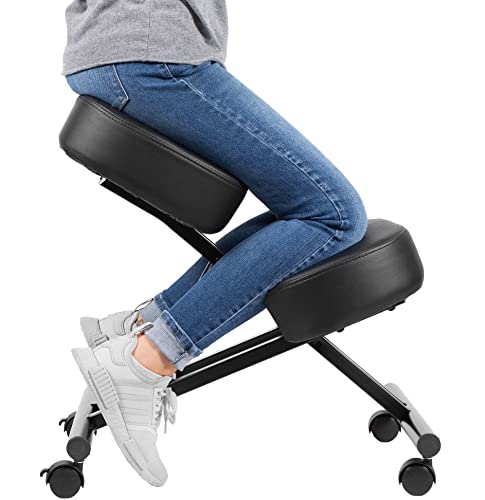
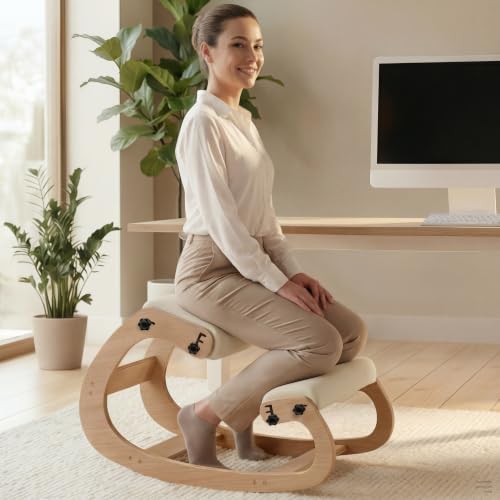

As an Amazon Associate we earn from qualifying purchases at no extra cost to you.
At a Glance: Kneeling Chair Options Compared
| Type | Best for | Typical maker-listed features | Limits |
|---|---|---|---|
| Varier Variable Balans | Active sitting, design-focused buyers | Curved wooden frame, rocking base, padded seat and knee pad | Premium tier; no back support |
| Varier Move or similar active chairs | Those who want more movement | Rocking, tilting base, different seat angles | Learning curve for new users |
| Wooden-frame budget kneeling chair | Trying the concept | Fixed wooden frame, padded seat and shin rest | Fewer adjustments, comfort varies |
| Adjustable-height kneeling chair | Shared use, desks of different heights | Gas lift or adjustable legs, wheels on some | Moving parts to maintain |
| Kneeling chair with back support | Those who want a backrest | Short back pad, swivel | Back support is limited |
| Saddle or stool-style seat | Short work sessions | Saddle shape, height adjustment | Different posture, takes adjustment |
What to Look For Before You Buy
Seat angle and hip position
Kneeling chairs tilt the seat forward, which opens the angle between torso and thighs. Makers say this promotes a more upright sitting posture. Reviewers note that the effect varies by person and desk height, and the shift in weight to the shins takes getting used to.
Knee and shin comfort
Because part of your weight rests on the shins, padding quality matters. Look for firm but cushioned shin rests with enough depth. People with knee, ankle or circulation concerns should speak with a doctor before using one for extended periods.
Height adjustment and desk fit
A kneeling chair changes your seated height. Check that the chair’s height range works with your desk, and whether you can still tuck your legs under it. Some models adjust with a gas lift while others use fixed heights, so measure first.
Rocking versus fixed
Rocking bases such as the Variable Balans let you shift position and encourage movement. Fixed frames feel more stable but allow less movement. Rocking designs require a bit more floor space and may not suit thick carpets.
Wheels and floor
Wheels make a chair easy to reposition but may let it roll when you get on or off. Rocking and fixed bases can scratch hard floors without protective pads. Follow the maker’s care advice.
Weight capacity and build
Makers list maximum user weight and dimensions. Wood and steel frames both exist; inspect joints and hardware when assembling. Replace the chair if it develops cracks or loosens.
Picks by Need
Design and active sitting: Varier Variable Balans
The Variable Balans is a long-running design from Varier, a Norwegian maker, with a curved base that allows gentle rocking. Reviewers at design and ergonomic outlets frequently point to it as the benchmark of the category. It is in the premium tier, and it has no backrest, so it suits short to moderate sessions.
More movement: Varier Move and similar
Varier also makes chairs that encourage more movement and different postures. They suit people who like to shift position, with the caveat that active sitting takes a period of adjustment.
Budget entry: wooden-frame kneeling chairs
Budget wooden kneeling chairs let you test the concept at a lower cost. Quality varies, and padding may compress over time. Use them in short sessions at first.
Shared desks: adjustable-height models
Adjustable-height kneeling chairs suit households where more than one person uses the desk. Choose a model with a smooth lift mechanism and a stable base.
Limited back support: kneeling chair with back pad
Some models add a small back pad, which can help people who miss a backrest. They remain far less supportive than a full ergonomic chair.
Decision Table: Pick X If
| Pick this | If | Keep in mind |
|---|---|---|
| Varier Variable Balans | You want a well-known active-sitting design | Premium tier, no back support |
| Active rocking chair (Move) | You like to fidget and shift | Takes time to learn |
| Budget wooden kneeling chair | You want to test the style cheaply | Padding and finish vary |
| Adjustable-height model | Several people share the desk | Moving parts |
| Chair with small back pad | You miss a backrest | Still limited support |
| Standard ergonomic chair | You sit for long hours or have joint issues | Not a kneeling chair |
Budget Tiers
- Budget: Simple wooden or steel-frame kneeling chairs with basic padding.
- Mid-range: Adjustable-height models with better cushions and sturdier hardware.
- Premium: Varier chairs with refined frames, upholstery options and long-term durability.
Usage and Safety Notes
- Start with short sessions and increase gradually as your body adjusts.
- Change position often. Kneeling chairs are not intended for eight uninterrupted hours.
- People with knee, ankle, hip or back problems, or with poor circulation, should ask a doctor or physiotherapist before use.
- Stop if you feel numbness, tingling or sharp pain.
- Follow the maker’s assembly instructions and tighten bolts periodically.
- Keep children and pets from rocking designs, which can tip if misused.
Alternatives to Consider
- Ergonomic office chair with lumbar support: The safer all-day option for most people.
- Balance ball or active stool: Encourages movement but offers little support.
- Sit-stand desk: Alternating positions may be easier on the body than any one chair.
Making the Switch to Active Sitting
People who move from a conventional chair to a kneeling chair usually notice that their thighs, shins and core muscles work differently. A common suggestion from makers is to start with short blocks, such as thirty minutes, and then return to your regular chair. Over several days you can extend the time if it feels comfortable. If you notice pain rather than mild tiredness, stop and seek advice.
Desk height is the other practical issue. Because a kneeling chair places your hips slightly higher and forward, you may find the desk feels lower than usual. Adjustable-height desks make this easy to manage, while fixed desks may need a chair with a taller range. Keep your screen at eye level and your keyboard close so you do not lean forward from the hips.
Finally, think about footwear and flooring. Soft-soled shoes or bare feet can feel better when your shins rest on the pad, and a chair mat protects hard floors from a rocking base. If you share the chair with others, pick a design with straightforward height adjustment so everyone can set it up quickly.
Frequently Asked Questions
Do kneeling chairs improve posture?
Makers say the forward-tilted seat encourages a more upright spine, and some users report feeling more upright. Evidence is limited and varies by person. A chair alone will not solve posture problems.
Can I use a kneeling chair all day?
Most makers suggest using one for part of the day and alternating with another seat. Weight on the shins can become uncomfortable over long periods. Listen to your body and take breaks.
Are kneeling chairs good for back pain?
Some people find them comfortable, while others do not. They do not treat back pain, and anyone with persistent pain should see a doctor or physiotherapist. A kneeling chair lacks a backrest, which can be a drawback for some users.
Is the Varier Variable Balans worth it?
Reviewers often describe it as a well-made, design-driven option. Whether it is worth the premium depends on how much you value its build and active-sitting feel. A cheaper wooden model is a lower-risk way to test the concept.
Who should avoid kneeling chairs?
People with knee, ankle or circulation issues, or those who need back support, should check with a healthcare professional first. Tall users or those with large frames should check weight and size ratings.
How do I set the height?
Adjust so your forearms rest comfortably on the desk with your shoulders relaxed. The seat should hold your hips above your knees at an open angle. Make small changes and give yourself time.