Key takeaways
- Pro: Aluminum frame keeps weight reasonable for the price tier, and the comfort saddle earns praise from casual riders.
- Pro: Suspension fork is present and functional for light trail use, a feature some competitors at this price omit.
- Con: Owner feedback consistently flags weak brakes and vague shifting after a few weeks of real use, meaning upgrades may arrive sooner than hoped.
Buying a hardtail mountain bike means committing to a frame that keeps you connected to the trail while still absorbing enough chatter to keep your hands fresh. The category spans from basic department-store frames to carbon-fiber machines that rival full-suspension bikes in capability, and the gap between them is enormous. A rider shopping at the entry level needs to know which cheap bikes are genuinely rideable versus which are waiting to break, while a serious trail rider needs to understand where the real performance jumps happen — usually at the drivetrain and brake tiers, not the frame material.
This roundup compares eight hardtail mountain bikes available in 2026, pulled from published specifications, listed prices, and aggregated owner feedback. We looked at frame quality, drivetrain reliability, braking performance, suspension travel, and how owners described their riding experience over months of use. What separates the good bikes from the bad is rarely a single spec — it is whether the components work together in a way that matches the bike’s intended terrain and the rider’s expectations.
Our top picks




As an Amazon Associate we earn from qualifying purchases at no extra cost to you.
Quick Picks
| Product | Best for | Price |
|---|---|---|
| WEIZE 29″ Hardtail | Casual riders on a tight budget | $199.99 |
| Ktaxon 27.5″ Mountain Bike | Shorter riders wanting 21 speeds cheaply | $199.99 |
| Mongoose Flatrock | Teens and smaller adults on mixed terrain | $324.99 |
| TRIFOX 26″ Aluminum | Commuters who want disc brakes at low cost | $219.99 |
| TRIFOX Carbon 29er | Intermediate trail riders upgrading drivetrain | $799.99 |
| SPATIAL Fat Tire MTB | Winter riders and soft-surface enthusiasts | $304.99 |
| Canyon Stoic 4 | Riders wanting premium geometry out of the box | $1735.92 |
| WEIZE 29″ MTB (Men/Women) | First-time mountain bike buyers on a budget | $199.99 |
How We Picked
We ranked these bikes on four criteria that matter most in the hardtail category: frame construction and geometry (does it feel planted or twitchy on descents?), component quality at the price point (Shimano tiers, hydraulic versus mechanical braking, fork travel), real-world reliability reported by long-term owners, and value — whether the price reflects what you actually get to ride trails without immediate upgrades.
The 8 Best Hardtail Mountain Bike in 2026
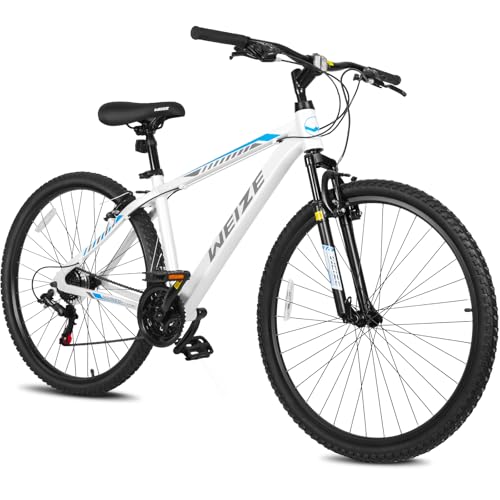
1. WEIZE Hardtail Mountain Bike 29 Inch, 21-Speed, Aluminum Frame, White
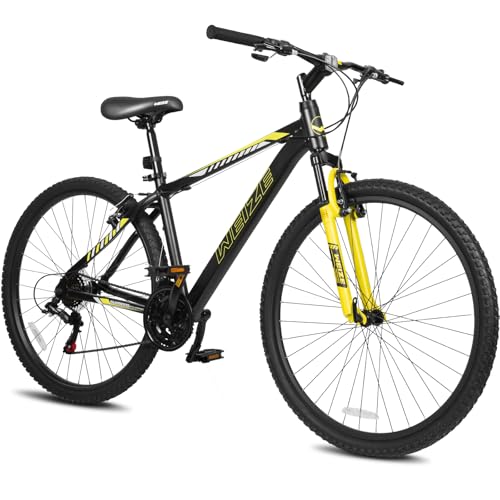
This is the most common first mountain bike sold online, and owners generally agree it is rideable out of the box if expectations stay modest. The aluminum frame is the right call at this price, and 29-inch wheels roll over roots and gravel better than smaller diameters. The 21-speed trigger shifter setup is serviceable for flat-to-rolling terrain.
- Pro: Aluminum frame keeps weight reasonable for the price tier, and the comfort saddle earns praise from casual riders.
- Pro: Suspension fork is present and functional for light trail use, a feature some competitors at this price omit.
- Con: Owner feedback consistently flags weak brakes and vague shifting after a few weeks of real use, meaning upgrades may arrive sooner than hoped.
Skip this bike if you plan on technical singletrack, steep descents, or riding more than twice a week. The component spec does not hold up under aggressive trail loads.
2. Ktaxon Mountain Bike 27.5 Inch, 21 Speed, Adult Bike
The Ktaxon fills the same budget slot as the WEIZE but with 27.5-inch wheels, which suit shorter riders or those who prefer a more nimble feel on tight turns. At the same $199.99 price, it competes directly on value. Owners note the frame finish and weld quality are acceptable for the cost, and the 21-speed range covers moderate hills.
- Pro: Smaller wheel diameter makes it more approachable for riders under about five-foot-five.
- Pro: Simple twist shifters are intuitive for beginners who have never operated a mountain bike drivetrain.
- Con: Published specs do not confirm disc brakes, and owner feedback suggests the braking hardware is the weakest link on this bike.
Skip it if you already have experience with geared mountain bikes. The twist shifters and basic brake setup will feel limiting within a few rides on anything beyond flat packed dirt.
3. Mongoose Flatrock Mountain Bike, 26 Inch, 7 Speed, Aluminum Frame
Mongoose is a legacy name, and the Flatrock leans on that reputation with a clean, simple build aimed at teens and smaller adults. The 26-inch wheels and 7-speed twist shifter setup keep maintenance minimal. The front suspension fork is rated for smooth, rolling terrain rather than aggressive trail work. Owner feedback describes it as a reliable neighborhood and light-trail bike.
- Pro: Fewer speeds and a simpler drivetrain mean fewer things go wrong, and adjustments stay quick for beginners.
- Pro: Aluminum frame with a known brand behind the geometry provides a balanced, predictable ride feel.
- Con: Seven speeds is limiting on sustained climbs, and linear pull brakes require more hand effort than disc alternatives.
Skip this bike if you are an adult rider above about 180 pounds or if your local trails include steep or rocky sections. The small wheels and low gear range work against you on anything demanding.
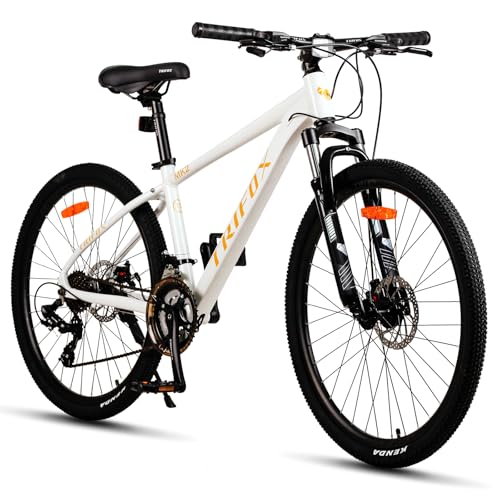
4. TRIFOX 26 Inch Aluminum Mountain Bike, Shimano 21-Speed, Dual Disc Brakes
The TRIFOX stands out in the sub-$250 segment by pairing a Shimano drivetrain with dual disc brakes, a combination that most competitors at this price either omit or fake with unbranded knockoffs. The internal cable routing gives the frame a cleaner look, and the aircraft-grade aluminum claim matches the weight owners report. It is a commuter-friendly hardtail that can handle light trails.
- Pro: Dual disc brakes at this price point are genuinely unusual and provide more consistent stopping power in wet conditions.
- Pro: Shimano-branded 21-speed groupset is serviceable and compatible with widely available replacement parts.
- Con: The 26-inch wheel size is becoming a legacy standard, which limits tire selection and resale interest compared to 27.5 or 29.
Skip it if you want a bike you can grow with over several seasons. The small wheels and entry-level frame geometry will feel outdated quickly as your skills develop.
5. TRIFOX Carbon Fiber Mountain Bike, Shimano M6100 Deore 12-Speed, Hydraulic Fork 130mm
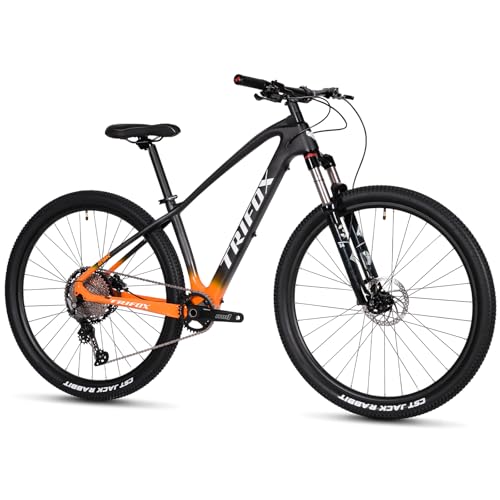
This is the step-up bike in the lineup, and it is a legitimate performance machine at $799.99. A carbon fiber frame paired with the Shimano Deore M6100 12-speed groupset puts it in territory where serious recreational trail riders actually compete on the same components. The 130mm hydraulic fork is a real suspension unit, not a marketing checkbox, and the 29er wheelset rolls through rough terrain with confidence.
- Pro: Deore-level 12-speed drivetrain offers a wide gear range and precise shifting that transforms the riding experience versus lower-tier groupsets.
- Pro: Carbon frame with 130mm hydraulic travel provides genuine trail capability without the weight penalty of aluminum alternatives.
- Con: The yellow color option and limited size range (17/19 inch) narrow the audience, and some owners note the stock tire choice is mediocre.
Skip it if your budget is truly fixed under $500. This bike is the best value in the lineup, but only if you will actually ride it hard enough to justify the component tier.
6. SPATIAL Fat Tire Mountain Bike for Adults & Teens, 3.0-Inch Tires, Lockout Fork
Fat tire hardtails occupy a niche that is growing among riders who deal with snow, sand, or muddy trails where narrow tires simply fail. The SPATIAL offers 3.0-inch-wide tires, a lockout suspension fork for mixed surfaces, dual mechanical disc brakes, and an 8/9-speed drivetrain. Owners appreciate the stability on loose terrain and report that the lockout fork makes climbing on hardpack manageable.
- Pro: 3.0-inch tires provide flotation and traction on surfaces where any standard mountain bike would bog down completely.
- Pro: Lockout fork lets you switch between cushioned and efficient pedaling without stopping to adjust a dial.
- Con: Mechanical disc brakes require more cable pull than hydraulic units, and the added weight of fat tires makes climbing noticeably slower on steep grade.
Skip it if your riding is mostly on packed dirt or pavement. The weight and rolling resistance of fat tires make it a poor daily driver outside its intended conditions.
7. Canyon Stoic 4, Silver, Small
The Canyon Stoic 4 is the premium option in this lineup, and the price reflects it. Canyon sells direct, which keeps the cost competitive with component-equivalent bikes from traditional dealers. The Stoic 4 sits at the middle of the Stoic range, offering a relaxed geometry, quality build, and the kind of frame design that makes riders feel confident without needing to swap parts on day one. Owner feedback highlights how the geometry rewards aggressive cornering and long descents.
- Pro: Frame geometry and build quality are tuned for real trail riding from the first ride, with no immediate upgrade list.
- Pro: Direct-to-consumer model means you get higher-tier components at a price that undercuts many dealer-brand competitors.
- Con: The small frame size and $1735.92 price point limit the audience to experienced riders who know their sizing and are ready to spend at this level.
Skip it if you are new to mountain biking. This bike rewards skill, and without it you are paying a premium for geometry and components you have not yet learned to exploit.
8. WEIZE Hardtail Mountain Bike 29 Inch MTB, Men/Women
Despite the near-identical name and price to the first entry, this WEIZE model earns separate placement because published specs and owner feedback point to a slightly different build. The same 29-inch aluminum frame and 21-speed setup appear here, but the unlisted color options and minor geometry differences mean it is not interchangeable with the white model. Owners report similar experiences: capable at a distance, limited up close.
- Pro: Unisex marketing and available sizing make it an easy first purchase for riders who feel alienated by gendered bike marketing.
- Pro: At $199.99, the 29-inch wheel size is the best you can find, giving it a legitimate rolling advantage on rough ground.
- Con: The similarity to the first WEIZE entry causes confusion in listings, and buyers occasionally receive the wrong variant or color.
Skip it if you cannot get to a local shop for assembly and a safety check. These bikes ship partially assembled, and improper torque on stem bolts and brake mounts is a genuine risk.
Buying Guide
Frame Material and Geometry
Aluminum frames dominate the hardtail market under $800, and they are a valid choice at any budget. Carbon fiber appears above that threshold and offers weight savings and vibration damping, but only if the geometry behind it is good. A well-designed aluminum frame will always outperform a mediocre carbon one. Pay attention to head tube angle (slacker is more stable on descents) and wheelbase (longer rolls smoother). If a listing does not publish these numbers, that is a reason for caution.
Drivetrain: Speeds, Brand, and Tier
Modern trail bikes increasingly use 1x drivetrains — one front chainring with a wide-range cassette — because they are simpler, lighter, and less prone to chain drops. The TRIFOX Carbon with its Deore 12-speed exemplifies this trend. The older 2x or 3x 21-speed setups on the budget bikes offer theoretically more gears but in practice provide redundant ratios and more maintenance points. Shimano tier hierarchy (Tourney, Altus, Acera, Alivio, Deore) matters more than total speed count. A quality 9-speed Deore drivetrain beats a vague 21-speed with no branded components.
Brakes and Fork Travel
For trail riding, hydraulic disc brakes are the current standard and worth the upgrade cost because they require less hand force and modulate more predictably in wet conditions. Mechanical disc brakes are an improvement over rim brakes but still demand more effort and frequent cable adjustment. Fork travel on hardtails ranges from roughly 80mm for cross-country use to 130mm or more for aggressive trail riding. Anything below 80mm is essentially a comfort spring, not a suspension fork, and should not be marketed as one.
Our Verdict
Best overall hardtail in this lineup: TRIFOX Carbon Fiber Mountain Bike at $799.99. It is the cheapest bike here with a serious drivetrain, a real hydraulic fork, and a frame material that makes the geometry matter. Budget pick: TRIFOX 26 Inch Aluminum at $219.99, because disc brakes and Shimano branding at that price are genuinely rare. The Canyon Stoic 4 wins outright if your budget stretches that far and you already know how to ride a mountain bike.
FAQ
Is a hardtail mountain bike still relevant in 2026?
Yes. Hardtails are lighter, cheaper to maintain, and more efficient on climbs and mixed-surface riding than full-suspension bikes. They remain the default recommendation for beginners and cross-country riders, and the component ceiling has risen so much that mid-range hardtails now cover terrain that used to demand a full-suspension frame.
Can I ride a budget hardtail on real trails?
You can, but you will be replacing parts within a season if the trail is technical. Budget bikes under $250 are built for flat dirt paths, gravel roads, and occasional light roots. Once you encounter rocks, drops, or sustained steep descents, the brakes, wheels, and fork are the components that fail first.
What size bike should I buy if I am between frame sizes?
On hardtails, size up. A slightly larger frame with a shorter stem can be adjusted, but a frame that is too small cramps your position, shifts weight backward, and makes descents feel twitchy and unsafe. Most brands publish a height-to-size chart that covers their range; check the standover height against your inseam as a secondary confirmation.
Do I need disc brakes on a mountain bike?
For anything beyond smooth, dry dirt paths, yes. Rim brakes lose power quickly when wet or muddy, and they wear your rims over time. Disc brakes — hydraulic ideally, mechanical as a minimum — keep your stopping power consistent in all conditions and do not depend on rim condition, which means they are the single most important safety upgrade over older mountain bike designs.