Key takeaways
- Choose a basic silicone mold if you make whiskey drinks once or twice a week and have overnight freezing time.
- Choose covered rigid silicone if several people use the freezer, you want repeatable round shapes, or odor control matters.
- Choose metal if you serve whiskey frequently and value shorter freeze cycles more than low price and easy handling.
- Choose smaller spheres for narrow glasses, compact freezers, or cocktails where some dilution is welcome.
- Choose larger spheres for slow sipping in a generously sized rocks glass, provided the rim is wide enough.
The best whiskey ice sphere molds are usually two-piece silicone molds that make 2.5- to 2.75-inch spheres, seal tightly, and fit your freezer without requiring a dedicated storage container; metal molds freeze faster, but they cost more and are less forgiving to handle.
Our top picks
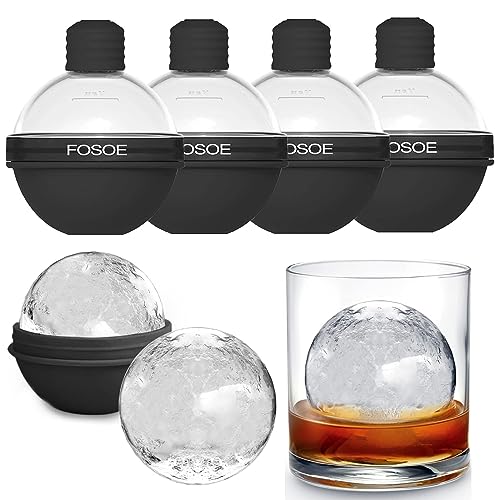
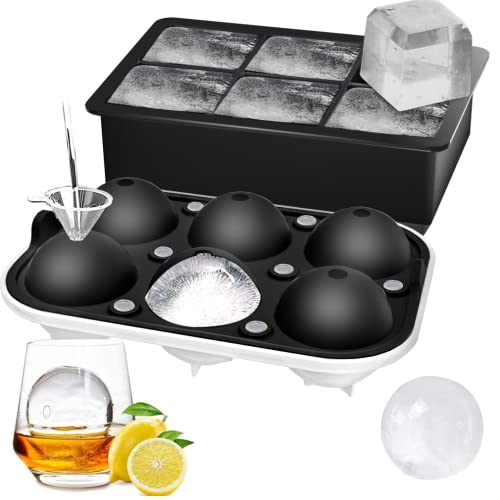


As an Amazon Associate we earn from qualifying purchases at no extra cost to you. Ratings are shown as listed on Amazon.
Quick picks by drinking situation
| Situation | Best mold type | Recommended sphere size | Why it fits |
|---|---|---|---|
| Occasional Old Fashioneds | Single or two-cavity silicone mold | 2.5 inches | Low cost, easy release, and enough ice for one drink |
| Daily whiskey service | Four-cavity rigid silicone mold with a cover | 2.5 to 2.75 inches | Produces several servings while limiting freezer odors |
| Fast turnover behind a bar | Metal spherical ice maker | 2 to 2.5 inches | Freezes more quickly than silicone when pre-chilled and handled correctly |
| Small freezer or crowded ice drawer | Stackable silicone mold | 2 inches | Uses less vertical space and freezes in a shorter cycle |
| Large rocks glass and slow dilution | Large silicone sphere mold | 2.75 to 3 inches | Lower exposed surface area relative to the drink volume |
What size whiskey ice sphere should you buy?
Sphere diameter matters more than the number of cavities. A 2-inch sphere contains about 8.4 cubic inches of ice, while a 2.5-inch sphere contains about 16.4 cubic inches. That means the larger sphere holds almost twice as much ice, even though its diameter is only one-quarter greater.
For a standard rocks glass, a 2.5-inch sphere is the most versatile choice. It chills a modest pour without quickly becoming a nuisance to remove. A 2.75- or 3-inch sphere suits a wide, heavy-bottomed glass, but may not fit through a narrow rim. Measure the glass opening before purchasing: the mold’s advertised diameter is the frozen sphere’s approximate diameter, not the clearance required to insert it.
Smaller 1.5- to 2-inch spheres are practical for high-volume service and cocktails containing more mixer. They melt faster because more ice surface is exposed relative to the drink, so they are less suitable when the goal is gradual dilution of neat whiskey.
Silicone versus metal: the head-to-head
Silicone molds
Food-grade silicone is the easiest material for most home users. The flexible lower half can be pressed to release the sphere, and silicone does not become dangerously cold to the touch as quickly as metal. A well-designed silicone mold also tolerates minor impacts that could dent a metal unit.
The trade-off is time and freezer space. Silicone is a poor conductor of heat, so a covered mold commonly needs about 8 to 14 hours for a full 2.5-inch sphere to freeze solid, depending on freezer temperature, starting-water temperature, and how many spheres surround it. Thin, flexible molds can also flex at the seam, creating leaks or flat spots.
Look for a rigid frame, a broad sealing rim, and a lid that stays attached during handling. Very soft silicone without structural support is inexpensive, but it is more likely to spill when carried to the freezer.
Metal sphere makers
Metal conducts heat efficiently. A pre-chilled metal mold can freeze a sphere in roughly 3 to 8 hours in a typical home freezer, although the result depends heavily on the mold’s design and whether it is chilled before filling. Metal models are often made from aluminum or stainless steel and may create a denser, clearer-looking sphere when the water freezes directionally.
They are less convenient to store and release. A metal sphere maker may require a tray, careful separation of halves, and insulated handling. A wet cloth or small amount of warm water can help release the ice, but excessive heat can crack the sphere or distort the mold. Aluminum can also dent, while stainless steel is tougher but usually heavier and more expensive.
Feature comparison for the best whiskey ice sphere molds
| Feature | Flexible silicone | Rigid silicone with cover | Metal sphere maker |
|---|---|---|---|
| Typical sphere diameter | 1.5–2.5 inches | 2.5–3 inches | 2–2.5 inches |
| Typical capacity | 2–6 spheres | 2–4 spheres | 1–2 spheres |
| Approximate full-freeze time | 8–14 hours | 8–16 hours | 3–8 hours |
| Common empty weight | 100–350 grams | 300–700 grams | 500–1,500 grams |
| Leak resistance | Low to moderate without a cover | Moderate to high | High once properly closed |
| Release difficulty | Low | Low to moderate | Moderate |
| Storage requirement | Can collapse or nest | Needs a flat shelf or bin | Needs a stable, protected space |
| Typical market price | About $8–$20 | About $15–$35 | About $25–$70 |
These are useful buying ranges rather than guarantees. Freezer temperature, water volume, mold geometry, and construction quality can move the actual result well outside the midpoint.
Leak resistance is the feature most listings under-explain
A mold can be made from good silicone and still be a poor whiskey accessory if its seam is unreliable. The most dependable designs combine three features: an overlapping upper and lower shell, a rigid outer frame, and a lid or locking band that keeps pressure on the seam.
Before filling, inspect the seam for ice residue, warped edges, or food particles. Fill only to the marked line; overfilling forces water into the seam as the mold is closed. Carry a filled mold on a flat tray, especially when the freezer is above or below waist height. If the mold leaks after several uses, replacing it is usually more practical than trying to repair silicone with household adhesive.
Freezing time, clarity, and storage
For the fastest freeze, use cold water, leave at least 2 inches of clearance around the mold, and place it on a level shelf rather than in the freezer door. Do not stack heavy food on a soft mold. A dedicated covered container is valuable because silicone can absorb or transmit freezer odors, particularly from onions, seafood, and strongly seasoned leftovers.
Sphere molds do not automatically produce crystal-clear ice. Cloudiness usually comes from dissolved air and minerals being trapped as the water freezes. Clarity has little effect on chilling performance, but a clear sphere looks cleaner in a short glass. If appearance matters, use filtered water and a directional-freezing container designed for clear ice; do not assume a standard sealed spherical mold will deliver the same result.
Storage is part of the purchase decision. A four-cavity rigid mold may occupy approximately 10 by 6 by 4 inches while filled, whereas a flexible two-cavity mold may collapse to a fraction of that volume. Measure the shelf height and the distance between freezer contents. A mold that technically fits but must be tilted to insert will be used less often and is more likely to spill.
How to choose without overspending
- Choose a basic silicone mold if you make whiskey drinks once or twice a week and have overnight freezing time.
- Choose covered rigid silicone if several people use the freezer, you want repeatable round shapes, or odor control matters.
- Choose metal if you serve whiskey frequently and value shorter freeze cycles more than low price and easy handling.
- Choose smaller spheres for narrow glasses, compact freezers, or cocktails where some dilution is welcome.
- Choose larger spheres for slow sipping in a generously sized rocks glass, provided the rim is wide enough.
A simple cost-per-use calculation helps explain why the cheapest mold is not always the best value. A $12 silicone mold used twice weekly for two years costs about 12 cents per use: $12 divided by approximately 208 uses. A $45 metal mold used five times weekly for the same period costs about 9 cents per use. That calculation excludes replacement, cleaning effort, and the value of faster freezing, but it shows why frequency should guide the purchase.
Cleaning and durability realities
Wash the mold before first use and after each cycle with warm water and mild dish soap. Rinse thoroughly, then dry it fully before storage. Silicone can retain detergent fragrance, so avoid strongly scented cleaners. A dishwasher is suitable only when the manufacturer explicitly permits it; repeated high heat can shorten the life of some lids, seals, and bonded parts.
The first parts to wear are usually the lid, locking tabs, sealing rim, or thin hinge—not the silicone cavity itself. Watch for permanent warping, cracks, a lid that no longer stays closed, or a persistent freezer smell. Do not pry frozen spheres out with a knife or metal pick. Let the mold sit at room temperature briefly or run lukewarm water over the outside, keeping the water away from the whiskey ice if you want to avoid surface melting.
Bottom line
For most whiskey drinkers, the best whiskey ice sphere molds are covered silicone models making 2.5-inch spheres: they balance slow melting, manageable storage, leak resistance, and easy release. Select metal when rapid production is the priority, and select a smaller flexible mold when freezer space or budget matters more than maximum melt time. The right sphere is the one that fits both your glass and your actual freezing routine.