Key takeaways
- Choose wired if you want maximum consistency, the lowest cost, no charging, or simple controller compatibility.
- Choose 2.4 GHz wireless if you move around, dislike a cable, or want to switch between a computer and console.
- Choose Bluetooth as a secondary feature, not as the primary connection for fast competitive games.
The best headphones for gaming are the ones that match your platform, communication needs, and tolerance for cables: choose a wired model for the lowest consistent latency and value, or a wireless model if freedom of movement and a tidy setup matter more.
Our top picks



As an Amazon Associate we earn from qualifying purchases at no extra cost to you. Ratings are shown as listed on Amazon.
Quick picks by gaming situation
| Situation | Best fit | Why | Main compromise |
|---|---|---|---|
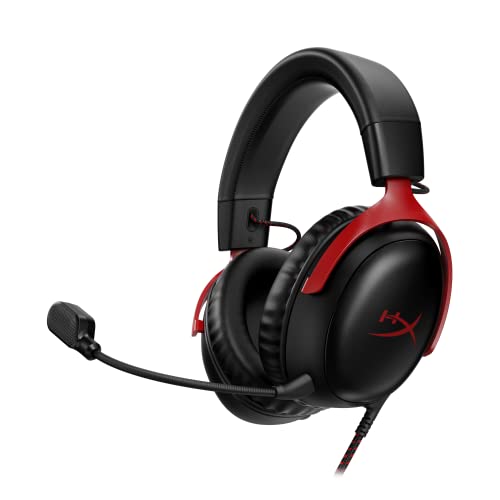
| Competitive PC or console play on a budget | HyperX Cloud III Wired | Lightweight design, clear positional sound, detachable microphone, and broad wired compatibility | No wireless convenience or active noise cancellation |
| One headset for PC, PlayStation, and mobile | SteelSeries Arctis Nova Pro Wireless | Wireless base station, swappable batteries, Bluetooth, and multiple connections | High price and a heavier, more complicated setup |
| Long sessions with a large soundstage | Audeze Maxwell | Excellent detail, strong imaging, and an exceptionally long battery | About 490 g, making it substantially heavier than most gaming headsets |
| Wireless PC gaming with a strong microphone | Razer BlackShark V2 Pro (2023) | Comfortable fit, low-latency 2.4 GHz wireless, and a notably clear microphone | Platform features differ between PC, PlayStation, and Xbox versions |
Wired versus wireless: latency, reliability, and price
Wired headphones send audio through an analog or USB connection, so they avoid radio interference and battery limits. With a USB gaming headset, the conversion from digital audio to sound still takes a small amount of processing, but the delay is normally imperceptible. A 3.5 mm headset is even simpler: the console, controller, or computer handles the audio output.
Wireless gaming headsets generally use a 2.4 GHz USB transmitter rather than ordinary Bluetooth. A good 2.4 GHz connection typically adds only a few milliseconds of latency and is suitable for competitive games. Bluetooth is useful for phones and music, but its codec and connection mode can introduce noticeably more delay. Some headsets disable their microphone or reduce sound quality when using Bluetooth in a computer’s headset mode.
For a practical comparison, suppose a wireless headset adds 10 ms of audio delay while a wired model adds 3 ms. The difference is 7 ms—smaller than one frame at 60 frames per second, which lasts 16.7 ms. Connection stability, display latency, game performance, and your ability to hear a cue usually matter more. Still, wired is the safest choice for esports, tournaments, or systems where wireless interference is common.
- Choose wired if you want maximum consistency, the lowest cost, no charging, or simple controller compatibility.
- Choose 2.4 GHz wireless if you move around, dislike a cable, or want to switch between a computer and console.
- Choose Bluetooth as a secondary feature, not as the primary connection for fast competitive games.
Head-to-head: useful gaming headsets compared
| Model | Connection | Approx. weight | Published battery life | Microphone and sound design |
|---|---|---|---|---|
| HyperX Cloud III Wired | 3.5 mm and USB, depending on version | About 330 g | Not applicable | Detachable boom mic; 53 mm dynamic drivers; closed back |
| Razer BlackShark V2 Pro (2023) | 2.4 GHz wireless and Bluetooth | About 320 g | Up to 70 hours | Detachable 9.9 mm boom mic; 50 mm drivers; closed back |
| Logitech G Pro X 2 Lightspeed | 2.4 GHz wireless, Bluetooth, and wired modes | About 345 g | Up to 50 hours | Detachable boom mic; 50 mm graphene drivers; closed back |
| Audeze Maxwell | 2.4 GHz wireless, Bluetooth, USB, and 3.5 mm | About 490 g | Up to 80 hours | Detachable boom mic; 90 mm planar magnetic drivers; closed back |
| SteelSeries Arctis Nova Pro Wireless | 2.4 GHz base station, Bluetooth, and wired base-station connections | About 339 g | Up to 22 hours per battery | Retractable boom mic; 40 mm drivers; active noise cancellation |
Weights and battery figures are manufacturer specifications and can vary slightly by version or measurement method. Battery life also falls when you use high volume, Bluetooth simultaneously, or additional processing such as active noise cancellation.
For positional audio
Positional audio depends more on tuning, imaging, fit, and the game’s audio mix than on driver size. A headset with accurate left-to-right placement helps you locate footsteps, reloads, and distant shots. Excessive bass can make explosions enjoyable but mask quieter cues.
The Cloud III Wired is a sensible value choice because its closed-back design provides consistent sound in a noisy room, while its angled drivers and restrained low end aim to keep directional details distinct. The Audeze Maxwell offers more resolution and fuller low-frequency impact, but its weight can become the deciding factor during a four-hour session.
For microphone quality
A detachable or retractable boom microphone normally beats built-in earcup microphones. Position the boom roughly two finger-widths from the corner of your mouth, slightly to the side rather than directly in front. This reduces breath blasts and popping. Software noise suppression can help with a keyboard or fan, but aggressive processing may cut off word endings.
The BlackShark V2 Pro (2023) is a strong choice when teammates need to hear speech clearly without extensive adjustment. The Nova Pro Wireless microphone is convenient because it retracts into the earcup, although its base-station settings and software deserve careful configuration. For the cleanest voice, a separate USB microphone still has an advantage, but it adds desk space and cost.
Comfort, isolation, and long-session fit
Comfort is not determined by weight alone. Clamp force, headband pressure, earcup depth, heat buildup, and the material touching your skin all matter. Memory-foam pads usually seal better than thin pads, but they can become warmer. Fabric pads breathe better but may leak more sound and lose their seal around glasses.
Closed-back headphones isolate you from some room noise and prevent game audio from disturbing nearby people. They are useful in shared rooms, but passive isolation is not the same as active noise cancellation. ANC can reduce steady sounds such as an air conditioner; it is less effective against voices, keyboard clicks, and sudden noises. The Nova Pro Wireless includes ANC, while the other models in the table primarily rely on their closed earcups.
During a fitting check, wear the headset for 15 minutes before judging it. Your ears should sit fully inside the cushions, the headband should not create a pressure point, and the earcups should not shift when you turn your head. If glasses create a gap, you may hear more room noise and lose bass. Softer replacement pads can improve comfort, but they may also alter the sound and reduce isolation.
Platform support: check the exact version
- PC: USB and 2.4 GHz models generally provide the most software controls, equalization, sidetone, and microphone processing.
- PlayStation: USB wireless transmitters and 3.5 mm controller connections are common. Confirm that the model supports your specific console generation.
- Xbox: Xbox Wireless certification is often required for direct console wireless use. A PlayStation or PC version may not work wirelessly with Xbox.
- Nintendo Switch: USB wireless support depends on docked or handheld use, while 3.5 mm is the least complicated option.
- Mobile: Bluetooth is convenient, but USB-C or 3.5 mm connections can reduce delay when the device and headset support them.
The Logitech G Pro X 2 is flexible because it supports wireless, Bluetooth, and wired operation. The Nova Pro Wireless is particularly useful for a multi-device setup, but its base station and console-specific versions make compatibility more important. Before buying, check whether the package includes the needed cable, transmitter, and console license rather than assuming every version has identical features.
Ownership costs and maintenance
General market pricing places basic wired gaming headsets around $50–$100, capable wireless models around $100–$200, and premium wireless or planar-magnetic options around $250–$400. A $70 wired headset used for three years and 1,000 gaming sessions costs about 7 cents per session before replacement parts. A $300 wireless headset used for the same number of sessions costs about 30 cents per session, without counting battery aging.
The parts most likely to wear first are ear cushions, headband padding, cable connectors, and the rechargeable battery. Replaceable pads are therefore more valuable than decorative lighting. Rechargeable batteries gradually lose capacity; a model with a removable battery, such as the Nova Pro Wireless, can be easier to keep in service than one with a sealed cell. Do not leave a wireless headset permanently charging in a hot location.
A simple care routine
- Wipe cushions and headband contact areas with a lightly damp, lint-free cloth after heavy use.
- Keep sweat and liquid away from microphone openings, USB ports, and control wheels.
- Store the headset on a stand or flat surface instead of hanging it by the cable.
- Unplug by the connector, not by pulling the wire.
- Update firmware only through the manufacturer’s official software, and avoid interrupting the process.
For most players, the final decision is simple: buy the HyperX Cloud III Wired when value and dependable positional audio come first; choose the Razer BlackShark V2 Pro for lightweight wireless play and voice chat; select the Nova Pro Wireless for multi-platform convenience; and choose the Audeze Maxwell when sound detail and battery life justify its considerable weight.