Key takeaways
- Compare the best bookends for heavy books: six steel, metal and wood options, with height, base, non-skid and quantity notes to confirm.
The Officemate Heavy Weighted Metal Bookends are the best overall pick here for shelves of heavy books, thanks to a listing that describes 10-inch steel construction, a weighted build and a non-skid base. Bookends do one job, which is to stop a row of books from sliding or leaning, and heavy books make that job harder because the force pushing outward grows with every volume you add. The six options below cover steel L-shaped supports, multi-pair value sets, a decorative tree design and one lighter wooden pair, so you can match the support to what is actually on your shelf.
Quick List
- VFINE Black Metal Bookends – best for a simple, single pair on a home or office shelf
- Officemate Heavy Weighted Steel Bookends – best overall for heavy binders, textbooks and art books
- HappyHapi 7-Pair Heavy Duty Bookends – best for outfitting a whole wall of shelving
- MaxGear Tree Design Bookends – best for a decorative look with non-skid, scratch-resistant pads
- HappyHapi 3-Pair Heavy Duty Bookends – best for a mid-sized library of several shelves
- Wood Economy Bookends – best for lighter loads, CDs and files (a runner-up for truly heavy books)
Which One Is Right for You?
| If you… | Choose |
|---|---|
| Hold up textbooks, binders or oversize art books | Officemate Heavy Weighted Steel Bookends |
| Have many shelves and want matching supports for all of them | HappyHapi 7-Pair Heavy Duty Bookends |
| Need supports for three or four shelves, not a whole room | HappyHapi 3-Pair Heavy Duty Bookends |
| Want a plain black pair that disappears into the shelf | VFINE Black Metal Bookends |
| Care about a decorative shape and protecting the shelf finish | MaxGear Tree Design Bookends |
| Hold paperbacks, CDs, files or video games, and prefer wood | Wood Economy Bookends |
First decide how heavy your books are and how much shelf you have to hold in place. A foot of paperbacks and a foot of hardcover art books are very different loads. Next, consider the surface: bare metal on smooth glass or polished wood needs a pad or non-skid base. Finally, count the shelves. If you plan to cover many, a multi-pair set is the more practical choice than buying single pairs one at a time.
All 6 Picks in Detail
1. VFINE Black Metal Bookends – Best for a Simple Single Pair
As an Amazon Associate we earn from qualifying purchases at no extra cost to you.

The VFINE is the no-nonsense pick. The listing describes one pair of black metal bookends for shelves, marketed as a book stopper for heavy books and for use around the home, office or school. A single pair is exactly what you need for one shelf, a desk or a small bookcase, and a black finish is easy to blend with most furniture. As with most L-shaped metal bookends, the base slides under the books, so the weight of the books helps hold the bookend in place.
- Quantity: one pair, according to the listing
- Material: metal in a black finish
- Use: shelves, desks and school or office use
- Height, base length and weight: confirm dimensions on the product page
- Non-skid pads: confirm whether the base has rubber or felt
Pros:
- Straightforward design suits any shelf
- Black finish hides dust
- Single pair avoids buying more than you need
Cons:
- Heavy-duty strength depends on metal thickness, which should be confirmed
- Bare metal can scratch some shelf surfaces
Compared with the Officemate, the VFINE is the lighter-weight, simpler option; the Officemate puts more emphasis on weighted steel.
This style suits first apartments, dorm rooms and home offices where the aim is to keep a short row of books upright without fuss. It is also a sensible spare pair to keep in a drawer for the days when a shelf of new purchases overflows. Because metal gauge is not given in the title, the product images and customer questions are the best places to judge how stiff the wall feels.
When you evaluate a basic pair, check how long the base is and how thick the steel looks in the product images. A longer base lets more books sit on top of it, which increases friction, and thicker steel resists bending when a stack leans against it. If your shelf is smooth, add a thin piece of rubber shelf liner under the base.
2. Officemate Heavy Weighted Steel Bookends – Best Overall for Heavy Books
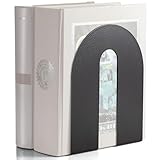
This is the most heavy-duty-sounding pick. The listing describes a set of two heavy weighted metal bookends, with 10-inch steel construction, a non-skid base and support for books, binders and similar items. Weight matters in a bookend because mass resists tipping and sliding, and a taller 10-inch bookend gives support to larger volumes like textbooks, binders and coffee-table books that would otherwise bow over a shorter stop.
- Quantity: a set of two, which is typically one pair; confirm on the listing
- Material: steel, with a weighted build, according to the listing
- Height: 10 inches, according to the listing title
- Base: non-skid, according to the listing
- Weight per piece and finish: confirm on the product page
Pros:
- Tall support suits large books and binders
- Weighted steel resists tipping
- Non-skid base helps on smooth shelves
Cons:
- A 10-inch height is too tall for low shelves
- Heavier pieces are less convenient to move around
Next to the MaxGear, the Officemate is taller and more utilitarian, while the MaxGear is smaller and more decorative.
Weighted bookends are also useful on desks, where they keep reference manuals, planners and files upright between monitors and storage boxes. If the desk is wooden, add felt pads so the steel does not mark the finish when you slide it. A matte or powder-coated finish tends to resist chips better than bare paint, though the listing does not say which is used here.
Before buying tall bookends, measure the clearance between your shelves. A 10-inch bookend needs at least 10 inches of vertical space, plus a little extra to slide it in and out. Office users with binders and reference manuals will find this size convenient, and home users with large art books or cookbooks may find it ideal for the bottom shelf.
3. HappyHapi 7-Pair Heavy Duty Bookends – Best for Outfitting a Whole Wall of Shelves
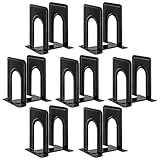
If you have a floor-to-ceiling bookcase, buying bookends one pair at a time gets tedious. The listing for this set says seven pairs of heavy-duty black metal bookends with a non-skid design, for heavy books, and the quantity is the main selling point. Seven pairs mean fourteen pieces, which is enough to anchor seven shelves or to divide a long shelf into sections, so the books lean less when you remove one.
- Quantity: seven pairs, according to the listing
- Material: metal, black
- Design: heavy-duty, non-skid, according to the listing
- Dimensions and weight per piece: confirm on the product page
- Pad type: confirm whether the base has rubber or felt
Pros:
- Enough pairs for a full bookcase
- Matching look across shelves
- Non-skid design in the listing
Cons:
- More pieces than a small library needs
- Individual pieces may be lighter than a single heavy pair
Compared with the HappyHapi 3-pair set, this is the same style with more pairs for larger collections.
Bulk sets also make sense for libraries, offices and shared spaces where you would rather replace one lost bookend than rebuy a whole pair. Because the pieces are identical, you can mix and match them freely, which is useful when a book collection grows unevenly and some shelves need three supports.
Sets like this are also useful for dividing a shelf into categories, such as cookbooks, travel books and reference. Place a pair at each end of a section, and the books stay organized even when you pull a title out. If the set is for a classroom, check that the edges are smooth, and consider adding felt pads to protect furniture.
4. MaxGear Tree Design Bookends – Best for a Decorative Look and Shelf Protection

The MaxGear has a tree-shaped cutout, which makes it the decorative pick. The listing describes two pairs of metal bookends, each measuring 7 x 4.7 x 3.5 inches, with a heavy-duty construction, non-skid pads and a scratch-resistant, stable design. Two pairs are useful for two shelves or for dividing a long shelf, and the tree motif adds a bit of character to a home office, nursery or reading nook.
- Quantity: two pairs, according to the listing
- Dimensions: 7 x 4.7 x 3.5 inches, according to the listing
- Material: metal, tree-design cutout
- Pads: non-skid and scratch-resistant, according to the listing
- Finish and weight: confirm on the product page
Pros:
- Decorative shape sets it apart from plain L-brackets
- Pads protect shelves from scratches
- Two pairs in one set
Cons:
- The 7-inch height may be too short for large books
- Cutouts mean less metal contact with the book
Compared with the Officemate, the MaxGear is smaller and more stylish but less suited to big binders.
The tree cutout keeps the piece visually light and, in many designs, also reduces the amount of metal used, so check the stated thickness and weight before assigning it to a shelf of heavy volumes. The listed pads are a plus on finished wood, where bare metal can leave marks over time. In a child’s room or nursery, the decorative shape pairs nicely with picture books, which are usually lightweight.
For medium-weight loads, such as novels and standard hardcovers, a 7-inch bookend is usually enough. If your books are taller than about 11 inches, the bookend will only support the lower part, which can let the top lean outward, so choose a taller bookend for oversize volumes.
5. HappyHapi 3-Pair Heavy Duty Bookends – Best for a Mid-Sized Library
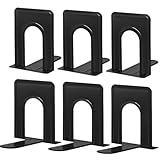
This is the middle choice between a single pair and a full seven-pair kit. The listing describes three pairs of black metal, heavy-duty, non-skid bookends for shelves and heavy books. Three pairs cover three shelves or a long shelf in several sections, which suits many home libraries, small offices and classrooms.
- Quantity: three pairs, according to the listing
- Material: black metal
- Design: heavy-duty and non-skid, according to the listing
- Dimensions and weight: confirm on the product page
- Base pads: confirm material
Pros:
- A practical quantity for a modest bookcase
- Same look as the 7-pair set
- Non-skid design in the title
Cons:
- May leave larger bookcases short of pairs
- Strength per piece should be confirmed
Next to the VFINE single pair, this offers more pieces with a similar black metal look.
A mid-sized set is also a practical gift for a new reader or student. Keeping a spare pair means you can react quickly when a shelf is rearranged. As with the larger set, look at the product images to see how the base is shaped and how far it extends under the books.
Count your shelves before choosing a quantity. A standard bookcase might have five shelves, so three pairs would cover the busiest ones, such as the shelf of reference books, the shelf of hardcovers and the shelf of binders. You can then fill the rest of the shelves tightly so they need no support at all.
6. Wood Economy Bookends – Best for Lighter Loads (Runner-Up for Truly Heavy Books)

The last pair is a wooden bookend, and it is the odd one out. The listing describes a pair of universal economy wood bookends as book stoppers for heavy-duty books, CDs, files and video games. Wood works well for paperbacks, files and media, but it is generally lighter than steel, and the thickness of the wood and the way the base is built will determine whether it can really hold a stack of heavy hardcovers. For that reason, treat it as a runner-up for heavy loads and confirm the weight and dimensions on the product page.
- Quantity: one pair, according to the listing
- Material: wood
- Use: books, CDs, files and video games, according to the listing
- Style: universal, economy design
- Weight, thickness and base design: confirm on the product page
Pros:
- Warm look that matches wooden shelves
- Versatile for media, files and books
- Gentle on shelf surfaces
Cons:
- Wood is lighter than steel and may slide under heavy loads
- Strength depends on construction details that should be confirmed
If your books are truly heavy, the Officemate steel bookends are the better alternative in this list.
Wooden bookends suit shelves with lighter or mixed contents, like a media shelf with CDs and games. To help them hold, make sure the base slides far under the books and add a strip of rubber shelf liner beneath it. If the shelf is smooth, wood can slide more easily than metal with non-skid pads.
Specs Compared
| Bookend | Material | Quantity | Size note | Non-skid base |
|---|---|---|---|---|
| VFINE Black Metal | Metal, black | 1 pair | Confirm on listing | Confirm on listing |
| Officemate Heavy Weighted | Steel | Set of 2 (confirm) | 10-inch | Yes, per listing |
| HappyHapi 7 Pairs | Metal, black | 7 pairs | Confirm on listing | Non-skid, per listing |
| MaxGear Tree Design | Metal | 2 pairs | 7 x 4.7 x 3.5 inches | Non-skid pads, per listing |
| HappyHapi 3 Pairs | Metal, black | 3 pairs | Confirm on listing | Non-skid, per listing |
| Wood Economy Pair | Wood | 1 pair | Confirm on listing | Confirm on listing |
How We Chose These
This guide is based on desk research on product listings, not on loading the bookends with books. We read each listing title and specification fields and compared the factors that matter for heavy books: material, stated height and dimensions, non-skid or scratch-resistant features, and the number of pieces in the set. We kept the products in the order provided, labeled the wooden pair as a runner-up for heavy loads, and noted every value the listing did not state, such as weight per piece, so you can confirm it on the product page before buying.
What to Look For
Material and Thickness
Steel is the standard material for heavy-duty bookends because it resists bending under load. Look for a stated gauge or thickness; thicker steel, often around 1.5 millimeters or more, tends to hold up better than thin sheet metal that can bow. Wood can work for lighter loads but depends on grain and construction. Plastic and acrylic are decorative and usually unsuited to heavy volumes.
Height, Base Length and Leverage
Bookends work like levers. The vertical wall pushes against the books, while the horizontal base slides under them and is held down by their weight. Taller walls resist leaning better, and longer bases provide more friction. As a guide, choose a bookend whose height is at least two thirds of your tallest book, and whose base extends under at least half of the book’s depth. For a 10-inch-tall book, aim for a wall of about 7 inches or more.
Non-Skid Pads and Shelf Protection
Bare metal on a smooth shelf can slide, especially on glass, laminate or polished wood. Rubber or felt on the underside adds grip and prevents scratches. If the bookend has no pads, you can add self-adhesive felt or a strip of shelf liner. On carpet-like surfaces, such as a padded shelf, grip is rarely a problem, but the bookend may sink in.
Weight, Safety and Placement
A foot of hardcover books can weigh roughly 10 to 25 pounds, depending on size and paper. Keep the heaviest books on lower shelves, and anchor tall bookcases to the wall with anti-tip hardware, especially in homes with children. Bookends are not a substitute for a full shelf: when possible, fill the shelf so the books support each other, and use bookends to hold the end of the row.
Decorative Versus Utilitarian Designs
Bookends fall into two broad camps. Utilitarian L-shaped steel pieces maximize strength for the least money and look best in offices, libraries and classrooms. Decorative designs, such as tree cutouts, animals or stone-look pieces, carry personality but often use less metal or smaller bases. If you pick a decorative design for heavy books, look closely at the base length, the weight and the pads, because style and strength do not always come together. A good compromise is to use decorative pairs on shelves with lighter novels and utilitarian steel on the shelves that hold atlases, textbooks and binders.
A simple rule of thumb. Suppose you have a 30-inch shelf of 12-inch-tall art books. Estimating about 15 pounds per foot, the row weighs around 37 pounds. Choose a pair with a wall of at least 8 inches, a base that slides at least halfway under the books, and non-skid pads. If the shelf is glass, add shelf liner as well.
Questions
How heavy should a bookend be?
For heavy books, look for steel bookends in the pound-and-a-half to several-pound range per piece, or a weighted design. Weight helps, but base length and non-skid pads matter just as much, because a heavy bookend on a slippery base can still slide when a shelf is crowded.
Do bookends scratch wooden shelves?
Bare metal can scratch, especially if grit gets under the base. Choose bookends with felt or rubber pads, or add adhesive felt to the underside.
Can I use bookends on a glass shelf?
Yes, but use bookends with rubber pads or add a strip of shelf liner, because metal slides easily on glass. Keep loads moderate on glass shelves, and check the shelf’s own weight limit, since glass has a lower limit than solid wood.
How many bookends do I need?
You need one pair per row that is not filled edge to edge. A full shelf may need only one end stop, while a half-empty shelf needs a pair. Large, heavy collections often benefit from an extra stop in the middle of a long shelf so no single section of books carries too much outward push.
Are wooden bookends strong enough for heavy books?
Thick hardwood designs can work for moderate loads, but steel is usually the safer choice for heavy hardcovers and binders. Check weight and construction on the product page.
What size bookend fits tall books?
Choose a wall height of at least two thirds of the tallest book’s height, and a base that goes under at least half of the book. For oversize art books, 8 to 10 inches is a common range.
Update History
- October 20, 2026 – Initial publication; product set drawn from current catalog listings.
- Check the product page for current specifications and availability before buying.
Sources
- Retailer listing titles and specification fields for each bookend
- General furniture-safety and shelving references on load distribution and anti-tip anchoring