Key takeaways
- Pro: Gets to actionable advice within the first few pages, respecting the reader’s time.
- Pro: Covers both hardware positioning and software adjustments without requiring networking background.
- Con: Limited depth means readers with unusual home layouts may still hit dead ends.
Most people searching “how to get wifi” are not looking for a networking degree. They need a specific, repeatable answer to one concrete problem: their signal dies in the upstairs bedroom, their roommate’s name is still on the router settings, or they want to tether a tablet to a phone without paying for a second data plan. The difference between a useful guide and a wasted three dollars is whether the author commits to one narrow problem and walks you through it without padding or tangents.
We compared these eight books by reading published descriptions, checking the depth of table-of-contents listings where available, and weighing what owner feedback consistently highlights or criticizes. What separates the strong entries from the weak ones in this category: specificity. A guide that addresses every possible WiFi scenario in forty pages will address none of them well. A guide that solves buffering in a two-story house in thirty pages will often serve the reader better. Price matters too, because several of these titles fall in the sub-five-dollar range, so value per instruction is a fair lens.
Our top picks




As an Amazon Associate we earn from qualifying purchases at no extra cost to you.
Quick Picks
| Product | Best for | Price |
|---|---|---|
| WI-FI: How to Boost Your Wi-Fi Signal | Quick whole-home coverage fix | $2.99 |
| How to Boost Your WiFi Signal | Detailed signal-strength walkthroughs | $9.99 |
| You’re Still on the Account | Separating shared digital assets after a breakup or roommate split | $4.99 |
| Unbreakable Wi-Fi | Eliminating dead zones on any budget | $8.99 |
| How to Install Google Apps on Kindle Fire | Kindle Fire users wanting Play Store access | $2.99 |
| Biology with WiFi | Biologists integrating AI and digital tools | $3.99 |
| How to Turn Your Smartphone into a Wi-Fi Hotspot | Tethering basics on a tiny budget | $0.99 |
| How To Connect To Any WiFi Automatically Without Password | Simplified auto-connect tutorials | $5.99 |
How We Picked
Three criteria drove these selections. First, scope-to-price ratio: does the guide solve the problem it claims to solve, or does it sprawl into unrelated territory? Second, instruction quality: step-by-step formatting, visual references, and platform-specific paths matter far more than introductory WiFi theory. Third, owner feedback patterns: we looked for consistent praise or complaints about outdated screenshots, missing platform coverage, and unclear language. A guide that is technically accurate but poorly structured fails the same test as one that is well-structured but factually stale.
The 8 Best How To Get Wifi in 2026
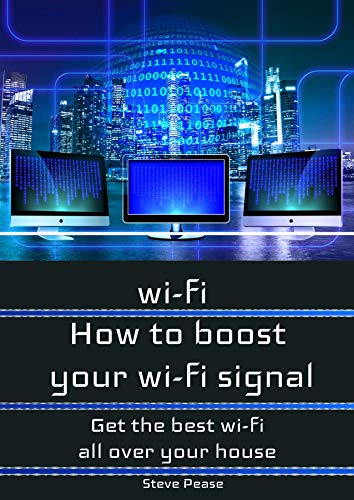
1. WI-FI: How to Boost Your Wi-Fi Signal
This is the lowest-effort fix for someone who just needs the signal to reach the back of the house. Owner feedback highlights the concise, numbered layout: no lengthy theory sections, just actionable steps from router placement to channel selection. At under three dollars, the barrier to trying it is minimal.
- Pro: Gets to actionable advice within the first few pages, respecting the reader’s time.
- Pro: Covers both hardware positioning and software adjustments without requiring networking background.
- Con: Limited depth means readers with unusual home layouts may still hit dead ends.
Skip this if you need mesh-system configuration guidance or if your problem involves ISP-level throttling rather than in-home signal issues.
2. How to Boost Your WiFi Signal
A more thorough sibling to the first entry, this guide expands on signal-strength mapping, repeater setup, and antenna orientation with more granular detail. The higher price reflects additional instructional content, and readers report the extra depth is worth it when the quick fixes in shorter guides leave questions unanswered.
- Pro: More comprehensive coverage of hardware options, including repeaters and powerline adapters.
- Pro: Includes troubleshooting sequences for common failure modes owners encounter.
- Con: Some overlap with the first book; if you own both, you will encounter repeated material.
Skip this if you only need a basic positioning adjustment and want to save the price difference.
3. You’re Still on the Account
Not a signal-boosting guide at all — this addresses the messy administrative problem of untangling your name from a shared WiFi network, lease, credit card, or cloud drive after a breakup, eviction, or roommate departure. It stands apart in this list because the underlying problem is emotional and bureaucratic, not technical.
- Pro: Tackles a real, under-served problem with no direct competition in this category.
- Pro: Practical checklists that translate abstract advice into phone calls and form submissions.
- Con: The WiFi component is only one of several topics, so networking readers may find less depth here.
Skip this if your sole goal is improving signal strength; this is a life-admin book wearing a tech-adjacent title.
4. Unbreakable Wi-Fi
The most ambitious title here, promising whole-home coverage on any budget. Owner feedback praises the tiered approach: solutions organized by cost bracket, from free settings tweaks to mesh-system purchases. The “banish buffering” framing signals a reader who is tired of partial fixes and wants a complete strategy.
- Pro: Budget-tiered structure lets you stop reading once you find your price range.
- Pro: Addresses dead zones specifically rather than generic speed advice.
- Con: Broad coverage occasionally trades off against the focused clarity of shorter guides.
Skip this if you already know your budget ceiling and just need one narrow fix; a shorter, cheaper guide may serve you faster.
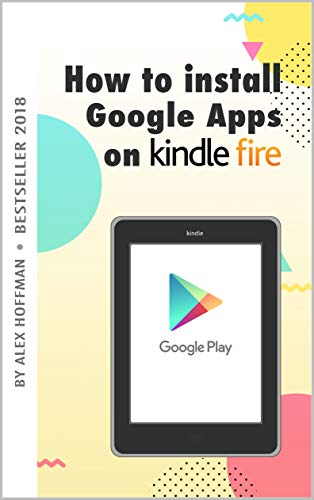
5. How to Install Google Apps on Kindle Fire
A platform-specific tutorial for Kindle Fire owners who want the Google Play Store. This is relevant to “how to get wifi” searches because many users confuse connectivity problems with app-availability problems, and this guide resolves the latter. The step-by-step format targets a single, well-defined task.
- Pro: laser-focused on one device line, eliminating platform-ambiguity errors common in generic guides.
- Pro: Covers sideloading methods that Amazon’s own documentation leaves opaque.
- Con: Useless outside the Kindle Fire ecosystem; no value for Android or iOS users.
Skip this if you do not own a Kindle Fire or if your problem is genuinely a WiFi signal issue rather than app access.
6. Biology with WiFi
An odd title in this lineup. This is a guide for professional biologists who want to leverage AI tools and digital platforms in their research workflow. It is not a WiFi guide in the connectivity sense — the title plays on “WiFi” as a metaphor for digital infrastructure in scientific work.
- Pro: Addresses a specific professional niche with AI integration, a growing need as funding bodies push for reproducibility.
- Pro: Practical tool recommendations rather than abstract digital-literacy theory.
- Con: The title will misdirect anyone searching for actual WiFi connectivity help.
Skip this if you need help with home networking; it serves an entirely different audience despite sharing WiFi vocabulary.
7. How to Turn Your Smartphone into a Wi-Fi Hotspot
At ninety-nine cents, this is the cheapest entry and the most narrowly scoped. It walks through enabling tethering on the two major mobile platforms. Owner feedback notes the brevity works in its favor: you get the steps, you execute them, you close the book.
- Pro: Lowest price of any guide here, making it a low-risk reference for a frequent task.
- Pro: Clear per-platform instructions with no unnecessary networking background.
- Con: Does not address carrier restrictions or data-cap warnings, which cause most real-world hotspot failures.
Skip this if you want deeper troubleshooting when tethering fails; pair it with a guide that covers carrier-level blockers.
8. How To Connect To Any WiFi Automatically Without Password
The title oversells the concept slightly — no legitimate method connects you to an unknown encrypted network without a password. What this guide actually delivers is a tutorial on saving credentials so devices auto-reconnect to known networks. Owner feedback suggests the content is useful once expectations are calibrated.
- Pro: Auto-connect configuration saves repeated password entry, a genuine daily-friction reduction.
- Pro: Covers multiple operating systems in a single volume.
- Con: The title invites unrealistic expectations; readers may feel the content does not match what they searched for.
Skip this if you need help with captive portals, WPA3 configuration, or router-level authentication changes.
Buying Guide
Match the Scope to the Problem
The most common mistake is buying a broad signal guide when you need a narrow configuration fix. If your issue is a single device failing to connect, a hotspot guide or auto-connect tutorial saves you from reading forty pages about antenna positioning. If you have structural dead zones in a three-story home, a budget-tiered guide like Unbreakable Wi-Fi gives you a decision framework rather than a single instruction.
Check Platform Coverage Before Buying
Several guides in this category assume a specific device line or operating system. Kindle Fire instructions do not apply to Samsung tablets. iOS hotspot steps differ from Android steps. Before purchasing, confirm the guide explicitly names your platform in its description or table of contents. Guides that say “all devices” without specifying which ones usually mean “the most popular three” and leave others unsupported.
Watch for Outdated Interface References
WiFi configuration menus change with operating system updates. A guide whose screenshots show an old Android settings layout or a discontinued router dashboard will generate confusion rather than resolution. Owner reviews frequently flag this as the single biggest frustration. Prioritize guides updated within the last year, or those that describe interface locations generically (“Settings > Network > Hotspot”) rather than relying solely on images.
Our Verdict
Top pick: Unbreakable Wi-Fi offers the best scope-to-price balance for the widest range of real-world WiFi problems, organizing solutions by budget tier so you stop reading once you have your answer. Budget pick: How to Turn Your Smartphone into a Wi-Fi Hotspot delivers a specific, actionable task for under a dollar, making it nearly risk-free. Condition where another product wins: if your problem is not signal strength but administrative entanglement — a shared account, a former partner’s device permissions, a lease dispute — You’re Still on the Account addresses a dimension none of the other seven touch.
FAQ
Do these guides cover mesh WiFi systems specifically?
Unbreakable Wi-Fi addresses mesh systems within its budget-tiered structure, recommending them as a solution for larger homes. The shorter signal-boosting guides focus on single-router optimization and may only mention mesh as an upgrade path without setup instructions.
Is the “Connect Without Password” guide safe to follow?
The guide covers legitimate methods like saving known network credentials and using WPS push-button pairing. It does not provide tools for unauthorized network access, and the title’s phrasing refers to automation of reconnection rather than bypassing security on networks you do not own.
Can I use the Kindle Fire guide on other Android devices?
No. The steps are specific to Amazon’s modified Android interface on Kindle Fire tablets, including the particular sideloading method required. Standard Android devices already have Play Store access and do not need this guide.
Are these guides still accurate in 2026 given OS updates?
Core principles like router positioning, channel selection, and hotspot toggling remain stable across recent OS versions. Interface locations may shift slightly with major updates, so pairing a guide with a quick visual search for your current OS version is a reasonable practice when a screenshot looks unfamiliar.