Key takeaways
- Brush out the grounds chute and burr area periodically. Old coffee oils and particles can build up and affect flavor. Unplug the grinder before removing parts, and follow the manufacturer’s cleaning instructions.
- Avoid washing steel burrs or the motor housing. Use a dry brush or a cleaning method approved for that model. Moisture can damage components or encourage corrosion.
- Do not treat grinder-cleaning pellets as a substitute for brushing. Use them only if the grinder maker permits them, and follow the product instructions.
- Expect burrs to wear gradually. Heavy use and very hard or contaminated beans can accelerate wear. Dull burrs may grind more slowly or less consistently; replacement burrs are a normal maintenance expense, not necessarily a reason to replace the whole grinder.
- Change one variable at a time when dialing in. Adjust grind size in small increments and keep dose and brew method steady. This makes it easier to tell whether the setting improved the result.
The best burr coffee grinders, by brewing style
The best burr coffee grinders match their grind range and adjustment precision to your brew: choose the Baratza Encore ESP for an affordable espresso-to-pour-over option, the Fellow Ode Brew Grinder Gen 2 for quieter filter coffee, or the Baratza Virtuoso+ for a versatile everyday grinder with a timer. For frequent espresso making, the Eureka Mignon Specialità is a more capable, dedicated choice.
Specifications below are manufacturer-published or commonly listed figures; exact dimensions and capacities can vary slightly by version. Prices are approximate market ranges in 2026, not live quotes.
Our top picks
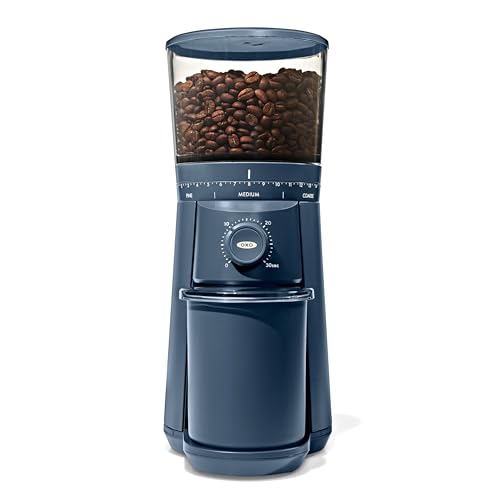
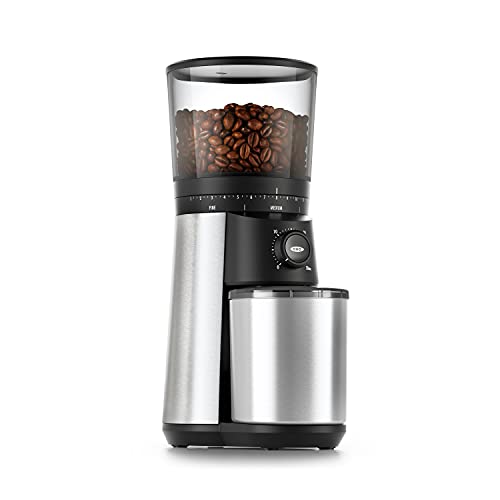
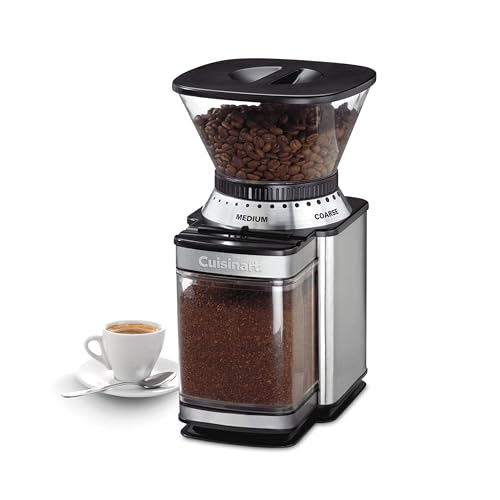
As an Amazon Associate we earn from qualifying purchases at no extra cost to you. Ratings are shown as listed on Amazon.
| Grinder | Burrs and adjustment | Hopper or dose capacity | Approx. size (W × H × D) | Noise and retention | Best fit |
|---|---|---|---|---|---|
| Baratza Encore ESP | 40 mm conical steel; 40 steps, with fine steps concentrated at the espresso end | Approx. 230 g hopper | 13 × 35 × 16 cm | Audible motor; hopper-fed grinding can leave some grounds in the chute | Entry-level espresso and filter brewing |
| Fellow Ode Brew Grinder Gen 2 | 64 mm flat steel; 31 steps, designed for brewed coffee rather than espresso | Approx. 100 g hopper | 24 × 24 × 10 cm | Relatively subdued for an electric grinder; low-retention, single-dose workflow | Pour-over, drip, and batch brew |
| Baratza Virtuoso+ | 40 mm conical steel; 40 steps | Approx. 230 g hopper | 13 × 36 × 16 cm | Noticeable grinding sound; some grounds may remain in the chute | Daily filter coffee and French press |
| Eureka Mignon Specialità | 55 mm flat steel; stepless adjustment | Approx. 300 g hopper | 12 × 35 × 18 cm | Often quieter than basic grinders; hopper-fed design is not optimized for zero retention | Frequent espresso use, especially with a portafilter |
Choose by what you brew
For espresso on a limited budget: Baratza Encore ESP
Espresso needs small, repeatable grind changes because a slight adjustment can noticeably change shot flow. The Encore ESP’s finer adjustment steps at the espresso end make it more suitable for learning espresso than a standard stepped filter grinder. Its broader range also covers pour-over and other everyday methods, so it can serve a household that switches between brew styles.
There are trade-offs: it is a hopper-fed grinder, not a precision single-dose machine, and its motor and grinding sound are apparent in a quiet kitchen. Expect some grounds to linger in the chute. If you change beans or brew methods often, clear out the old coffee before dialing in the new setting.
Approximate price range: $200–$250.
For pour-over and low-fuss filter brewing: Fellow Ode Brew Grinder Gen 2
The Ode Gen 2 is built for brewed coffee, with 64 mm flat burrs and an adjustment range that covers methods such as pour-over, drip, and French press. Its single-dose approach is useful if you want to weigh beans for each brew instead of keeping a full hopper loaded. The short, compact footprint also works well where counter depth is limited.
Do not buy it as an espresso grinder: its adjustment range is not intended to grind fine enough for conventional espresso dialing-in. Its smaller capacity is a benefit for freshness and bean rotation, but a drawback if you grind large quantities in one session. Approximate price range: $350–$400.
For automatic, everyday filter coffee: Baratza Virtuoso+
The Virtuoso+ suits people who want a hopper and a timed grind rather than weighing each dose individually. Its 40 mm conical burrs and broad stepped range cover common filter methods, including drip and French press. The timer can make weekday routines more repeatable, though it measures time rather than coffee weight: different beans and grind settings can produce different amounts in the same interval.
It can grind fine, but its stepped adjustment is less suited to espresso than the Encore ESP or a dedicated espresso grinder. Approximate price range: $250–$300.
For espresso made often: Eureka Mignon Specialità
The Specialità is the strongest fit here for a household that regularly makes espresso and wants a dedicated grinder. Its 55 mm flat burrs and stepless adjustment let you make very small changes while dialing in a shot. The portafilter fork and timed dosing also make repeated espresso preparation convenient.
Stepless adjustment is a precision advantage, but it comes with a learning curve: there are no numbered steps to return to when switching between beans or brew styles. It is also less convenient as an all-purpose grinder if you frequently move between espresso and coarse filter settings. Approximate price range: $600–$800.
A quick decision matrix
| Your situation | Best starting choice | Why |
|---|---|---|
| New to espresso; moderate budget | Baratza Encore ESP | Espresso-focused fine steps without giving up a useful filter range |
| Mostly pour-over; one or two doses at a time | Fellow Ode Gen 2 | Designed for brewed coffee and single-dose use |
| Daily drip or French press for several people | Baratza Virtuoso+ | Hopper capacity and timed grinding support a repeatable routine |
| Espresso most days; willing to learn fine adjustments | Eureka Mignon Specialità | Stepless adjustment and an espresso-oriented workflow |
What burr type, retention, and noise mean in practice
Conical and flat burrs both produce good coffee; the label alone does not determine cup quality. Conical burrs are common in compact all-rounders, while larger flat burrs often appear in grinders aimed at filter brewing or espresso. Burr geometry, alignment, adjustment range, and the coffee itself all matter. Choose for the brewing range and workflow you need rather than assuming one burr shape is always better.
Retention is the coffee left inside the grinder after grinding. In a hopper-fed model, a small amount can remain in the chute and mix with the next dose. That matters most when switching beans or moving between espresso and filter settings. Single dosing reduces the quantity of beans sitting in the grinder, but does not guarantee that every ground particle exits. If exact doses matter, weigh the beans before grinding and the grounds afterward until you know your grinder’s typical behavior.
Noise varies with motor design, burrs, beans, and the surface under the grinder. A low-retention design is not necessarily quiet, and a quiet motor does not mean faster grinding. If early-morning noise matters, look for models specifically designed to damp sound and consider a stable, vibration-absorbing counter surface.
Ownership: cleaning, wear, and common mistakes
- Brush out the grounds chute and burr area periodically. Old coffee oils and particles can build up and affect flavor. Unplug the grinder before removing parts, and follow the manufacturer’s cleaning instructions.
- Avoid washing steel burrs or the motor housing. Use a dry brush or a cleaning method approved for that model. Moisture can damage components or encourage corrosion.
- Do not treat grinder-cleaning pellets as a substitute for brushing. Use them only if the grinder maker permits them, and follow the product instructions.
- Expect burrs to wear gradually. Heavy use and very hard or contaminated beans can accelerate wear. Dull burrs may grind more slowly or less consistently; replacement burrs are a normal maintenance expense, not necessarily a reason to replace the whole grinder.
- Change one variable at a time when dialing in. Adjust grind size in small increments and keep dose and brew method steady. This makes it easier to tell whether the setting improved the result.
Bottom line
For one grinder that can handle introductory espresso and filter coffee, start with the Baratza Encore ESP. Choose the Fellow Ode Brew Grinder Gen 2 for pour-over and a single-dose routine, the Virtuoso+ for convenient everyday filter brewing, or the Eureka Mignon Specialità if espresso is your main use and precise stepless adjustment is worth the higher cost. Before buying, check the current version’s dimensions, voltage, and capacity against your counter space and usual batch size.