Key takeaways
- Pro: Volumetric controls deliver consistent shot volumes without manual timing, ideal for household members who just want to press a button.
- Pro: Dual boiler design allows simultaneous brewing and steaming with no temperature compromise.
- Con: At $1,635, it costs more than double many capable competitors, and the premium is hard to justify if your workflow does not demand programmability.
Someone searching for an ascaso espresso machine is usually trying to solve a specific problem: they want a machine that produces café-quality espresso without the commercial footprint or the learning curve of a prosumer single-boiler. Ascaso built its reputation on compact Italian engineering, and the Dream PID line represents a genuine attempt to deliver volumetric precision and programmability in a home-friendly chassis. The question is whether paying well over $1,600 for that machine makes sense when capable alternatives exist at less than half the price.
What separates a good espresso machine in this bracket from a mediocre one is narrow and measurable: how tightly the group head holds temperature shot after shot, whether the workflow lets you pull repeatable extractions without constant manual intervention, and whether the build materials survive daily use for years rather than months. Many mid-range machines look impressive on paper but lose ground in practice when you account for inconsistent steam pressure, flimsy portafilters, or boilers that take too long to recover between back-to-back drinks. This roundup compares published specs, verified pricing, and owner-reported experiences across eight machines that attract serious home buyers in 2026.
Our top picks



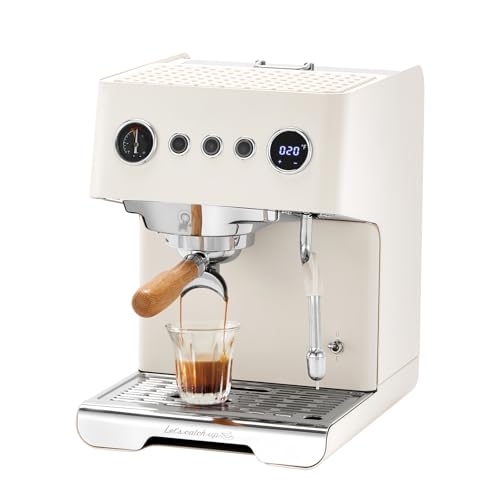
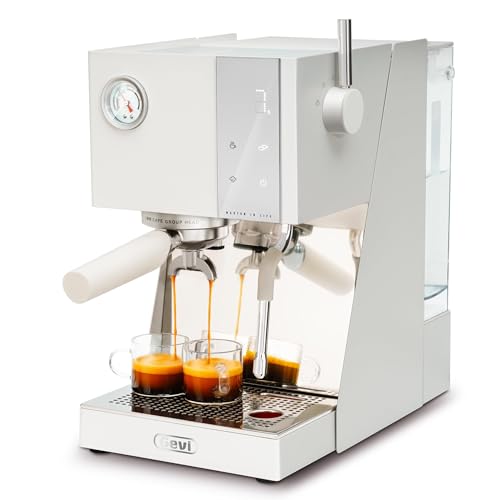


As an Amazon Associate we earn from qualifying purchases at no extra cost to you.
Quick Picks
| Product | Best for | Price |
|---|---|---|
| Ascaso Dream PID (Sweet Cream) | Precision programmable shots | $1635 |
| Ascaso Dream PID (Kid Blue) | Precision with standout design | $1635 |
| Gaggia RI9380/46 E24 | Classic single-boiler value | $451.9 |
| Breville BES876BSS Impress | All-in-one tamping convenience | $649.95 |
| Gemilai G3028A | Dual boiler on a budget | $699.99 |
| Gevi 20 Bar | Entry-level 58mm workflow | $359.99 |
| Breville BES876DBL Impress | Same Impress features in blue | $649.95 |
| Breville BES870XL Express | Proven integrated grinder setup | $685 |
How We Picked
We evaluated each machine on four criteria that matter most for the type of buyer researching an ascaso espresso machine: thermal stability (PID control, boiler size, recovery time), portafilter ecosystem (54mm versus 58mm basket compatibility affects long-term upgrade path), workflow efficiency (volumetric controls, auto-tamping, programmability), and value relative to build quality and expected lifespan. Machines that scored well on specs but poorly on owner-reported reliability or service availability were noted rather than recommended.
The 8 Best Ascaso Espresso Machine in 2026
Ascaso Dream PID, Programmable Home Espresso Machine w/Volumetric Controls, 120V (Sweet Cream)
This is the machine for someone who treats espresso as a craft and wants repeatable volumetric shots without pulling a stopwatch on every attempt. The PID-controlled dual boiler maintains tight temperature windows, and the programmable buttons let you store shot volumes for different coffee profiles. Owners consistently praise the stainless chassis and the tactile quality of the controls.
- Pro: Volumetric controls deliver consistent shot volumes without manual timing, ideal for household members who just want to press a button.
- Pro: Dual boiler design allows simultaneous brewing and steaming with no temperature compromise.
- Con: At $1,635, it costs more than double many capable competitors, and the premium is hard to justify if your workflow does not demand programmability.
Skip this if you are comfortable timing your own shots and do not need two buttons per drink.
Ascaso Dream PID, Programmable Home Espresso Machine w/Volumetric Controls, 120V (Kid Blue)
Identical in internals to the Sweet Cream version, the Kid Blue finish appeals to buyers who want a machine that doubles as a design statement on the countertop. The performance profile is the same: PID stability, volumetric programming, and a dual boiler that handles back-to-back cortados without waiting for steam recovery. If color matters to your kitchen aesthetic, this variant earns the same recommendation without any functional tradeoff.
- Pro: Same precision engineering as the Sweet Cream model with a distinctive color that owners report gets compliments.
- Pro: Compact footprint relative to its dual-boiler capability, fitting under standard upper cabinets.
- Con: The identical $1,635 price tag means the color choice alone does not add value; compare against feature sets at this price point before committing.
Skip this if the finish is the only differentiator you are considering; budget that gap toward a better grinder instead.
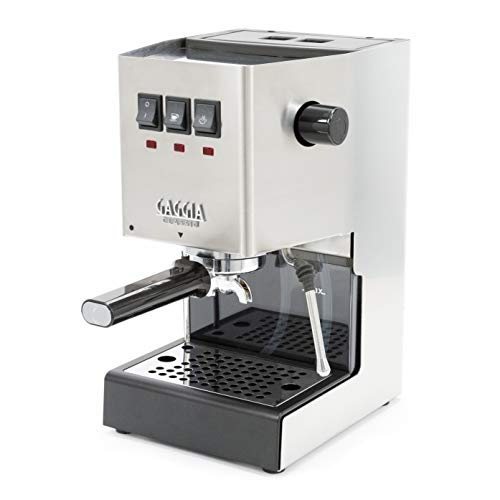
Gaggia RI9380/46 E24 Espresso Machine, Brushed Stainless Steel
A long-lived Italian design that rewards patience. The single boiler means you alternate between brewing and steaming, which slows throughput but keeps the machine affordable. The brass group head retains heat well, and the 15-bar pump delivers pressure comparable to far more expensive machines. Ideal for a solo drinker or a household where most mornings involve one espresso and one cappuccino made in sequence.
- Pro: Brass group head and stainless body give a durability feel well above its $451.9 price.
- Pro: Widely documented modding path; parts, gaskets, and upgrade kits are easy to source.
- Con: No PID means you manage temperature by flushing water before the shot, a workflow that frustrates buyers used to set-and-forget controls.
Skip this if you make multiple milk drinks in quick succession or dislike manual temperature management.
Breville BES876BSS Barista Express Impress, Brushed Stainless Steel
Breville solved the most common home-espresso complaint—messy, inconsistent tamping—with the Impress line’s integrated tamper. You dose, level, tamp, and pull without leaving the machine. The built-in conical burr grinder, low-pressure pre-infusion, and PID temperature control make it a genuine workflow simplifier. The $649.95 price sits in a sweet spot between basic single-boilers and prosumer territory.
- Pro: Auto-tamp eliminates the most error-prone step, producing repeatable puck density shot after shot.
- Pro: Integrated grinder removes the need for a separate purchase, keeping total setup cost manageable.
- Con: The 54mm portafilter limits third-party basket choices compared to the standard 58mm ecosystem found on Ascaso and most prosumer machines.
Skip this if you already own a quality grinder or want the flexibility of 58mm accessories.
Gemilai G3028A Espresso Machine, 15 Bar with Adjustable Pressure & Automatic Milk Frother, Dual PID & 550ml Boiler, 57oz Tank, Stainless Steel for Cappuccino, Latte White
This machine packs a surprising number of features at $699.99: dual PID, adjustable pressure profiling, a 57-ounce water tank, and an automatic milk frother. On paper it rivals machines costing significantly more. The real question is long-term serviceability—owners report good initial performance but note that replacement parts and technical support can be harder to obtain than with established brands.
- Pro: Adjustable pressure lets you experiment with pre-infusion profiles normally reserved for high-end machines.
- Pro: The large 57-ounce tank reduces refill frequency for households with multiple coffee drinkers.
- Con: Brand support infrastructure is thin compared to Breville or Ascaso, creating uncertainty around parts availability beyond the warranty window.
Skip this if you prefer owning a machine you can service independently or through a wide dealer network.
Gevi 20 Bar Espresso Machine with Professional 58mm Portafilter, White
The $359.99 Gevi stands out by offering a full 58mm commercial portafilter at an entry-level price. That single choice opens the door to VST and IMS baskets, precise distribution tools, and decades of third-party accessories. The 20-bar pump is marketing overkill (9 bar is standard for extraction), but the group head and portafilter quality are legitimately good for the money. It suits beginners who want to learn proper technique without being locked into proprietary fittings.
- Pro: Genuine 58mm portafilter future-proofs your accessory investment from day one.
- Pro: Low price makes it a reasonable first machine while you develop palate and technique.
- Con: Temperature stability without PID is noticeably weaker; expect to flush and adjust between shots.
Skip this if you need steam pressure adequate for latte art at volume, or if temperature consistency matters more than basket compatibility.
Breville BES876DBL Barista Express Impress, Damson Blue
Functionally identical to the brushed stainless Impress above, the Damson Blue edition offers a richer color palette for buyers who want the same auto-tamp convenience in a warmer aesthetic. All internal specifications—PID, integrated tamper, built-in grinder, low-pressure pre-infusion—remain unchanged. It is worth considering if the color suits your kitchen, but not otherwise, since the $649.95 price does not shift.
- Pro: The auto-tamp system works identically to the stainless version, producing consistent puck prep regardless of user skill.
- Pro: The Damson Blue finish resists fingerprints better than brushed steel, a small but practical daily benefit.
- Con: Same 54mm portafilter limitation as the stainless Impress; no functional advantage exists beyond aesthetics.
Skip this if color is your sole motivation; the price premium over the Gevi 58mm option is significant for purely cosmetic gain.
Breville BES870XL Barista Express Espresso Machine, Brushed Stainless Steel
The original Barista Express remains the most reviewed integrated grinder-plus-machine setup on the market. No auto-tamp here—you handle puck preparation manually—which some buyers prefer for greater control. The thermocoil system heats quickly and the $685 price reflects a well-understood machine with extensive community documentation. Owners report years of reliable service when they descale on schedule and use filtered water.
- Pro: Massive owner community means troubleshooting guides, mod instructions, and part sources are abundant.
- Pro: The built-in grinder and manual workflow let you dial in shots with fine control over dose and tamp pressure.
- Con: At $685, it costs slightly more than the Impress (BES876) which adds auto-tamp, making the older model harder to justify for new buyers.
Skip this if you want the least-friction morning routine; the Impress variant is cheaper and does the tamping for you.
Buying Guide
Boiler Architecture and Temperature Control
Dual boilers allow simultaneous extraction and steaming with independent PID control per boiler, eliminating the temperature drop that single boilers suffer during switchovers. A PID is not decorative—it holds your set temperature within one or two degrees, which directly affects shot repeatability. The Ascaso Dream PID and Gemilai G3028A both offer dual PID control; the Gevi and Gaggia E24 rely on thermal inertia and manual flushing, which introduces more variability between shots.
Portafilter Diameter and Accessory Ecosystem
A 58mm portafilter (found on both Ascaso Dream models, the Gevi, and most prosumer machines) gives you access to precision baskets, unported bottomless options, and distribution tools that have been refined over decades. Breville’s 54mm system works well but locks you into proprietary accessories. If you plan to improve your setup over two or three years—better basket, WDT tool, pressure profiling—choose 58mm to avoid buying a whole new group head later.
Workflow Automation vs. Manual Control
Volumetric controls and auto-tamp systems reduce the skill floor for making a good shot but limit your ability to respond to a coffee that wants a longer pre-infusion or a finer grind. For households where one person is a dedicated hobbyist and others just want a button, the Ascaso Dream PID’s programmable shots hit the balance. For solo users who enjoy the process, the manual Gaggia or Breville BES870XL reward attention with greater extraction control.
Our Verdict
The top pick is the Ascaso Dream PID (either colorway) for anyone whose priority is programmable, repeatable volumetric espresso with dual-boiler steam capacity in a compact footprint. The $1,635 price is real, but the feature set justifies it over a long ownership window.
The budget pick is the Gevi 20 Bar at $359.99, which gets you a genuine 58mm portafilter without breaking the bank—a foundation that rewards learning.
Choose the Breville BES876BSS Impress over both if your main friction point is messy, inconsistent tamping and you want an integrated grinder in under $650; it will make more cups with less skill than anything else here.
FAQ
Is the Ascaso Dream PID worth it over cheaper machines?
Yes, if you make two or more drinks daily and want to program shot volumes for different users or roast profiles without manual timing. Below that usage threshold, the Breville Impress or Gaggia E24 deliver very good espresso at a fraction of the cost.
What does a 58mm portafilter actually give me over 54mm?
Access to a much wider range of precision filter baskets, distribution tools, and bottomless options developed over decades for commercial and home use. With 54mm, you are limited to Breville-compatible accessories and a smaller third-party selection.
Do I need a PID on my espresso machine?
You need it if you pull multiple shots daily from different coffees that require different brew temperatures. Without one, you are managing temperature by feel and flushing, which adds time and inconsistency. For a single drinker using one roast, it is less critical.
How long should a good espresso machine last?
A well-built home machine with a brass or stainless group head should last a decade or more with regular descaling and gasket replacement. Cheaper machines with aluminum components or sealed boilers tend to reach their service limit sooner due to part availability rather than outright failure.