Key takeaways
- Measure shelf depth. Many bookshelf speakers have rear-firing ports. Pushing them against a wall or into a bookcase can make bass boomy, so leave space or choose a front-ported or sealed design.
- Use stands or isolation pads. Placing speakers at ear height improves clarity, and decoupling pads reduce vibration transferred to furniture.
- Triangle layout. Position speakers and your listening seat roughly as an equal-sided triangle, angled slightly inward.
- Cable length. Powered pairs with a linking cable need both speakers within reach of that cable.
- Turntables. If you plan to play records, make sure the speaker or your amplifier has a phono stage, or add a separate phono preamp.
- Heat and ventilation. Do not cover amplifier vents on powered speakers, and keep the speaker’s power supply dry and away from liquids.
For most readers the best bookshelf speakers are either a powered pair such as the Edifier R1280DB or Klipsch The Fives if you want a simple setup, or a passive pair such as the Q Acoustics 3020i or Elac Debut B6.2 if you already own a stereo amplifier. Readers who want a premium, space-saving wireless system tend to look at the KEF LSX II, while desk and small-room listeners often prefer the compact Audioengine A2+. The right choice depends less on brand than on room size, source devices and how much equipment you are willing to buy and wire.
Our top picks


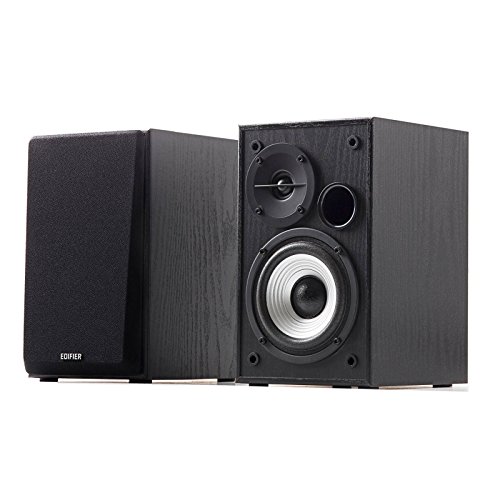

As an Amazon Associate we earn from qualifying purchases at no extra cost to you.
Powered vs passive: the first decision
Powered (active) bookshelf speakers contain their own amplifier. You connect a phone, television, turntable with a preamp or computer directly to them, and the pair is ready to play. Passive speakers need a separate stereo amplifier or receiver, which adds cost and cables but allows you to upgrade each part independently later. Reviewers commonly point out that a powered pair is the better fit for apartments, bedrooms and desks, while passive pairs make more sense in a dedicated listening corner with an existing amplifier.
A second split is wired vs wireless. Several current models add Bluetooth, optical, USB or HDMI ARC inputs, and a few, like the KEF LSX II, add network streaming. More inputs add convenience, but the maker-stated input list matters more than marketing terms: check that the speaker has the connection your television or computer actually offers.
At a glance
| Model | Type | Best for | Stated connections / notes | Limits |
|---|---|---|---|---|
| Edifier R1280DB | Powered | Budget desk or small-room setups | The maker lists Bluetooth, optical, coaxial and analog inputs plus a remote | Wood-effect cabinets; modest bass depth; one speaker holds the amplifier and cables to the second |
| Audioengine A2+ | Powered, compact | Desktops, dorm rooms | Maker lists USB, analog and Bluetooth models; small footprint | Small drivers limit bass and room-filling volume |
| Klipsch The Fives | Powered | Television plus music | HDMI ARC, Bluetooth, phono and USB as listed by the maker | Larger and heavier than desk speakers; mid-range to premium tier |
| KEF LSX II | Powered, wireless | Buyers who want a premium compact system | Network streaming, Bluetooth, HDMI and other digital inputs per the maker | Premium tier; depends on the app and network; fixed finish options |
| Q Acoustics 3020i | Passive | Stereo amplifier owners on a mid-range budget | Reviewers describe it as a balanced, easy-to-place pair | Needs an amplifier and speaker cable |
| Elac Debut B6.2 | Passive | Value-driven listeners wanting larger bass drivers | Reviewers often cite strong value for the tier | Needs amplification; larger cabinet than ultra-compact pairs |
Edifier R1280DB: the practical budget starting point
The R1280DB is a long-running model in the budget tier and is widely cited by reviewers as a first powered pair. The maker lists Bluetooth, optical and coaxial digital inputs, analog RCA inputs and a remote control. That input list covers a television with optical output, a laptop and a phone, which is why it suits a bedroom or desk. Reviewers generally describe the sound as pleasant and easy to live with rather than highly detailed, and point out that very low bass is limited. Because one cabinet houses the amplifier, speaker placement is partly dictated by the length of the connecting cable. If you need more convenience features such as network streaming, step up the tier.
Audioengine A2+: small desks and tight spaces
Audioengine makes the A2+ for near-field listening, meaning you sit within a metre or two of the speakers. Reviewers note that it is very compact, so it fits on a crowded desk next to a monitor. It is typically sold with USB and analog connections, with a wireless variant also offered, so confirm the version before choosing. The trade-off is physical: small cabinets and drivers do not move as much air, so most reviewers advise adding a separate subwoofer, if the maker offers a compatible output, for large rooms or bass-heavy music.
Klipsch The Fives: for television and records
The Fives are marketed as a powered pair with HDMI ARC, which means a single cable from a compatible television carries audio to the speakers and lets the television remote control volume. The maker also lists Bluetooth, a USB input and a built-in phono preamp for turntables. Reviewers often describe a warm, forward sound with the horn-loaded tweeter design Klipsch is known for, which some listeners find lively and others find bright at higher volumes. They sit in the mid-range to premium tier and take more shelf space than desk speakers.
KEF LSX II: premium wireless in a small body
KEF lists the LSX II as an active wireless system with network streaming, Bluetooth and wired digital and analog inputs, and it is frequently praised by outlets for imaging and refinement relative to its size. Its Uni-Q driver arrangement places the tweeter at the centre of the mid-bass cone, which reviewers say gives a wide listening area. The cost is the premium tier, plus reliance on a companion app and network for the full feature set. It suits buyers who want a tidy system with no separate amplifier and are willing to pay for build quality.
Q Acoustics 3020i: a balanced passive pair
The 3020i is a passive bookshelf speaker that reviewers often recommend for mid-range budgets. It is described as neutral, forgiving of placement and suitable for a wide range of music. Because it is passive, you need an amplifier with speaker terminals. Reviewers also note that these speakers benefit from stands and some distance from the rear wall.
Elac Debut B6.2: bass on a budget
Designed by Andrew Jones, the Debut series earned a reputation for value. The B6.2 uses a larger bass driver than the most compact options, so reviewers report fuller low end without a subwoofer in medium rooms. It also needs an amplifier, and it is bulkier. Pair it with an affordable stereo receiver for a complete, upgrade-friendly system.
Fit, size and placement notes
- Measure shelf depth. Many bookshelf speakers have rear-firing ports. Pushing them against a wall or into a bookcase can make bass boomy, so leave space or choose a front-ported or sealed design.
- Use stands or isolation pads. Placing speakers at ear height improves clarity, and decoupling pads reduce vibration transferred to furniture.
- Triangle layout. Position speakers and your listening seat roughly as an equal-sided triangle, angled slightly inward.
- Cable length. Powered pairs with a linking cable need both speakers within reach of that cable.
- Turntables. If you plan to play records, make sure the speaker or your amplifier has a phono stage, or add a separate phono preamp.
- Heat and ventilation. Do not cover amplifier vents on powered speakers, and keep the speaker’s power supply dry and away from liquids.
Budget tiers explained
Budget tier: expect a powered pair like the Edifier R1280DB or a compact desk system. You get convenience and decent clarity, with limits on bass and maximum volume.
Mid-range tier: passive pairs such as the Q Acoustics 3020i or Elac Debut B6.2, or a powered television-friendly pair like The Fives. Sound quality improves, but passive pairs require an amplifier.
Premium tier: the KEF LSX II and similar systems add refinement, network features and nicer finishes. Returns diminish quickly; a mid-range pair in a well-treated room often beats a premium pair in a poor position.
Pick X if you…
| Pick this | If you… |
|---|---|
| Edifier R1280DB | want a low-cost, ready-to-play pair for a desk or bedroom |
| Audioengine A2+ | have very little desk space and sit close to the speakers |
| Klipsch The Fives | want one HDMI ARC cable to a television and an optional turntable input |
| KEF LSX II | want a premium, network-capable system without a separate amplifier |
| Q Acoustics 3020i | own an amplifier and want a balanced, easy-to-place pair |
| Elac Debut B6.2 | own an amplifier and want fuller bass on a tighter budget |
Alternatives worth a look
- Edifier S3000Pro or similar upscale Edifier models: a step up in the same powered category for listeners who want more inputs, if the maker’s current lineup includes them.
- Wharfedale Diamond series: a passive line frequently mentioned by reviewers at the budget to mid-range tier.
- Powered studio monitors: designed for accuracy at a desk; they are not always styled for living rooms and usually lack Bluetooth, so check the input list.
Care and safety
Dust drivers gently with a soft brush and avoid spraying cleaners directly on grilles or cones. Keep powered speakers away from water and follow the maker’s guidance on power supplies and ventilation. If a speaker hums, crackles or smells hot, unplug it and contact the maker instead of opening the cabinet yourself, since amplifier components can retain a charge.
Frequently Asked Questions
Do I need a subwoofer with bookshelf speakers?
Not always. In a small to medium room, a pair with a 5- to 6-inch bass driver is often enough for music. A subwoofer helps with film effects and very low organ or electronic notes, and many powered pairs list a subwoofer output.
Can I use bookshelf speakers with a television?
Yes, if the speakers accept an input your television provides. HDMI ARC, optical and analog outputs are the common options. Check the television’s output list and the speaker’s input list before buying.
Are passive speakers better than powered speakers?
Neither is automatically better. Passive pairs allow separate upgrades and suit existing hi-fi systems, while powered pairs simplify setup and have amplifiers matched to the drivers by the maker.
Should bookshelf speakers actually sit on a bookshelf?
They can, but reviewers usually advise stands or a free-standing position with space behind them. Rear ports in a tight shelf can make bass sound muddy, so leave room or pick a front-ported design.
How far apart should I place them?
A common starting point is to place the speakers roughly as far apart as you sit from them, angled slightly toward your ears. Adjust by ear, moving them in small steps until vocals sound centred.
Is Bluetooth good enough for music quality?
Bluetooth is convenient and sounds fine for casual listening. For critical listening, wired digital or network inputs avoid the compression Bluetooth codecs apply, so use them if your speakers provide them.