
Key takeaways
- Best Overall: Lamy Safari fountain pen – durable, ergonomic, easy to maintain.
- Best Value Fountain Pen: Pilot Metropolitan – metal barrel, steel nib, a converter-ready entry pen.
- Best Premium: Pilot Vanishing Point – retractable 18k gold nib in a clip-style body.
- Best for Pockets and Travel: Kaweco Classic Sport – about 10.5 cm capped, light and tiny.
- Best Classic Ballpoint: Parker Jotter – the 1954 design in a steel body.
- Best Smooth Ballpoint for Daily Notes: uni-ball Jetstream RT – low-viscosity ink, quick-drying.
- Best Gel Pen for Annotating: Zebra Sarasa Clip 0.5 – fine line, fast-drying water-based pigment ink.
There is no single best pen in the world, but for people who read, annotate and write by hand the strongest all-round answer is the Lamy Safari fountain pen, with the Pilot Vanishing Point as the “if money is no object” runner-up. The reason the question never gets a clean answer is that pens fail in different ways: a fountain pen that feels wonderful on a quiet evening is a poor choice for a train, and a ballpoint that never skips is a poor choice for a long letter. So this guide treats “the best pen in the world” as a practical question. Which pen is the most satisfying to hold, the most dependable to carry and the most pleasant to use for margin notes, reading journals and long-form writing? Seven pens are covered, from a very cheap, very good ballpoint to a retractable fountain pen that people keep for decades.
This guide is research-based. We did not personally use these pens; we read the manufacturer pages, retailer specification sheets and independent pen reviews, and we mark anything we could not confirm as “not listed”. Prices are given only as tiers because they move constantly.
Our top picks



As an Amazon Associate we earn from qualifying purchases at no extra cost to you.
Top Picks at a Glance
- Best Overall: Lamy Safari fountain pen – durable, ergonomic, easy to maintain.
- Best Value Fountain Pen: Pilot Metropolitan – metal barrel, steel nib, a converter-ready entry pen.
- Best Premium: Pilot Vanishing Point – retractable 18k gold nib in a clip-style body.
- Best for Pockets and Travel: Kaweco Classic Sport – about 10.5 cm capped, light and tiny.
- Best Classic Ballpoint: Parker Jotter – the 1954 design in a steel body.
- Best Smooth Ballpoint for Daily Notes: uni-ball Jetstream RT – low-viscosity ink, quick-drying.
- Best Gel Pen for Annotating: Zebra Sarasa Clip 0.5 – fine line, fast-drying water-based pigment ink.
Comparison Table
| Pen | Best for | Key specs | Watch for | Price tier |
|---|---|---|---|---|
| Lamy Safari | Daily writing, first serious pen | ABS plastic body; steel nib in EF to broad; about 13.9 cm capped; T10 cartridge or Z28 converter | Triangular grip does not suit everyone; converter sold separately | Mid-range |
| Pilot Metropolitan | Best-value metal fountain pen | Lacquered brass barrel; steel nib; 138 mm closed; about 26 g; CON-B or CON-40 converter | Only Pilot cartridges and converters fit | Mid-range |
| Pilot Vanishing Point | One-handed use, lifetime pen | Retractable 18k gold nib; brass body; about 14.1 cm; cartridge or CON-40 converter | Clip sits where some people grip; weight listed from 25 to 32 g | Premium |
| Kaweco Classic Sport | Pocket carry, journals | About 10.5 cm capped, about 13.2 cm posted; about 9.9 g; short international cartridges | Too small to write comfortably unposted for some hands | Mid-range |
| Parker Jotter | Gifts, desk and office | Stainless steel body; click mechanism; Parker-style refill; launched 1954 | Stock refill is average; swap it for a better one | Budget to mid-range |
| uni-ball Jetstream RT | Smooth ballpoint, left-handers | Low-viscosity oil-based ink; 0.7 mm fine point; retractable | Plastic body is plain | Budget |
| Zebra Sarasa Clip 0.5 | Margin notes and planners | 0.5 mm tip; water-based pigment ink; refillable with JF refills; strong clip | Water-resistant, not waterproof | Budget |
1. Lamy Safari: Best Overall Pen for Readers and Writers
- ABS plastic body with a triangular grip, an ink-level window and a chrome-plated brass clip.
- Designed by Wolfgang Fabian in 1980 and made in Heidelberg, Germany, per Lamy.
- Modular steel nib in extra fine, fine, medium, broad, left-handed and stub sizes.
- Takes Lamy T10 cartridges; the Z28 converter for bottled ink is sold separately.
- About 13.9 cm capped and 12.9 cm uncapped; posted about 16.5 cm; weight roughly 15 to 17 g depending on the retailer.
Best for: someone who wants a pen that works every time and survives a bag. Skip if: you dislike a shaped grip that forces a tripod hold.
The Safari earns the top spot because it combines three things that are hard to find together: a tough body, a good nib and a low barrier to maintenance. The ABS barrel shrugs off drops and the nib is a replaceable steel unit that fits most Lamy pens, which means a damaged or mismatched nib is a simple swap rather than a new pen. The triangular grip guides the thumb, index finger and middle finger into a relaxed tripod position. For long reading sessions with a notebook beside you, that guidance reduces the tendency to grip too hard.
The details matter for ownership. The pen uses Lamy’s own T10 cartridges, which hold about 1.56 ml, while the optional Z28 converter holds about 1.08 ml and opens up the whole world of bottled ink. It does not take standard international short cartridges, so check that you can buy T10 refills near you. Nib size is the big decision: a fine or extra-fine nib suits annotating margins and small handwriting, a medium suits everyday journals and a broad or stub nib adds character to signatures and headings.
Pros: durable; ergonomic grip; interchangeable nibs; widely available; easy to clean. Cons: grip shape can feel restrictive; proprietary cartridge; converter extra; plain looks to some.
2. Pilot Metropolitan: Best Value Metal Fountain Pen
- Lacquered brass barrel with a steel nib, available in fine, medium and (on some listings) stub or italic.
- Ships with a cartridge and a squeeze converter (CON-B) or the CON-40, depending on the batch, per retailers.
- Body diameter about 13 mm; grip about 8.4 mm; 138 mm closed and 153 mm posted; about 26 g (Goulet Pen Co. figures).
- Ink capacity about 1.10 ml with a cartridge and 0.82 ml with a converter.
- Only Pilot’s own converters and cartridges fit.
Best for: people who want a metal-bodied fountain pen at a price that does not hurt. Skip if: you want a pen that accepts universal cartridges.
The Metropolitan is a standard recommendation on pen forums for a simple reason: the nib is smooth out of the box and the brass barrel gives it enough weight to feel like a finished tool without wearing the hand. At roughly 26 g it sits in a comfortable spot, heavier than a plastic pen but not a burden over a page of notes. A Fine nib writes a narrow line that suits annotation, while the Medium gives a more generous line that shows off ink colour.
The practical advice is to choose between the cartridge and the converter at purchase. Cartridges are convenient for travel and carry about 1.1 ml, whereas a converter gives you access to bottled ink for a lower cost per page. Because Pilot has changed the included converter over the years, check which version your listing includes. If you want to make the pen last, rinse it with water every month or two when you change ink, and cap it between uses to stop the nib drying.
Pros: metal build; smooth steel nib; includes a converter; good starter fountain pen. Cons: proprietary filling parts; limited nib options; the clip is a basic design.
3. Pilot Vanishing Point: Best Premium Pen for One-Handed Use
- Retractable 18k gold nib, rhodium plated, advanced by a top knock button.
- Brass body; grip diameter about 12.0 mm and maximum about 13.3 mm; retracted length about 14.1 cm.
- Takes a cartridge or Pilot’s CON-40 converter; roughly 1.05 ml with a cartridge and 0.82 ml with a converter.
- Weight: sources disagree – about 25 g (whole pen, empty) to about 30 g (converter included) to 32 g on one listing.
- Nib widths include extra fine, fine, medium, broad and 1 mm stub depending on model.
Best for: people who take notes standing up, in meetings or on the move and want a fountain pen with a click. Skip if: you hold the pen near the clip, which sits close to the nib end.
The Vanishing Point is the closest thing to a fountain pen for people who hate caps. Click the top and the nib extends, click again and it retracts behind a small door. For anyone who annotates a book with one hand holding the page open, it is a real advantage. It also means a gold nib that is protected inside the barrel, which is a good match for a bag.
What the specs mean in practice: an 18k gold nib gives a softer, slightly springy feel than a steel one, and the brass body adds enough weight to keep the pen stable. The caveat is the clip, which is placed near the writing end to keep the pen balanced; if your grip lands there, it can feel awkward. Try holding a similar pen at the grip position before spending this much. The reported weight range (25 to 32 g) comes from different retailers counting different things – a converter, ink or nothing – so treat it as a general figure rather than a precise one.
Pros: retractable mechanism; gold nib; suited to one-handed use; durable. Cons: premium cost; clip position; limited to Pilot’s filling system.
4. Kaweco Classic Sport: Best Pocket Fountain Pen
- About 10.5 cm capped and 13.2 cm with the cap posted; about 9.9 g.
- Gold-plated steel nib in EF, F, M, B and BB; screw-on cap.
- Takes international short standard cartridges; a Kaweco Sport converter exists.
- Body diameter about 12.7 mm; grip about 9.1 mm.
Best for: carrying a fountain pen in a jacket pocket or tucked in a book. Skip if: you have large hands and never post a cap.
A Kaweco Classic Sport is the pen that actually gets carried. At about 10.5 cm capped it vanishes into a coat pocket or the elastic of a notebook, and it extends to a comfortable 13.2 cm once posted. The weight, about 9.9 g, is the lowest here by some distance, so it does not strain the hand. The screw-on cap is secure and the octagonal cap shape keeps it from rolling off a desk.
The trade-off is capacity. Short international cartridges hold roughly 1.2 ml according to one retailer, while the Sport converter holds less, about 0.5 ml, so heavy writers will refill often. If you annotate at a rate of a few pages a day, that is fine. If you write long letters, a Safari or a Metropolitan is a better working pen. Think of the Kaweco as the pen in your coat and the Lamy as the pen on your desk.
Pros: tiny and light; widely available nib sizes; uses cheap short cartridges; sturdy cap. Cons: small converter capacity; short unposted; no frills.
5. Parker Jotter: Best Classic Ballpoint
- Launched in 1954; the maker says over 750 million have been sold worldwide.
- Stainless steel version: satin-finish body, chrome arrow clip and a click mechanism.
- Rotates the ball 90 degrees at each click to even out wear, per Parker.
- Standard blue medium refill; compatible with Parker-style refills; made in France with a 2-year guarantee per one retailer.
- Weight about 17 g per one retailer.
Best for: a pen you give, keep on a desk or leave on the table at a reading group. Skip if: you want a smooth gel feel straight from the box.
The Jotter is a design classic: simple, slightly nostalgic, dependable. The click mechanism is one of the most recognisable sounds in stationery and the arrow clip holds on to a notebook cover. The stock refill is serviceable rather than special, but the Parker-style format is one of the most common in the world, which turns the Jotter into a cheap upgrade project. Swap the standard refill for a smoother low-viscosity one and the pen writes much better.
Be cautious with ink claims. Retailers quote different figures for refill life, some at 3,500 metres and others at 5,000, and the ink name has changed over the years, so we do not rely on either number. What is safe to say is that the pen is built to be refilled for years.
Pros: classic design; steel body; refill flexibility; widely stocked. Cons: stock ink is average; click is audible; not a comfort pen for long sessions.
6. uni-ball Jetstream RT: Best Smooth Ballpoint for Daily Notes
- Low-viscosity oil-based “Super Ink” combining ballpoint durability with a gel-like glide, per Uni.
- Retractable body in 0.7 mm fine and 1.0 mm medium point sizes.
- Ink is described as quick-drying, water-resistant and fade-resistant.
- The SXR-600 refill fits many Parker-style pens.
Best for: left-handers, quick notes and anyone who wants a ballpoint that feels like a gel pen. Skip if: you care about the look of the barrel.
The Jetstream is a rare case where a cheap pen outperforms many expensive ones. The low-viscosity ink needs very little pressure, which reduces hand tension and makes it a good fit for long reading notes. It dries quickly, which is a relief for left-handers who drag their palm across the line. Retailers and reviewers regularly cite it as a smooth, dependable choice.
The body is plain plastic, and that is its limit. The clever way to use the brand is the refill: the SXR-600 is reported to fit Parker-style pens, so you can drop it into the Jotter and get a premium feel with a smooth ink. Choose 0.7 mm for general writing and 1.0 mm if you like a bolder line.
Pros: smooth; quick-drying; inexpensive; refill fits other pens. Cons: basic body; not refillable in the standard version; bolder lines can feather on cheap paper.
7. Zebra Sarasa Clip 0.5: Best Gel Pen for Annotating
- 0.5 mm tip; Zebra EU lists the actual writing width at roughly 0.29 to 0.37 mm.
- Water-based pigment ink marketed as fast-drying and non-smearing; “water-resistant” is the safe description.
- Retractable with a strong clip; refillable with JF refills; soft rubber grip on the US model.
- Available in more than 40 colours.
Best for: margin notes, planners, colour coding and fine line work. Skip if: you need a fully waterproof ink for archival documents.
For reading, the Sarasa Clip may be the most useful pen on the list. A fine line does not cover the printed text, the clip holds to a book cover or planner, and the colour range allows you to separate themes in the margin: one colour for characters, another for quotes. The fast-drying ink is a bonus on glossy pages where slower inks smear. Zebra’s pigment ink is meant to resist smearing and is popular with left-handers.
The one caution is waterproofing. Sources disagree on the wording, with the European page calling it waterproof and the US listing calling it water-resistant. Use the cautious term. If you need a document pen for long-term records, check the product page for the specific ink line you buy.
Pros: fine, controlled line; many colours; refillable; fast drying. Cons: water-resistant only; thin body for some; plastic build.
Also Consider
- Waterman Expert Ballpoint: a heavier, gift-boxed ballpoint if you want a metal executive pen; specs beyond the listing are not listed here.
- Scriveiner Silver Chrome Ballpoint: a luxury-style ballpoint with a Schmidt refill, aimed at gifts.
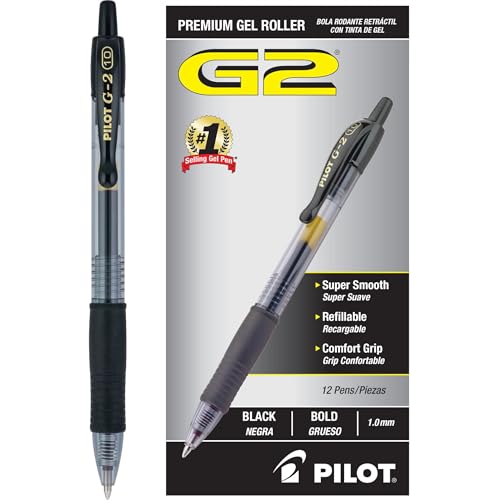
- Pilot G2 Premium Gel Pen: a low-cost gel workhorse if you prefer a rubber grip.
- Pilot Kakuno: a very approachable fountain pen with a smiley-face nib mark, designed for beginners and children as well as adults.
How We Chose
We chose pens that satisfy three conditions: they are currently sold, they have manufacturer or retailer specifications that agree with each other, and they suit reading, annotating and writing rather than a single use. This guide is based on research: manufacturer pages, retailer spec sheets such as those from JetPens, Goulet Pen Company and Pen Chalet, and independent pen reviews. We did not personally use these pens. Where sources disagreed – for example on the Vanishing Point’s weight or the Jotter’s refill life – we gave the range or avoided the claim. We kept to two products from any one brand, mixed fountain pens with ballpoints and gels, and sorted by use case rather than by price. Price tiers are relative: Budget is a few cups of coffee, Mid-range is a nice dinner, and Premium is a considered purchase.
Buying Guide
Fountain pen, ballpoint or gel?
Fountain pens give the most pleasing line and the lowest hand pressure, and refilling from a bottle is cheap per page. They need a little care and decent paper. Ballpoints are the most robust and work on almost any surface, with low-viscosity inks narrowing the gap with gels. Gel pens give strong colour and a smooth line, but they smear more easily and drain faster. A practical combination for readers is a fountain pen at home, a gel pen for margins and a ballpoint in the bag.
Nib or tip size
For annotation, aim for a fine nib on a fountain pen (about 0.5 to 0.6 mm line), or a 0.5 mm gel. For everyday handwriting, a medium nib or 0.7 mm ballpoint is more forgiving. Broad nibs and 1.0 mm ballpoints add character but fill small margins quickly. Left-handers usually prefer quick-drying inks and fine to medium tips.
Weight and size
A comfortable pen weighs roughly 10 to 30 g. Under 12 g, like the Kaweco, relies on being posted to feel balanced. Over 25 g, like the Vanishing Point, feels solid but can tire the hand over a long session. Check the barrel diameter: 10 to 13 mm suits most hands.
Refill and filling system
Ask what the pen takes and where you can buy it. Lamy T10, Pilot cartridges and converters, Kaweco short cartridges and Parker-style ballpoint refills are widely available. A proprietary system is fine if the brand is stocked near you. Converters give access to bottled ink, which is the cheapest way to write a lot.
Paper matters
The best pen cannot rescue bad paper. Thin or very absorbent pages feather and bleed with wet fountain pen inks; quick-drying gels and ballpoints are safer on thin book paper. If you annotate books you own, test the pen on an inside back page or a spare sheet before committing.
Common Mistakes When Choosing a Pen
- Choosing by price alone: a smooth budget ballpoint beats an uncomfortable expensive pen.
- Buying a fountain pen without checking the filling system and its availability.
- Ignoring the grip: the best-looking pen is wasted if it hurts after a page.
- Letting a fountain pen dry out by leaving it uncapped; keep it capped or retracted.
- Expecting one pen to do every job.
Frequently Asked Questions
What is the best pen in the world?
There is no single winner, but the Lamy Safari is the best all-round choice for most people, and the Pilot Vanishing Point is the best premium option. Pick by use: fountain pen for pleasure, gel for notes, ballpoint for reliability.
Is a fountain pen worth it for everyday writing?
Yes, if you like the feel. A fountain pen needs light pressure, which helps with long writing sessions, and bottled ink makes it cheap to run. If you write on poor paper or in a rush, a quick-drying gel or ballpoint is simpler.
Which pen is best for left-handers?
Quick-drying inks are the key. The uni-ball Jetstream and the Zebra Sarasa Clip both dry fast, which cuts smearing. For a fountain pen, a fine or medium nib with a fast-drying ink works best.
Which pen is best for annotating books?
A fine 0.5 mm gel pen such as the Zebra Sarasa Clip, because the line is thin and dries quickly. Test on an inside page, as thin paper can show through.
Can I use any ink in a fountain pen?
Use ink made for fountain pens. Avoid ink meant for drawing, shimmering inks with particles and waterproof India ink, which can clog a pen. Follow the pen maker’s guidance on cleaning.
How often should I clean a fountain pen?
Rinse it with water whenever you change ink, and every month or two if you use it regularly. If a pen sits unused for long, flush it before storing.
Are expensive pens better?
They are different, not always better. Higher prices often buy a gold nib, better materials or a special mechanism. A well-chosen budget pen can match a premium one for ordinary writing.
Which One Should You Buy?
If you want one pen and nothing else, buy the Lamy Safari. If you want a metal fountain pen at a friendly price, take the Pilot Metropolitan. If you want a lifetime pen and a gold nib, the Pilot Vanishing Point is the standout. For pockets and travel pick the Kaweco Classic Sport, for a classic desk ballpoint the Parker Jotter, for the smoothest cheap ballpoint the Jetstream RT and for reading notes the Zebra Sarasa Clip. A good compromise for most readers is a Safari for home and a Sarasa Clip for the margins; together they cover nearly every situation a book lover meets.
Sources
- Lamy product information for the Safari fountain pen
- Pilot Pen product pages for the Metropolitan and Vanishing Point
- Kaweco product information for the Classic Sport
- Parker product page for the Jotter ballpoint
- Uni / uni-ball product information for the Jetstream and Zebra Pen product information for the Sarasa Clip
- Retailer specification sheets from JetPens, Goulet Pen Company and Pen Chalet
Last updated: October 2026





