Key takeaways
- Pro: Six-battery configuration delivers meaningful runtime for a quarter to half acre without the cost of higher-capacity packs.
- Pro: True zero-turn maneuverability at under three thousand dollars is rare among electric options.
- Con: The 600W charger is slow, so back-to-back sessions on larger properties can be tedious.
A homeowner with a quarter to half acre who wants to stop hauling gas cans and dealing with carburetor issues has finally got real choices among electric riding lawn mowers in 2026. The market has matured past the awkward early models that ran out of juice before you finished a strip of yard. But the confusion has shifted from whether electric works to which combination of deck width, battery configuration, and charging strategy actually fits your property without leaving you stalled mid-mow.
What separates the good models from the frustrating ones is not raw marketing specs but the practical geometry of runtime under load, how many batteries you need to juggle during a single session, and whether the deck actually handles hills and thick growth without bogging down. Owner feedback consistently highlights these as the real differentiators. We compared published specifications, current pricing, and aggregated owner reports across all eight models below to help you cut through the noise and match a machine to your actual yard.
Our top picks




As an Amazon Associate we earn from qualifying purchases at no extra cost to you.
Quick Picks
| Product | Best for | Price |
|---|---|---|
| Greenworks 60V 42″ CrossoverZ Zero Turn | Best value zero turn | $2999.99 |
| EGO Power+ TR4204 42″ Lawn Tractor | Traditional lawn tractor feel | $4399 |
| EGO Power+ Z6 ZT4214L 42″ | Serious zero turn performance | $5299 |
| Greenworks 60V 54″ MaximusZ | Large acreage on one charge | $4999.99 |
| EGO Power+ Z6 ZT5216L 52″ | Biggest deck without gas | $6499 |
| Husqvarna Z254F 54″ | Gas reliability when electric is not ready | $3879 |
| EGO Power+ Z6 ZT4215S 42″ e-Steer | Novice zero-turn operators | $5799 |
| PRORUN PLT60V42-60V 42″ | Budget entry into electric riding | $3499 |
How We Picked
We evaluated these electric riding lawn mowers on four criteria that owners report matter most in real use: runtime relative to deck width (a wide deck with thin batteries is a trap), charging logistics including how many batteries a full-session mow demands, build quality and dealer service availability, and price-to-acreage value. Models that look impressive on paper but require constant battery swaps or lack local support scored lower regardless of their spec sheets.
The 8 Best Electric Riding Lawn Mowers in 2026
Greenworks 60V 42″ CrossoverZ Zero Turn Mower
This is the zero turn most first-time electric buyers should consider if acreage is modest and budget matters. Six 8.0Ah batteries paired with a 600W charger mean you can keep a rotation going, but charging overnight is not always an option.
- Pro: Six-battery configuration delivers meaningful runtime for a quarter to half acre without the cost of higher-capacity packs.
- Pro: True zero-turn maneuverability at under three thousand dollars is rare among electric options.
- Con: The 600W charger is slow, so back-to-back sessions on larger properties can be tedious.
Skip it if your lawn exceeds roughly half an acre or you need to mow in two consecutive sessions without waiting for charge.
EGO Power+ TR4204 42″ Deck Lawn Tractor
The TR4204 suits buyers who want electric power without learning to drive a zero turn. It rides and handles like a traditional lawn tractor, which removes the intimidation factor that keeps many people on gas.
- Pro: EGO’s battery ecosystem means shared packs with chainsaws, trimmers, and blowers you may already own.
- Pro: Conventional steering and transmission feel familiar to anyone who has driven a riding mower before.
- Con: Noticeably pricier than comparable Greenworks models without offering extra deck width or runtime advantage.
Skip it if you are comfortable with zero-turn controls or want maximum value per dollar.
EGO Power+ Z6 Zero Turn Electric Riding Lawn Mower, 42″ Deck (ZT4214L)
This is the performance benchmark for zero turn electric riding lawn mowers in the mid-price range. EGO’s Z6 platform delivers crisp directional control and consistent power through thick grass, which is where budget models fall apart.
- Pro: Drive system handles slopes and damp grass without the hesitation owners report on lesser units.
- Pro: Build quality and dealer network give long-term ownership confidence that direct-to-consumer brands cannot match.
- Con: At $5299 you are paying a premium that only makes sense if zero turn precision matters to your layout.
Skip it if your yard is flat, narrow, or you do not need the tight turning radius of a zero turn.
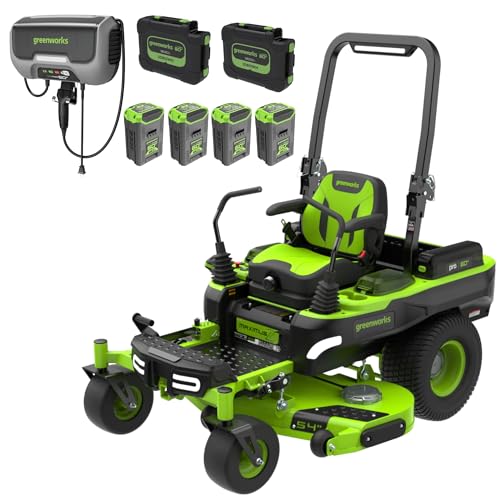
Greenworks 60V 54″ MaximusZ Zero Turn Riding Lawn Mower
For properties over half an acre, the MaximusZ is the standout electric option. The wide 54-inch deck combined with two 20.0Ah and four 8.0Ah batteries plus a 1.5kW fast charger means you can realistically mow large areas in one session and recharge quickly enough to go again.
- Pro: Mixed battery capacity (high-capacity plus standard) optimizes both runtime and weight distribution.
- Pro: The 1.5kW fast charger is a genuine workflow advantage over slow 600W competitors.
- Con: At $4999.99 the total cost of ownership is high, and the 54-inch deck will not fit through standard gates or tight landscapes.
Skip it if your property is small, your gates are narrow, or you cannot justify the near-$5000 outlay.
EGO Power+ Z6 Zero Turn Electric Riding Lawn Mower, 52″ Deck (ZT5216L)
This is the biggest deck available in a production electric zero turn that most buyers will actually consider. If acreage is substantial and you want to stay on the EGO platform, the ZT5216L lets you mow more area per pass without stepping up to a commercial diesel unit.
- Pro: 52-inch deck dramatically reduces total mowing time on properties over three-quarters of an acre.
- Pro: Shares EGO’s proven Z6 drive system, so the power delivery is as reliable as the smaller models.
- Con: $6499 puts this firmly in gas-comparable territory, where the financial case for electric becomes harder to justify.
Skip it unless you have a large, open property and are committed to eliminating gas entirely regardless of cost.
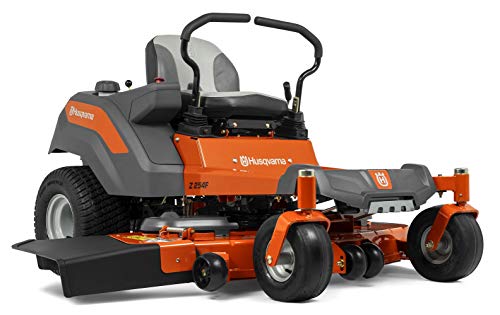
Husqvarna Z254F 54″ Kawasaki Zero Hydrostatic Turn Riding Mower
Included here because some buyers comparing electric riding lawn mowers are still unconvinced by battery logistics, and this gas-powered 54-inch zero turn at $3879 is a compelling counterpoint. It runs a 23 HP Kawasaki engine with hydrostatic transmission.
- Pro: No battery swaps, no charge time, no runtime ceiling on a full tank of gas.
- Pro: Kawasaki engines are legendary for longevity and dealer parts availability.
- Con: It is not electric. Gas smell, emissions, oil changes, and carburetor maintenance are all back.
Skip it if your whole reason for shopping electric is eliminating fuel storage and emissions concerns from your garage.
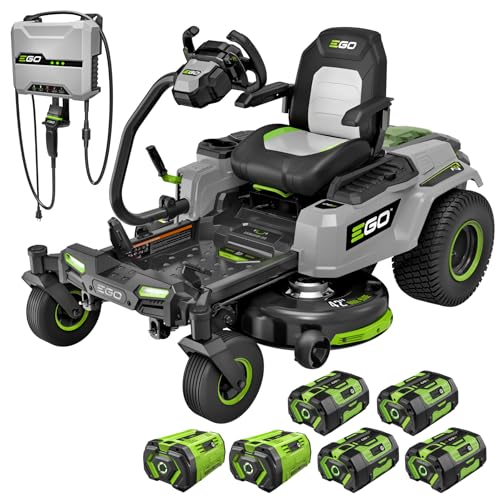
EGO Power+ Z6 Zero Turn Electric Riding Lawn Mower, 42″ Deck, e-Steer (ZT4215S)
The e-Steer system replaces traditional lap bars with a single steering wheel, making this the most approachable zero turn for people transitioning from lawn tractors. It retains the Z6’s performance but changes how you interface with it.
- Pro: e-Steer removes the learning curve of dual-lebar control, meaning less operator fatigue over long sessions.
- Pro: Same Z6 platform reliability and EGO ecosystem as the standard models.
- Con: The $5799 price adds nearly $500 over the identical-spec standard ZT4214L purely for the steering interface.
Skip it if you already operate lap-bar zero turns comfortably and do not want to pay extra for ergonomics you may not use.
PRORUN PLT60V42-60V 42″ Riding Lawn Mower
PRORUN is a lesser-known brand offering a 42-inch electric riding mower at $3499. It fills the gap for buyers who want a basic electric ride-on without the name-brand premium but are not ready to commit to Greenworks or EGO.
- Pro: Lower price than EGO equivalents with a similar deck width.
- Pro: Simple direct-to-consumer purchase model avoids dealer markups.
- Con: Limited owner feedback and sparse service network make long-term support a real risk.
Skip it if dealer support matters to you or if your property has terrain that stresses drive systems and you want a proven brand behind the warranty.
Buying Guide
Battery Configuration Is More Important Than Voltage
Voltage alone tells you very little about how long you can mow. The number and capacity of batteries, plus the charger wattage, determine your real-world workflow. Six 8.0Ah packs with a 600W charger creates a different daily rhythm than two 20.0Ah plus four 8.0Ah with a 1.5kW fast charger. If you own a quarter acre or less, a single battery set may cover the job. Past half an acre, fast charging and high-capacity packs become non-negotiable if you want to finish without stopping.
Deck Width vs. Property Geometry
A 54-inch deck mows faster in open fields but is useless if you cannot get it through your gate, around flower beds, or between fences. Measure your narrowest access point before choosing. Most residential gates are 36 to 42 inches wide, which immediately rules out the MaximusZ and the 52-inch EGO for many buyers regardless of how capable those decks are on open acreage.
Zero Turn vs. Lawn Tractor for Your Layout
Zero turn mowers excel on properties with obstacles, odd angles, and tight spaces because they pivot in place. Lawn tractors like the TR4204 are better for long open strips where a turning radius is irrelevant and you prefer familiar steering. The cost difference between these two styles is real, so be honest about your yard layout before paying a premium for maneuverability you will not use.
Our Verdict
Top pick: The Greenworks 54″ MaximusZ wins for anyone with substantial acreage who wants a single-session electric mow. The combination of mixed-capacity batteries, a wide deck, and fast charging solves the runtime problem that kept electric riding lawn mowers impractical for larger properties.
Budget pick: The Greenworks 42″ CrossoverZ at under $3000 is the entry point for most buyers. You get genuine zero turn and six-battery runtime at a price that undercuts gas competitors.
Condition that changes the answer: If your property has tight gates or narrow access, the 54-inch and 52-inch decks are irrelevant no matter their performance. In that scenario, the EGO ZT4214L becomes the best pick because it pairs a manageable 42-inch deck with the most proven electric drive system available.
FAQ
Do electric riding lawn mowers handle wet or thick grass?
Higher-end models like the EGO Z6 series maintain torque under load better than budget options, but all electric mowers struggle more than gas in saturated, heavy thatch. Most owners report acceptable performance if you mow frequently and do not let grass grow excessively between sessions.
How long do the batteries actually last in terms of years?
Lithium battery packs in quality electric riding lawn mowers typically deliver several years of regular seasonal use before noticeable capacity decline appears. Greenworks and EGO both offer multi-year warranties on their packs, and owner reports on forums suggest gradual degradation rather than sudden failure over a typical ownership period.
Can I use the same batteries in a push mower and a riding mower?
Within a single brand’s ecosystem, yes. EGO’s 56V platform batteries work across their entire tool lineup including riding mowers, and Greenworks’ 60V packs are shared across their range. This cross-compatibility is a genuine cost advantage if you already own hand tools in the same platform.
Is gas still cheaper than electric over five years?
For small properties under a quarter acre, the fuel savings rarely justify the higher upfront cost of electric riding lawn mowers over five years. For larger properties where you mow weekly for months, eliminated gas, oil changes, and tune-ups can offset the price gap, especially on models under four thousand dollars.