Key takeaways
- The best camera for street photography is the one you can carry every day without attracting attention: choose the Ricoh GR IIIx for maximum pocketability, the Fujifilm X100VI for a quiet fixed-lens experience, the Sony α6700 for autofocus and lens…
The best camera for street photography is the one you can carry every day without attracting attention: choose the Ricoh GR IIIx for maximum pocketability, the Fujifilm X100VI for a quiet fixed-lens experience, the Sony α6700 for autofocus and lens flexibility, and the OM SYSTEM OM-5 for weather-resistant value.
Our top picks


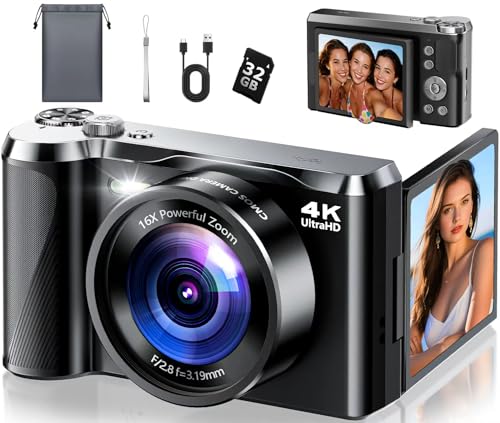

As an Amazon Associate we earn from qualifying purchases at no extra cost to you. Ratings are shown as listed on Amazon.
Quick comparison
| Camera | Size and weight | Lens or mount | Street-shooting strengths | Typical 2026 market range |
|---|---|---|---|---|
| Ricoh GR IIIx | 109 × 62 × 36 mm; 262 g | 40mm-equivalent f/2.8 fixed lens | Smallest serious option; fast startup; silent electronic shutter | About $900–$1,100 |
| Fujifilm X100VI | 128 × 75 × 55 mm; 521 g | 35mm-equivalent f/2 fixed lens | Hybrid optical/electronic viewfinder; leaf shutter; strong low-light performance | About $1,700–$2,000 |
| Sony α6700 | 122 × 69 × 75 mm; 493 g | Sony E-mount interchangeable lenses | Excellent subject detection; compact lenses available; image stabilization | About $1,300–$1,600 body only |
| OM SYSTEM OM-5 | 125 × 85 × 49 mm; 366 g | Micro Four Thirds interchangeable lenses | Lightweight weather-sealed kit; effective stabilization; many small lenses | About $900–$1,200 body only |
| Leica Q3 | 130 × 80 × 93 mm; 743 g | 28mm-equivalent f/1.7 fixed lens | Exceptional lens and sensor; discreet electronic shutter; substantial crop flexibility | About $6,000–$7,000 |
Dimensions and weight are approximate camera-body figures from manufacturer specifications; the lens, strap, battery, and card add to what you carry. Prices are broad market ranges and can change with availability.
Our picks by shooting situation
Best for a camera that disappears in a pocket: Ricoh GR IIIx
The Ricoh GR IIIx is the clearest choice when size matters more than viewfinder use. Its APS-C sensor and 24.2-megapixel resolution produce substantially more image quality than a phone in difficult light, while the 40mm-equivalent lens gives a natural perspective for people, signs, storefronts, and details.
Its biggest advantage is readiness. There is no lens to change, no large zoom barrel, and no conspicuous viewfinder. The electronic shutter can be silent, which is useful in galleries, cafés, transit, and close-range candid work. Autofocus is capable, but it is not as dependable for fast-moving subjects as the Sony α6700. Set the GR IIIx to snap focus or zone focus when you already know the approximate distance, and it becomes considerably faster and less distracting.
The compromises are equally important: the battery is modest, the screen is fixed, there is no built-in viewfinder, and the body is not designed for serious rain. Carrying a spare battery or USB-C power bank is sensible for a full day.
Best fixed-lens all-rounder: Fujifilm X100VI
The X100VI is better than the GR IIIx if you want a viewfinder, physical controls, a built-in flash, and a lens that handles both environmental portraits and general street scenes. Its 35mm-equivalent f/2 lens is a versatile middle ground: wider than the Ricoh for architecture and groups, but not so wide that people look distant.
Its leaf shutter can be very quiet and permits flash synchronization at unusually high shutter speeds. The hybrid viewfinder is useful when you want to keep watching the edges of the frame through the optical finder, while the electronic finder gives a live exposure preview. The 40.2-megapixel sensor also provides useful cropping room.
It is not pocketable in most clothing, and the fixed lens is less flexible than a zoom or interchangeable system. The camera is weather-resistant only when used with the appropriate accessory filter and ring, so do not treat the bare body as fully sealed. It is also noticeably more expensive and heavier than the Ricoh.
Best for moving subjects and lens choice: Sony α6700
Choose the Sony α6700 when street photography includes bicycles, performers, children, animals, or rapidly changing distances. Its subject-recognition autofocus and tracking are the strongest option in this group for unpredictable movement. The electronic front-curtain shutter reduces mechanical vibration, and a fully electronic shutter provides silent operation when the lighting allows it.
The E-mount gives you a broad range of compact lenses. A small 20mm lens gives a 30mm-equivalent view; a 23mm lens gives roughly 35mm equivalent; and a 27mm lens gives roughly 40mm equivalent. A compact zoom can cover several viewpoints, although it makes the camera more noticeable and may be slower in low light.
The α6700 has a larger grip and more prominent shape than the Ricoh, and some lenses can be almost as large as the body. Electronic shutters can produce rolling-shutter distortion under artificial lighting or with fast motion, so use the mechanical or electronic-front-curtain option when straight lines begin to bend.
Best lightweight weather option: OM SYSTEM OM-5
The OM-5 is a strong choice for walking photographers who work in rain, dust, or changing weather and want a complete interchangeable-lens system without full-frame bulk. Micro Four Thirds lenses are often particularly small, and the camera’s stabilization helps keep static scenes sharp at slower shutter speeds.
Its 20-megapixel sensor is smaller than the APS-C sensors in the Ricoh, Fujifilm, and Sony, so it gives up some high-ISO flexibility. In return, you can carry a small wide-angle lens, a normal lens, and a short telephoto in a much smaller bag. The weather sealing is valuable, but it depends on using a suitably sealed lens and keeping doors, ports, and seals clean.
Best premium fixed-lens option: Leica Q3
The Leica Q3 is for photographers who specifically want a 28mm-equivalent f/1.7 lens, a high-resolution full-frame sensor, and a premium manual-control experience. The wide lens suits close urban work, architecture, and scenes where you need to include context. Its resolution allows substantial cropping toward a normal or short-telephoto view.
It is quiet when configured for electronic shutter operation, and its bright lens performs well after sunset. However, the 743-gram body and large lens are not discreet in the same way as a GR IIIx. Its price also makes accidental knocks, theft, and replacement costs more consequential. It is a specialist luxury choice, not the sensible default for most beginners.
How the key buying criteria change the decision
Size and discretion
Smallness helps in two ways: you are more likely to carry the camera, and subjects are less likely to react to it. The GR IIIx is the clear winner for pocketability. The X100VI and OM-5 are compact shoulder-bag cameras. The α6700 depends heavily on the lens, while the Q3 is compact for a full-frame camera but still conspicuous.
Autofocus
For stationary scenes, any of these cameras can focus accurately. For unpredictable movement, the α6700 has the strongest tracking advantage. Fujifilm’s X100VI is capable for ordinary walking subjects, while the Ricoh rewards pre-focusing and snap focus. The OM-5 is adequate for general street work, but its autofocus tracking is not the main reason to buy it.
Shutter noise
A silent electronic shutter is valuable in quiet interiors and close-range situations, but it is not automatically better. Flickering LEDs can create banding, and rolling shutter can distort moving subjects. Leaf shutters, as used in the X100VI and Q3, offer a particularly discreet mechanical-shutter experience. On any camera, keep the operating sounds, autofocus confirmation, and artificial shutter sound turned off where appropriate.
Low-light performance
Sensor size helps, but lens aperture and stabilization matter just as much. The Q3’s f/1.7 lens and the X100VI’s f/2 lens are helpful after sunset. The GR IIIx’s f/2.8 lens remains useful because its stabilization can steady static subjects, though it cannot freeze walking people. The α6700 can match or exceed the others when paired with a bright prime. The OM-5’s stabilization is excellent for static scenes, but its smaller sensor generally shows more noise at the same framing and exposure.
A practical decision matrix
| Your situation | Best fit | Why | Main compromise |
|---|---|---|---|
| First dedicated camera; limited budget | Ricoh GR IIIx or OM SYSTEM OM-5 | Low carried weight and relatively accessible system cost | Ricoh has one lens; OM-5 has a smaller sensor |
| Frequent evening walks | Fujifilm X100VI or Sony α6700 with a bright prime | Large sensor and useful lens apertures | Neither is as pocketable as the Ricoh |
| Fast-moving subjects | Sony α6700 | Best autofocus tracking and lens choice | Lens size can reduce discretion |
| Rainy travel and long walks | OM SYSTEM OM-5 | Light body, sealed design, and small sealed lenses | Less high-ISO headroom |
| Minimalist, quiet shooting | Fujifilm X100VI | Fixed lens, leaf shutter, and hybrid finder | Heavy and expensive for a fixed-lens camera |
Ownership details that affect the real choice
Street cameras receive more wear than cameras used from a tripod. The first parts likely to show it are the grip surfaces, control dials, screen coating, battery, and card door. Dust on the sensor becomes visible as dark spots at narrow apertures, especially after changing lenses outdoors. Use a blower before considering a wet-cleaning kit, and avoid touching the sensor with improvised materials.
Budget for a spare battery, a wrist strap, a small microfiber cloth, and a screen protector. A spare battery is more useful than an oversized camera bag: if a camera is uncomfortable to carry, it will stay at home. For interchangeable-lens systems, a compact prime often improves street photography more than a larger zoom because it reduces weight, visual attention, and decision time.
A simple setup is to use aperture priority, auto ISO, a minimum shutter speed around 1/250 second for walking people, and exposure compensation available on a physical dial or button. For static architecture at night, lower the minimum shutter speed and let stabilization do the work. Review images periodically for motion blur rather than assuming a high ISO is the only problem.
Final recommendation
Buy the Ricoh GR IIIx if carrying the camera everywhere is your highest priority. Buy the Fujifilm X100VI if you want the most satisfying fixed-lens balance of quiet operation, controls, viewfinder, and image quality. Choose the Sony α6700 for autofocus and an expandable lens system, or the OM SYSTEM OM-5 for a lightweight weather-ready kit. The Leica Q3 is superb but makes sense mainly when its 28mm f/1.7 design and premium build justify the cost for you.